
What is recorded here
Wedge-tomb that was destroyed around 1895 (Lynch 1909-11, 112) and was known locally as'Tuamanirvore' or 'The Big Man's Grave' (OSNB Abington Parish], described by the Megalithic Survey of Ireland as following; 'This monument was shown as "Tuamanirvore" on the 1840 edition of the O.S. 6" map and "Tuamanirvore (Site of)" on the 1901 edition. It has been completely destroyed. The monument is described in the O.S. Name Book (1840 Abington Parish) as follows:, "This grave, which is placed on a small rising ground in a cultivated field, is 21 feet long, four wide and three high, each side secured by a row of upright large stones from three to four feet, sunk deep in the ground and at each end one of same magnitude. The grave is uncovered but with the seeming appearance of having the large stones upon it some time ago which arc now promiscuously thrown on each side of it, besides a heap of smaller ones now overgrown with grass, moss etc. . . The description in the O.S. Letters is closely similar and seems to be directly derived from that in the Name Book. The descriptions are sufficient evidence to warrant the acceptance of the site as that of a megalithic tomb, very probably of the wedge-tomb class.
The tomb was recorded by Borlase (1897, 46) and described as; 'In the Townland of Cappanahannagh, and Parish of Abington; "near Lissguaire," and on the N.W. of the Slieve
Felim Mountains, is a dolmen marked Tuamanirvore [grave of the big man] in Ord., Surv. Map No. 6. "This dolmen stands on a small eminence in a field. It measures 21 feet [7m] long, 4 feet [1.2m] broad, and 3 feet [0.9m] high. Its sides are described as each defended by large stones, from 3 to 4 feet [0.9-1.2m] high, set upright in a row, and deeply sunk in the ground. Two stones of the same size as those of the sides, and set in the ground in the same way, defend the ends. The grave was uncovered above. It appeared, however, that there had been stones placed over it which rested on and were supported by the end [? side] ones. These stones lay confusedly on each side. There was also a heap of smaller stones overgrown with grass."
See linked document with details from Ruaidhrí de Valera and Seán Ó Nualláin, Survey of the Megalithic Tombs of Ireland. Volume IV. Counties Cork, Kerry, Limerick, Tipperary. (Dublin: Stationery Office, 1982)
Date of upload: 4 January 2012
Wedge tomb, dating to the Late Neolithic or Early Bronze Age (c. 2500–1000 BCE). Its local name, "The Big Man's Grave," suggests it may have been associated with a prominent individual or figure in the community.
This remains an important historical record, but the official description says the monument is no longer visible or has been destroyed. The monument record does not grant public access. Check the route and ask the landowner before entering private land.
- What survives
- No visible remains or recorded as destroyed
Places near here
 Killeen Burial GroundChildren's burial ground · 858 yd
 Ashroe Househouse · 947 yd
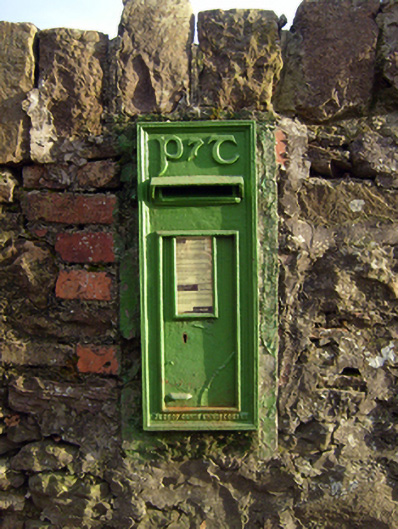 post boxpost box · 1024 yd
 Holy WellHoly well · 1333 yd
 IndicatedCastle, unclassified · 1.4 mi
 Sliev Felim WayVisitor information · 1.9 mi
 Site of Derryleigh CastleCastle, unclassified · 2.4 mi
 Graveyard in AbingtonGraveyard · 3.0 mi
 Slieve Felim WayWalking route · 3.7 mi
 Slieve FelimMountain / peak · 4.6 mi
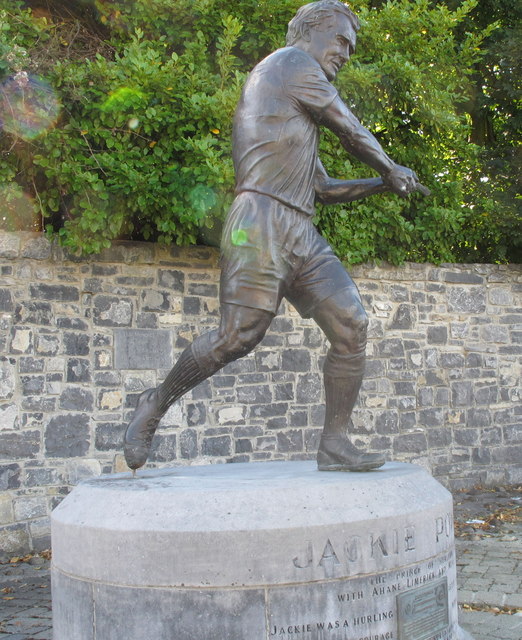 Jackie PowerMemorial · 4.7 mi
 The Pollagh TrailNature reserve · 6.8 mi
Other information
Photo: Credit not shown in the picture search · Rights wording not checked; contact us if this picture should be removed