
Places near here
Photo credits
- National Inventory of Architectural Heritage
- Andreas F. Borchert, Wikimedia Commons · CC BY-SA 4.0
- Eeno11, Wikimedia Commons · CC BY-SA 3.0
- Sitomon, Wikimedia Commons · CC BY-SA 2.0
- M'Loughlin, Peter, Wikimedia Commons
- Kenneth Allen, Wikimedia Commons · CC BY-SA 2.0
- Richard Webb, Wikimedia Commons · CC BY-SA 2.0
- Kenneth Allen, Geograph · CC BY-SA 2.0
- Alistair Cunningham, Wikimedia Commons · CC BY 3.0
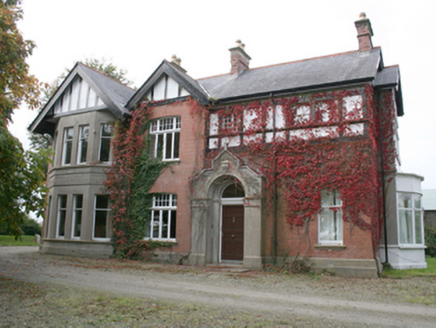 DrumbarnetHouse · 1.1 mi
Explorer Tom Drumbarnet wears four red-brick chimneys with yellow clay pots, part of the house the Glenn family remodelled in 1911. I picture the chimneys lining up for a photograph, each insisting it is the tallest. The 1911 front stands ahead of an older house dated to about 1840.
 Balleeghan FriaryReligious house, Franciscan Third Order Regular · 1.2 mi
Explorer Tom Balleeghan Friary was probably founded in the later fifteenth century, and its recorded ruins stand near Lough Swilly. Steps protruding from the east gable may have given access behind the altar and window. I was about to call them mystery stairs, but the record offers a careful possibility.
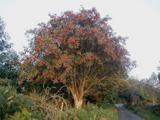 Rowan2.8 mi
Explorer Tom Rowan is in the middle of a fierce feud with the oak next door over who has the better view of the sunset. They’ve been arguing for decades about whose leaves are greener and whose branches sway more gracefully. It’s like watching two teenagers bicker, but slower and with more bark. Make up your own legend and I'll swear it's true.
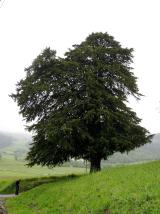 European Yew2.8 mi
Explorer Tom European Yew in County Donegal is a yew, which means it’s tough, old, and probably poisonous if you look at it wrong. It’s the kind of tree that survives empires and bad haircuts. Bring your own legend, I've run out, make up a story about a dragon living in its branches.
_(page_1_crop).jpg/250px-Burt_Castle,_County_Donegal,_1833_(IA_jstor-30004355)_(page_1_crop).jpg "Photo: M'Loughlin, Peter, Wikimedia Commons") O'Doherty's CastleRuins · 4.7 mi
O'Doherty's CastleRuins · 4.7 miExplorer Tom O'Doherty's Castle near Burt is the one that can make a confident guide point towards Buncrana and get the wrong ruin entirely. This is Burt Castle, a sixteenth-century stronghold guarding the southern approach to Inishowen, with a plan influenced by Scottish fortification design. Sir Cahir O'Doherty used it as his headquarters during his 1608 revolt. I would offer to defend the approach, then remember the fort has been a ruin for a good while and put my imaginary helmet away. The story here involves real sieges and prisoners, so keep the account straight. Check lawful access before heading for the ruin and stay off unstable masonry. Stand where you can see the ground it guarded. The view explains the choice of site quicker than any boast from me.
 Burt CastleCastle, tower house · 4.7 mi
Explorer Tom Burt Castle's roofless keep still stands on the hill, with two round corner towers and rows of gun-loops. The old account even records a spiral stair with broken steps in the south-west tower. I would admire that stubborn stonework from safe ground; those steps sound like trouble.
 Battlefield in Tully (kincraigy Ed),glenmaquin Lower,roosky (castleforward Ed)Battlefield · 4.8 mi
Explorer Tom Tully, Glenmaquin Lower had a fox that took charge of the whole operation once, probably because it was smarter than the generals involved in the mess. The animal just sat on a rock looking smug while everyone else argued over who started it. Take the long way round, it deserves the effort.
 Rockfield Standing StoneStanding stone · 4.9 mi
Explorer Tom Rockfield Standing Stone is over two metres tall, but the picture says cows use it like a giant scratching post! I imagine them wiggling their noses against the rock to get a proper itch gone.
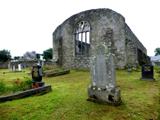 Tullyaughnish Old Church GraveyardGraveyard · 5.1 mi
Explorer Tom Tullyaughnish Old Church Graveyard has been hanging around since 1622, which is basically forever in church years. Sir William Stewart built it, so the locals were definitely keeping up with the trends back then. I bet the ghosts are still complaining about the new church. Take a pic of the old stones!
Battle of GlenmaquinBattle · 5.5 miExplorer Tom Battle of Glenmaquin would tell its younger self to stop caring so much about the Crown victory and just enjoy the mud, because 1642 was all about the mess anyway. It’s part of the Irish Confederate Wars, which sounds like a very exclusive club that nobody wanted to join voluntarily. Look serious, nod slowly, you're basically an expert now.
 Mongorry HillMountain / peak · 5.6 mi
Explorer Tom Mongorry Hill swears by a superstition that says if you sneeze, you must buy a pint or it will rain all week. Locals are terrified of this rule, so they carry umbrellas even in sunshine just to be safe. Whisper a secret at it, because it has kept worse ones for centuries.
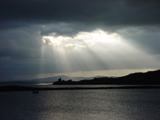 Inch Castle Promontory FortPromontory fort, coastal · 6.4 mi
Explorer Tom Inch Castle Promontory Fort sits right on Farland Bank, which is a bit of a mystery since the records are silent. But that coastal edge? I bet the wind there has been roaring since ancient times, keeping the ghosts perfectly chilled.
More historic places in County Donegal · All of County Donegal

What do you know about this place?Tap to add a comment or ask a question