DDiscover AloneMapAbout

Balleeghan Friary

Religious house, Franciscan Third Order Regular
Balleeghan Friary
Photo: Andreas F. Borchert, Wikimedia Commons · CC BY-SA 4.0 · Report the wrong picture

The church gables and side walls survive to full height. The official record says only the former domestic buildings have no visible trace. The monument record does not grant public access. Check the route and ask the landowner before entering private land.

What survives
Extensive ruins remain
What do you know about this place?Tap to add a comment or ask a question

What you write will be public.

What is recorded here

Balleeghan Friary: Founded by O'Donnell for the Franciscan Third Order Regular probably in the later 15th century. The site was subsequently granted to James Fullerton in 1603(Gwynn and Hadcock 1970, 268). The ivy-covered ruins stand close to the E shore of Lough Swilly and are built of granite blocks and slate…

Read the whole record
Balleeghan Friary: Founded by O'Donnell for the Franciscan Third Order Regular probably in the later 15th century. The site was subsequently granted to James Fullerton in 1603(Gwynn and Hadcock 1970, 268). The ivy-covered ruins stand close to the E shore of Lough Swilly and are built of granite blocks and slate pinnings with sandstone and greenstone dressings. The church, 24.9m by 6.45m internally, consists of nave and chancel without structural division. The gables and side walls stand to full height; the latter are c. 5.6m high. The E window is of three lights, transomed with curvilinear tracery. The exterior hollow-chamfered hood-mould has two head terminals; the N is damaged. Another badly weathered head, forms the keystone of the relieving arch above the hood-mould. The splayed ingoings have dressed scontions and the pointed rear-arch is double-chamfered. A flight of steps protrudes from the inner face of the E gable; they probably gave access to the furnishings of the altar and window from behind the former. There are two windows in the S wall. The E is blocked up and the exterior is covered with ivy; below it is a sedilia recess with a wall-press beside it on the E. Only the upper jambs, cusped W-spandrel and part of the hood-mould of the other window survive; all are very weathered. The sill has fallen away; the ope was probably c. 3m high. The scontions and splayed round-headed rear-arch are of dressed sandstone. Beside it is a wall-press. The rear-arch of the doorway on the W is of similar construction to that of the window but the ingoings and jambs are missing; the ope is partly blocked by a memorial. The jambs of the W door of the church have likewise fallen or were removed. There is a wall-press at the E end of the N wall. Almost directly opposite the tall window in the S wall is a small blocked-up, ogeeheaded, single-light window with splayed ingoings and segment-headed rear-arch; the E spandrel is missing. Beside it is a blocked-up doorway which connected with the domestic buildings and sacristy on the N. No visible trace of these buildings remain. Two small disused houses about the exterior face of the N wall. The N extension of the E gable is undoubtedly concealed beneath the harled wall of the eastern-most house. The above description was derived from the 'Archaeological Survey of County Donegal. A description of the field antiquities of the County from the Mesolithic Period to the 17th century.' Compiled by: Brian Lacey with Eamon Cody, Claire Cotter, Judy Cuppage, Noel Dunne, Vincent Hurley, Celie O'Rahilly, Paul Walsh and Seán Ó Nualláin (Lifford: Donegal County Council, 1983). Excavation licence number 03E0672 Testing was carried out at Balleeghan, Manorcunnigham, Co. Donegal, on 20 May 2003. The proposed development involved the construction of a dwelling-house, septic tank and percolation area. It is situated immediately east of SMR 54:3, a friary founded by O'Donnell for the Franciscan Third Order Regular, probably in the later 15th century. Four trenches were mechanically excavated down to natural ground; no finds or features or deposits of archaeological significance were in evidence. (Excavations 2003) Billy Quinn, Moore Archaeological & Environmental Services Ltd, Corporate House, Ballybrit Business Park, Ballybrit, Galway. Attached images: DG054-003----_01.JPG East window (interior) DG054-003----_0e.JPG Flight of steps on E gable DG054-003----_01.JPG Window at E end of S wall Date of upload: 22 September 2008

From the National Monuments Service (Archaeological Survey of Ireland) record DG054-003

Places near here

Photo credits
  • Maker not stated on source page, au.pinterest.com
  • Maker not stated on source page, www.dreamstime.com
  • Maker not stated on source page, ca.pinterest.com
  • Maker not stated on source page, www.pinterest.ru
  • Maker not stated on source page, www.kinopoisk.ru
  • Eeno11, Wikimedia Commons · CC BY-SA 3.0
  • Sitomon, Wikimedia Commons · CC BY-SA 2.0
  • John Vigar, Geograph · Creative Commons Attribution-ShareAlike 2.0
  • Maker not stated on source page, www.irelandtraveldeals.com
  • National Inventory of Architectural Heritage
Balleeghan Friary GraveyardGraveyard · 11 yd

Explorer Tom Balleeghan Friary Graveyard comes with a quiet but vivid detail: ivy-covered ruins by Lough Swilly, built from granite…

Burial ground in ArdnaditianBurial ground · 550 yd

Explorer Tom Burial ground in Ardnaditian is just a low, natural-looking mound slumping down toward Lough Swilly. It’s basically a…

Standing stone in Ballylawn (manorcunningham Ed)Standing stone · 1225 yd

Explorer Tom Standing stone in Ballylawn is a solid block measuring 1.72m high, situated on good land sloping down to Lough Swilly.…

Standing stone in HighbankStanding stone · 1.6 mi

Explorer Tom Standing stone in Highbank fell over and got a concrete cast about fifteen years ago! It’s sitting up proud on the…

Maylin WoodOfficial walking route · 1.7 mi

Explorer Tom Maylin Wood is Donegal's reminder that a good outing does not need to occupy half a calendar. This small loop near…
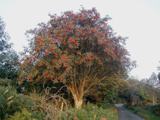
Rowan1.7 mi

Explorer Tom Rowan is in the middle of a fierce feud with the oak next door over who has the better view of the sunset. They’ve been…
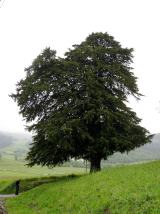
European Yew1.7 mi

Explorer Tom European Yew in County Donegal is a yew, which means it’s tough, old, and probably poisonous if you look at it wrong.…

CastlegroveCountry house · 1.7 mi

Explorer Tom Castlegrove claims to have invented the concept of a porch, thanks to some local who swears he saw the plans first. The…

Castle Grove House HotelHotel · 1.7 mi

Explorer Tom Castle Grove House Hotel sounds fancy but might just be a very confused barn. It's in Donegal, where the wind is strong…
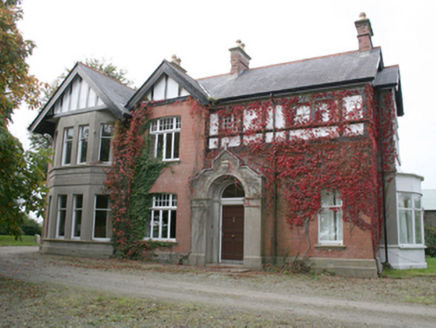
DrumbarnetHouse · 1.8 mi

Explorer Tom Drumbarnet wears four red-brick chimneys with yellow clay pots, part of the house the Glenn family remodelled in 1911.…
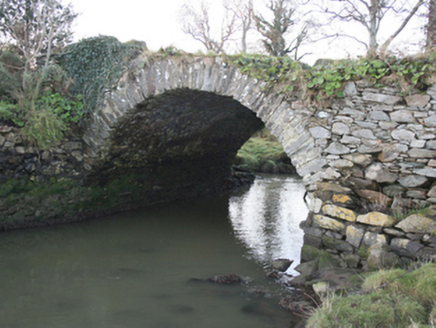
Castle WrayBridge · 1.8 mi

Explorer Tom Castle Wray acts like a grumpy gatekeeper who refuses to let go of its old friends. Built c. 1750, I bet it’s still…

Ardrumman HouseCountry house · 1.8 mi

Explorer Tom Ardrumman House hosted a dance that went so far the chimney pots are still trying to catch their breath, especially…

More historic places in County Donegal · All of County Donegal

Add to this placeAdd a picture Add a detailed tip Add a story

Explore the map1,095,414 places to discover

Next place · or swipeBalleeghan Friary Graveyard