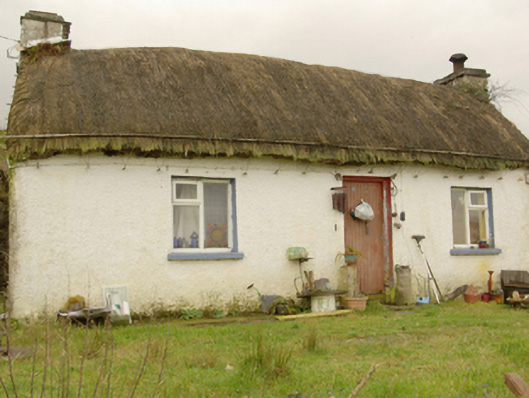
What is recorded here
Detached three-bay single-storey vernacular house, built c. 1860 and altered c. 1970, having extension to the rear (north-west). Pitched straw thatched roof with rendered chimneystacks to gable ends (north-east and south-west) and having metal pegs (for securing ropes over roof) below eaves level to main elevation and…
Read the whole record
From the Buildings of Ireland (National Inventory of Architectural Heritage) record 40909104
Places near here
Photo credits
- National Inventory of Architectural Heritage
- Maker not stated on source page, readymap.irish
- Maker not stated on source page, www.sciencedaily.com
- Maker not stated on source page, commons.wikimedia.org
- Maker not stated on source page, www.vecteezy.com
- louise price, Geograph · Creative Commons Attribution-ShareAlike 2.0
- Maker not stated on source page, www.airbnb.co.za
- Ronnie Nijboer, Wikimedia Commons · CC0
- louise price, Wikimedia Commons · CC BY-SA 2.0
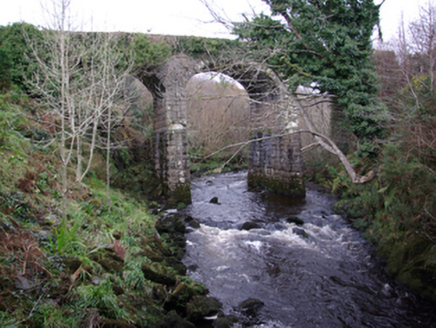 bridge875 yd
Explorer Tom Bridge in Aghayeevoge carries a story about a narrow-gauge railway that stopped running in 1960. I picture the tiny…
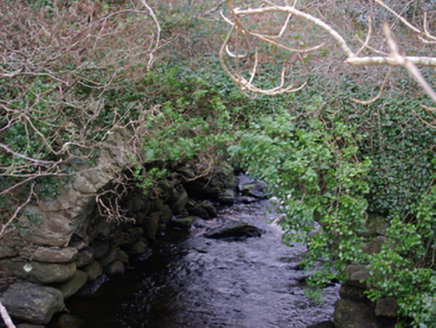 The Lough Head BridgeBridge · 1737 yd
Explorer Tom The Lough Head Bridge was already an old crossing when later roads took over. Built around 1770, it had become…
 Nicki's Cafe BistroCafé · 1.4 mi
Explorer Tom Nicki's Cafe Bistro is doing its best to be French, but it’s just a café in Donegal. Ask Nicki if she speaks French…
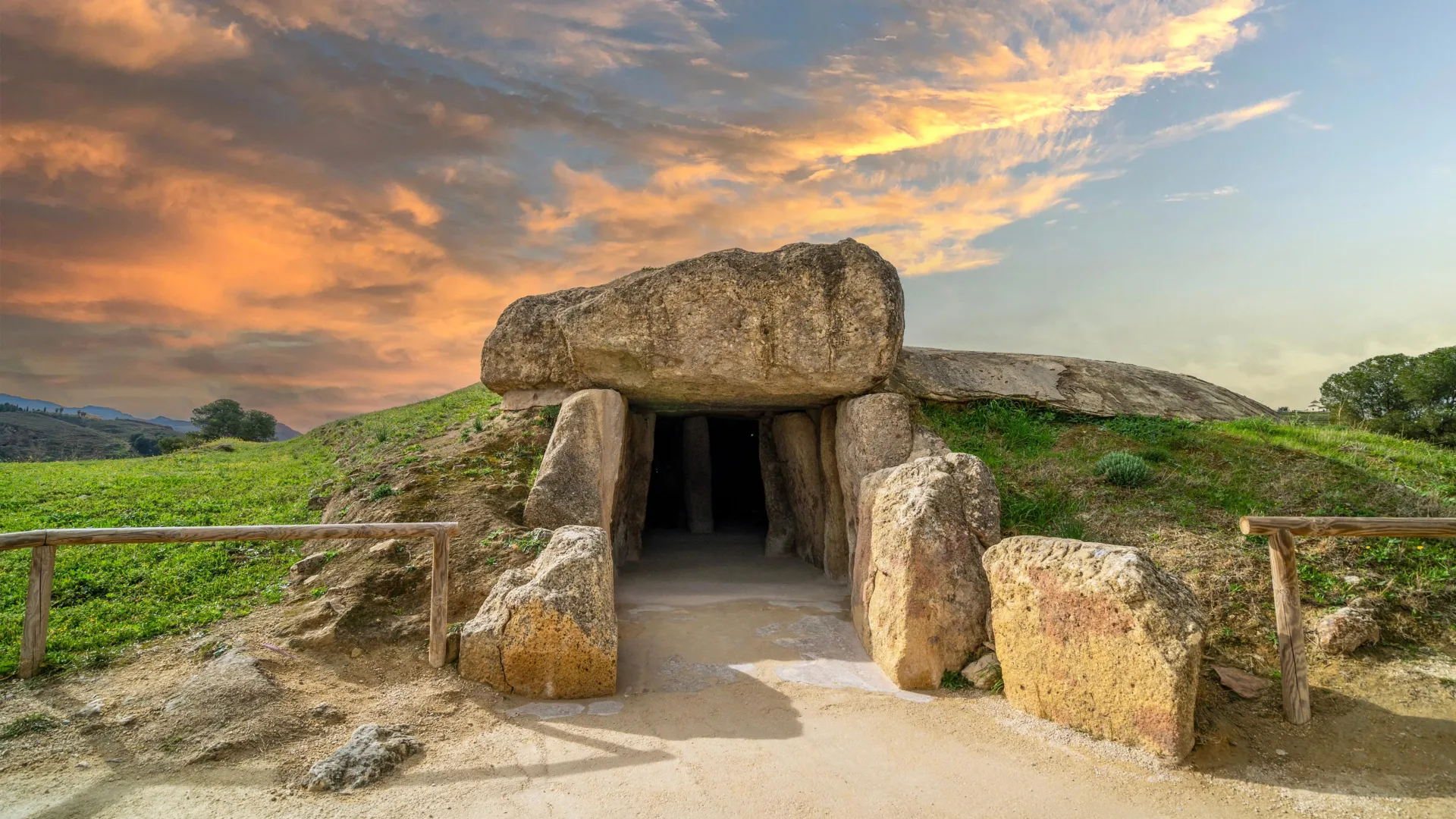 Megalithic tomb in StragarMegalithic tomb · 1.4 mi
Explorer Tom Megalithic tomb in Stragar is officially nowhere to be found, which is brilliant and infuriating at once. A guy saw six…
 Gilbertstown Portal TombPortal tomb · 1.5 mi
Explorer Tom Gilbertstown Portal Tomb sits in a wet, rushy patch where a giant roof slab has slid right over the chamber. It’s a bit…
 Killybegs GraveyardCemetery · 1.6 mi
Explorer Tom Killybegs Graveyard was nearly sold for a horse in 1890 because the price tag was written upside down on the signpost…
 Multins BridgeBridge · 1.6 mi
Explorer Tom Multins Bridge has V-shaped stone teeth on its north side, built around 1870. They look like a giant’s collarbone…
 Brooke HillHouse · 1.7 mi
Explorer Tom Brooke Hill has purple slate on its roof and little spear finials above the porch and dormers. A surgeon who served in…
 Pier View House b&bGuesthouse · 1.8 mi
Explorer Tom Pier View House B&B sounds lovely from the pier, where it’s likely watching its imaginary twin across the sea disappear…
 coastguard station1.8 mi
Explorer Tom Coastguard station in Corporation was built between 1866 and 1875 to keep an eye on Killybegs harbour. It’s now a…
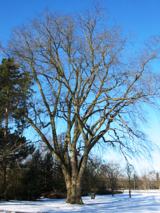 Wych Elm2.4 mi
Explorer Tom Wych Elm in County Donegal would explain the 1800s to a teenager as 'a time when we all had terrible fashion sense and…
 Balbane HillMountain / peak · 2.7 mi
Explorer Tom Balbane Hill has a photo of itself that looks like it's posing for a magazine. I bet the oldest stone there is judging…
More historic places in County Donegal · All of County Donegal

What do you know about this place?Tap to add a comment or ask a question