What is recorded here
Four stone slabs and a heavy capstone hid a juvenile body beneath a Cavan field until landscaping broke the seal in 2009. The child, aged six or seven, lay beside a decorated bowl in a narrow chamber dating to roughly 1955-1752 cal. BC. That young life was measured, marked and buried with care before the landscape forgot the shape of the grave.
Situated on a rise in a slight hollow in a gently undulating landscape. In 2009 a cist was discovered in landscaping work and investigated by the National Museum of Ireland. The cist (int. dims c. 7m NW-SE; c. 0.6m NE-SW; D c. 0.5m) was defined by four slabs and had been covered by a single large capstone in a stony area. This suggests that there may have been a cairn at some time although no evidence of one was present. There was one large floorstone with smaller slabs around the edges. The complete tripartite Bowl Food Vessel together with the inhumation were removed on discovery and their disposition cannot be recovered, although the body was probably flexed. The bowl has two horizontal ribs and is decorated in horizontal panels of oblique and horizontal incised lines. The bones represented one juvenile, aged 6-7 years at death. A sample of a rib bone produced a C14 date of 1955-1752 cal. BC. (Sikora et al. 2018)
Compiled by: Michael Moore
Date of upload: 16/09/2020
Bronze Age cist tomb; likely dates to the early to middle first millennium BCE. Its discovery provides insight into burial practices and funerary architecture in a poorly documented regional context.
The monument record does not grant public access. Check the route and ask the landowner before entering private land.
- What survives
- Recorded monument
Places near here
 Cave FortFairy fort / earthen ringfort · 599 yd
 Fennor LowerMountain / peak · 1746 yd
 CastleCastle, motte and bailey · 1.3 mi
 Church (in Ruins)Church · 1.3 mi
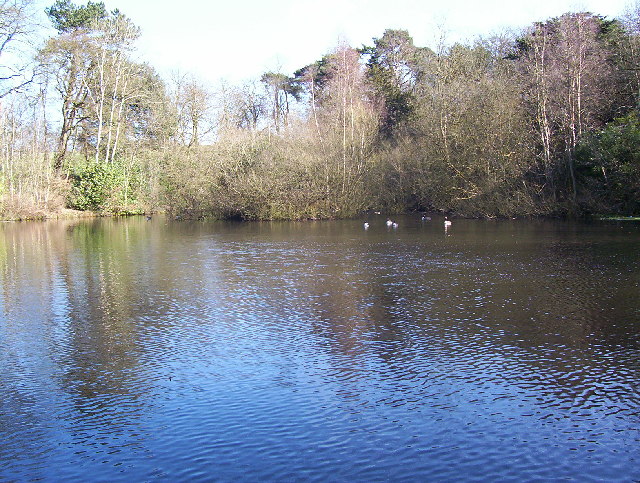 MoatFairy fort / earthen ringfort · 1.5 mi
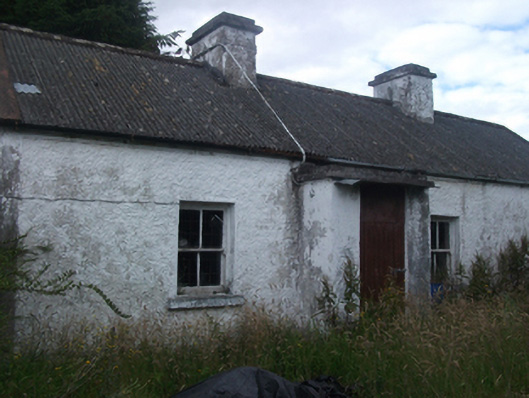 farm housefarm house · 1.7 mi
 Fennor RockMountain / peak · 1.9 mi
 Memorial CrossMemorial · 2.2 mi
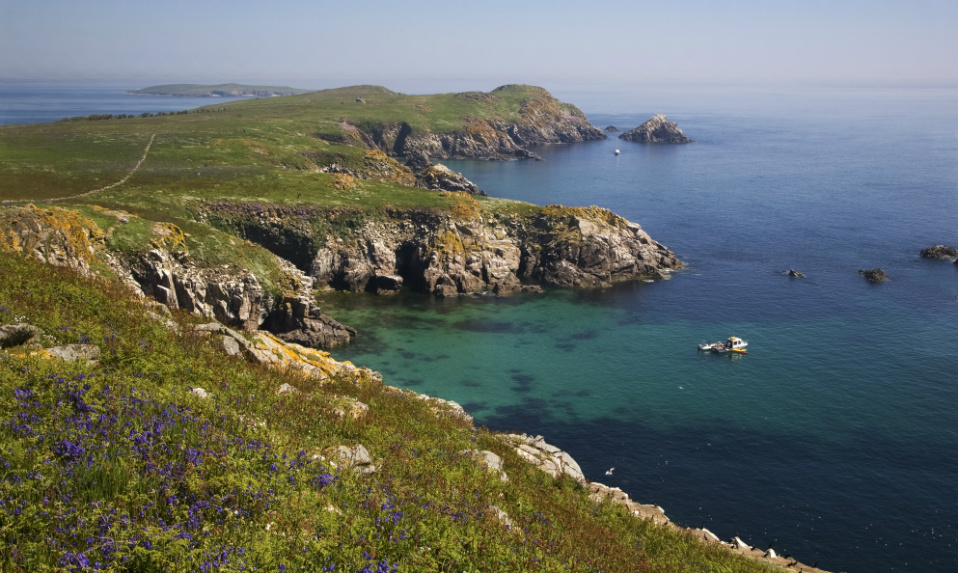 Crossafehin IslandsIslet · 3.3 mi
 Fort Frederick DemesneForest · 3.4 mi
 Fort Frederick IslandsIslet · 3.5 mi
 Rasuddan ForestForest · 3.8 mi