DDiscover AloneMapAbout

St Patricks Well

Holy well

The monument record does not grant public access. Check the route and ask the landowner before entering private land.

What do you know about this place?Tap to add a comment or ask a question

What you write will be public.

What is recorded here

St. Patrick's covered well stands on W facing slope of rising ground with stream and second open-air well to W, site of medieval church (LI032-063001-) and graveyard (LI032-063002-) 30m to SW. Penitential (LI032-063003-) station known locally as 'St. Patrick's Bed' lies immediately to E. Tobar Phádraig/Patrickswell…

Read the whole record
St. Patrick's covered well stands on W facing slope of rising ground with stream and second open-air well to W, site of medieval church (LI032-063001-) and graveyard (LI032-063002-) 30m to SW. Penitential (LI032-063003-) station known locally as 'St. Patrick's Bed' lies immediately to E. Tobar Phádraig/Patrickswell was described by John O'Donovan in 1840 as follows; 'this td. is said to have derived its name from this well, at which, according to tradition, St. Patrick celebrated Mass. On the centre stone are engraved the letters I H S (OSNB, Knockainy Parish, 1215). St. Patrick's holy well was described by Ó Danachair (1955, 215) as following; 'The well is enclosed in a small rectangular structure of masonry; over the opening is a slab with I H S and two crude angel figures. Close by are two small ponds and a mound, called "St Patrick's Bed" on which a tree grows. Three other trees stand close to the well. Devotions are still practised, especially on St Patrick's Day. The pilgrims usually make nine rounds of the well and five of the "Bed" [LI032-063004-); pebbles are used to tally the rounds. Water from the well and from each of the two ponds is drunk and carried away to be drunk at home. The water cures eye and stomach ailments and headaches; it is often brought to refresh those who are ill. Small religious objects, coins and flowers are left as offerings. Legends - Water from the well cannot boil. A fish was seen by people cured at the well. A woman who broke a branch from a tree by the well was reproved by a voice from the well. A man cut away portions of one of the trees; he was struck blind, but repented and was cured at the well. St Patrick'. The following folklore was recorded from Kilmallock National School about St Patrick's Well; 'The local inhabitants say that St. Patrick slept a night under a tree near this well. The tree can still be seen near the well. It is very tall and thick. The well is divided into 3 parts. The first part of the well, where the water rises up out the ground is partly covered with stone flags and the water of which cannot be boiled because a local inhabitant cut down some of St. Patricks Tree (which grew over the well) for firewood. It is said that a curse befell the local tree cutter and *himself suffered mental agony afterwards and his family and cousins died without issue. Every St. Patrick's Day people pay "rounds" at this well. A round consists of walking around the well and the tree saying while doing so "The Hail Mary" seven times at the well and "The Lord's Prayer" and five Hail Marys at the tree. Three or five "rounds" will suffice. Then the pilgrim should drink some of the water in the well; and some people say that the pilgrim should then gaze into the well and if he sees a fish there the person will be cured. "Rounds" are paid at this well from 1st March to St. Patrick's Day. The water of this well is often taken to people who are too sick to travel to the well; and they drink the water. The water is supposed to cure people suffering from head-aches, sore eyes and stomach pains' (The Schools’ Collection, Volume 0516, Pages 418-9; accessible online at www.duchas.ie/en/cbes/4922068/4849597). According to local tradition (information panel); 'it is recorded that the waters of the wells here have a special efficacy for eye ailments and people visited the Well to pray and be cured. The water from St. Patrick's Well with its curative properties is known locally as 'Dionacht' which means protectiveness. The term 'dionacht ar ghalair' means immunity against disease. To access the 'dionacht', the pilgrim must visit the Well on St. Patrick's Day and make the 'Rounds' which consisted of the following; ‘1. Collect 9 pebbles from the pathway; 2. Make 9 circuits of the well, throwing away a pebble each time a ‘Round’ is completed; 3. Recite the Our Father/Hail Mary/Gloria during each ‘Round’; 4. Finish the ‘Round’ at the well and pause for a while before continuing on to complete another ‘Round’; 5. When all 9 ‘Rounds’ are completed, collect 5 pebbles and proceed to the nearby mound; i.e. St. Patrick’s Bed; 6. Complete 5 ‘Rounds’ of the mound reciting each of the above-mentioned prayers; 7. Return to the well and take 3 sips of water from the covered well. The visit (pilgrimage) to the well is now complete. Several ‘Visits’ may be made to the well. On your last ‘Visit’, half-fill a bottle with the water from the covered well, and then fill the other half with water from the other two wells’. it is recorded that a week-long 'pattern' took place at St. Patrick's Well around the 17th of March with a 'Gathering Day' and a 'Scattering Day'. The statue of St. Patrick was placed on top of the covered well by the local community in 2021. See attached photos taken in 1954 by Caoimhín Ó Danachair, courtesy of and © National Folklore Collection, UCD. The Photographic Collection, F025.21.00450 accessible online at www.duchas.ie/en/cbeg/31012; F025.21.00451 accessible online at www.duchas.ie/en/cbeg/31013 and F025.21.00189 accessible online at www.duchas.ie/en/cbeg/16995. Compiled and revised by: Caimin O'Brien Date of revised upload: 7 November 2022

From the National Monuments Service (Archaeological Survey of Ireland) record LI032-063003

Places near here

Photo credits
  • Maker not stated on source page, www.tripadvisor.com.au
  • Maker not stated on source page, www.dreamstime.com
  • National Inventory of Architectural Heritage
  • Maker not stated on source page, www.alamy.com
  • Maker not stated on source page, commons.wikimedia.org
  • Maker not stated on source page, www.pinterest.com
  • No machine-readable author provided. Christian1965~commonswiki assumed (based on copyright claims)., Wikimedia Commons · Public domain
  • Knockane GAA Club website; individual photographer not stated, www.knockane.com
  • Kmcnamee, Wikimedia Commons · CC BY-SA 4.0
Church (Site of)Church · 43 yd

Explorer Tom Church in Patrickswell claims it’s older than the concept of time, which is a bold move for a spot that’s currently…
Stone Circle570 yd

Explorer Tom This Stone Circle in Patrickswell has had so many names over the centuries that even the stones are confused about…
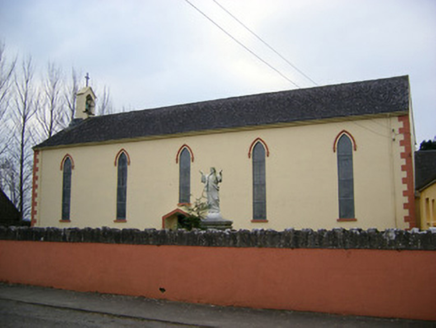
Saint Patrick's Catholic ChurchChurch/chapel · 613 yd

Explorer Tom Saint Patrick's Catholic Church was saved by a hero nobody remembers anymore. He just fixed the belfry and vanished…

Stone Circles, HachuredStone circle · 679 yd

Explorer Tom Stone Circles in Patrickswell used to rival Stonehenge for popularity back in the day, but now they’re basically…

Standing stone in LoughgurStanding stone · 1546 yd

Explorer Tom Standing stone in Lough Gur would survive Big Brother by just standing still and ignoring everyone who tries to talk to…
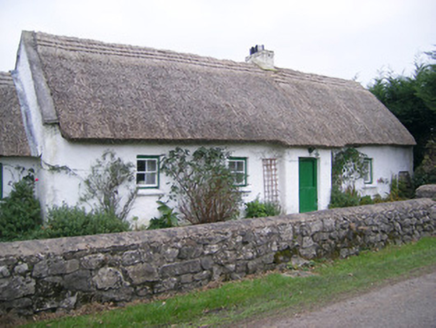
Maura's CottageHouse · 1660 yd

Explorer Tom Maura’s Cottage in Loughgur is thick on thatch and thin on privacy, so I suspect two fairies are currently fighting…

Earthwork in Ballinscoola (smallcounty By., Cahercorney Ed)Earthwork · 1.2 mi

Explorer Tom This circular ditch smells like old mud and regret, according to my sensitive nose. It’s thirty-four meters across and…

Stone CirclesSettlement platform · 1.2 mi

Explorer Tom Stone Circles in Loughgur hates tourists who wear flip-flops because the mud is personal and extremely mean-spirited.…

Fairy fort / stone ringfort in KilballyowenFairy fort / stone ringfort · 1.6 mi

Explorer Tom Fairy fort / stone ringfort in Kilballyowen has the local sheep convinced it’s a giant rock pile. It’s collapsed but…
Áine and Gearóid Iarla: Lough GurLegend location · 1.7 mi

Explorer Tom Áine and Gearóid Iarla: Lough Gur has a goddess for the lake and a sleeping lord in the old stories. I thought I was…
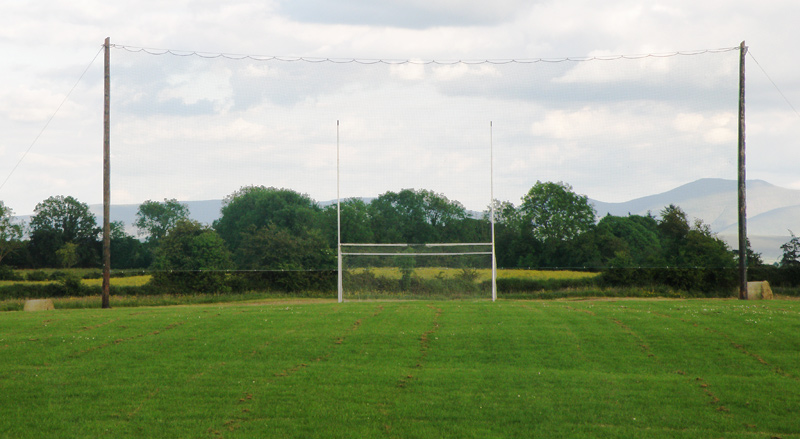
Knockainey GAA pitchGAA ground · 1.9 miBruff GAA pitchGAA ground · 2.3 mi

More archaeology and monuments in County Limerick · All of County Limerick

Add to this placeAdd a picture Add a detailed tip Add a story

Explore the map1,095,414 places to discover

Next place · or swipeChurch (Site of)