What is recorded here
Located at the crest of the E-facing slope of a broad N-S ridge, with the round tower of Oran (RO034-080003-) c. 250m to the SSW. A geophysical survey (11R0074) of possible routes for a re-directed section of the N60 at Oran identified a number of possible enclosures defined by ditches (Gimson and Regan 2011). Archaeological testing (11E0247) disproved many of the anomalies, but a group of four features in Field 2 proved to be archaeological, and elements of the field system (RO034-081003-) may extend into this area. (O’Hara 2011)
This penannular enclosure with a wide gap (Wth 11m) at N, was completely excavated (E004889) and it is a circular area (int. diam. 13.5m E-W) defined by a ditch (max. Wth of top 2.7m; max. D 1.2m) with an entrance (Wth c. 1.8m) at SE. A sample from the base of the ditch, from which sherds of a bucket-shaped vessel were also recovered, produced a C14 date of 1740-1535 cal. BC. A second phase is represented by an arc (Chord c. 9.5m N-S) of a shallow trench (Wth 0.32-0.4m; D 0.12-0.14m) partly overlying the primary ditch at SW but largely outside it. A piece of blackthorn charcoal from its fill produced a C14 date of 1391-1231 cal. BC.
A third phase consists of an occupation layer (dims 6.1m x 5.3m; D 0.25m) of brown silty clay with charcoal partly over the primary ditch at W. A sample from this produced a C14 date of 170 cal. BC to 0 as did a sample from a charcoal clamp, which was an oval pit (dims 1.5m x 0.56m; D 0.07m) with a fire-reddened base and a single layer of black silty clay and charcoal c. 5m SE of the primary ditch. The habitation material was cut by a second penannular enclosure which was represented by interrupted sections of a ditch on the line of the original, and a fragment of hazel charcoal from this produced a C14 date of cal. AD 256 to cal. AD 413. Animal bones from this phase included horse, cattle and sheep/goat, and a copper alloy spiral ring was also recovered. The purpose of this monument is not clear, but it appears not to be a barrow as human remains seem to be completely absent and it had a long usage. All the features were truncated by post-medieval cultivation ridges. (McIlreavy 2020)
Compiled by: Michael Moore
Date of upload: 3 December, 2014
Amended: 24 November 2020
The monument record does not grant public access. Check the route and ask the landowner before entering private land.
- What survives
- Recorded monument
Places near here
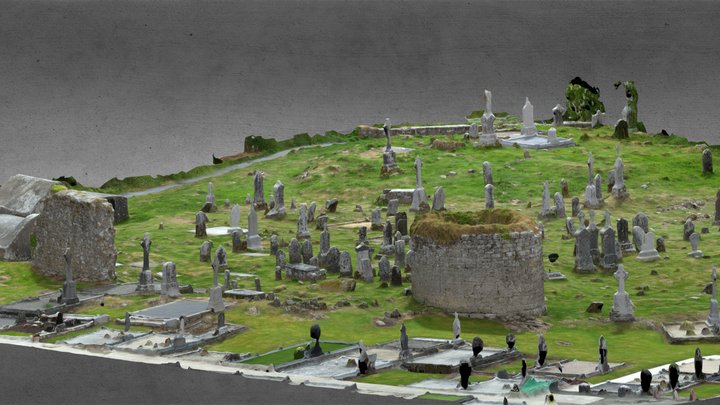 Enclosure in CarroweighterEnclosure · 205 yd
 IndicatedRound tower · 306 yd
 HawthornHawthorn · 382 yd
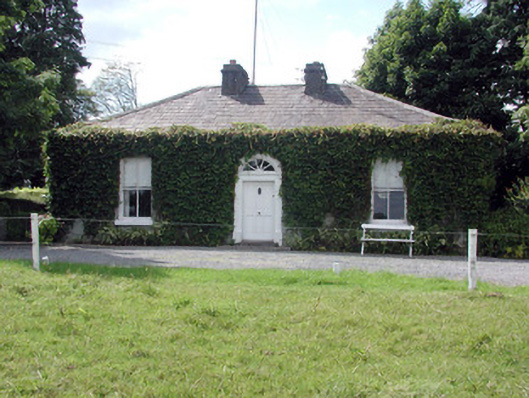 Ballydooley Lodgegate lodge · 1017 yd
 Old KilnKiln · 1263 yd
_-_geograph.org.uk_-_1952978.jpg?width=1280) Bawn in Glinsk (ballymoe By.)Bawn · 4.2 mi
Bawn in Glinsk (ballymoe By.)Bawn · 4.2 mi European ashEuropean ash · 4.5 mi
 CastleCastle, Anglo-Norman masonry castle · 4.6 mi
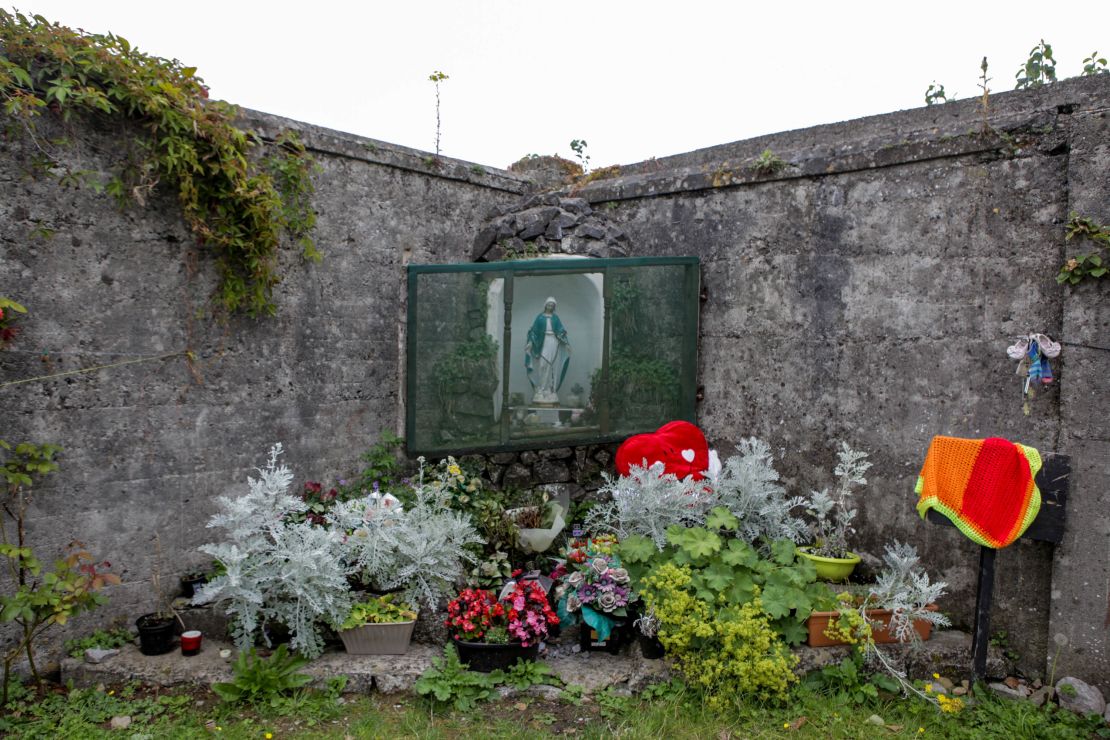 Site of Killomaine Grave YardArchaeological place · 4.8 mi
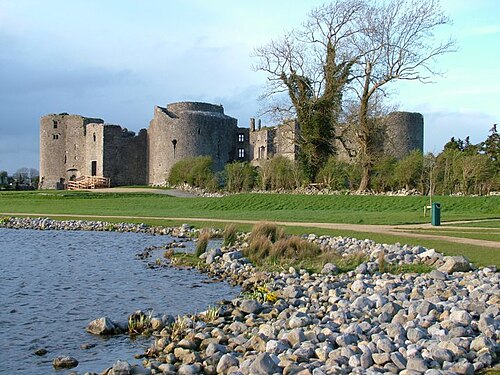 Roscommon CastleCastle · 6.5 mi
 Sally IslandIslet · 7.2 mi
 Mount MaryMountain / peak · 7.6 mi