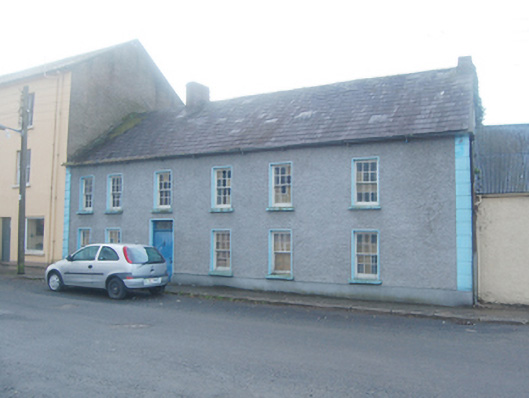
What is recorded here
Attached six-bay two-storey house, built c. 1800. Later in use as a Royal Irish Constabulary barracks, c. 1840-1920 and extended to north c. 1880. Later in use as a private house. Now out of use. Pitched natural slate roof with projecting eaves course, overhanging cast-iron rainwater goods, and with two red brick…
Read the whole record
From the Buildings of Ireland (National Inventory of Architectural Heritage) record 40827010
Places near here
Photo credits
- National Inventory of Architectural Heritage
- Kenneth Allen, Geograph · Creative Commons Attribution-ShareAlike 2.0
- Maker not stated on source page, ca.pinterest.com
- Maker not stated on source page, uk.pinterest.com
- Maker not stated on source page, www.pinterest.com
- Maker not stated on source page, ru.pinterest.com
- DAYVEHUSE, Wikimedia Commons · CC BY-SA 4.0
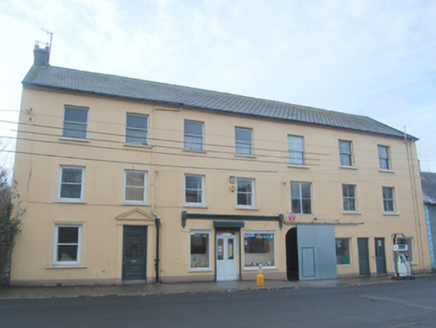 Browne & SonsHouse · 22 yd
Explorer Tom Browne & Sons has a sneaky little tunnel built right into its side! Built around 1870, I wonder if that arch was for a…
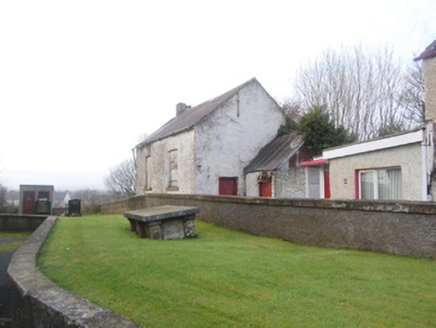 school58 yd
Explorer Tom School in Manorcunningham, Donegal, was built on a bargain that probably involved a chicken and a promise. It stands…
 Raymochy Church of Ireland Parish ChurchChurch/chapel · 80 yd
Explorer Tom Raymochy Church of Ireland Parish Church was built in 1792 and looks like a proper little castle that decided to keep…
 Presbyterian Church HallChurch hall/parish hall · 151 yd
Explorer Tom Presbyterian Church Hall in Manorcunningham has stepped buttresses hugging its walls. Built around 1860, those supports…
 First Presbyterian Meeting HouseChurch/chapel · 170 yd
Explorer Tom First Presbyterian Meeting House is a simple hall with a plaque that claims it was built in 1746 by the Revd William…
 Standing stone in ManorcunninghamStanding stone · 178 yd
Explorer Tom Standing stone in Manorcunningham is officially gone, taken away back in 1979! It used to stand on a low rise near…
 Second Ray Presbyterian ChurchChurch/chapel · 382 yd
Explorer Tom Second Ray Presbyterian Church is a 19th-century hall that looks like it’s wearing a very fancy, two-storey entrance…
 Standing stone in RaymoghyStanding stone · 754 yd
Explorer Tom Standing stone in Raymoghy has completely vanished from the hillside! The maps still show it, but my eyes see only…
 Raymoghy Old Church GraveyardGraveyard · 792 yd
Explorer Tom Rymoghy Old Church Graveyard keeps its history in the gate. Three medieval window fragments are built right into the…
 Raymoghly Old GraveyardChurch/chapel, graveyard/cemetery · 804 yd
Explorer Tom Raymoghly Old Graveyard in Raymoghy holds the ruins of an early church built around 1500, which was altered in the…
 Ruins of ChurchChurch · 804 yd
Explorer Tom Ruemoghy Church was converted for Protestant worship around 1622, yet the ivy has since claimed the building as its own…
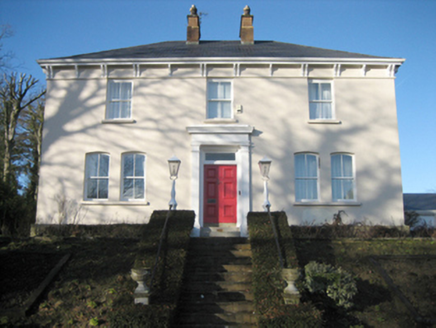 Gort Presbyterian ManseManse · 1246 yd
Explorer Tom Gort Presbyterian Manse has two big red brick chimneys right in the middle! Built around 1885, why would anyone need…
More historic places in County Donegal · All of County Donegal

What do you know about this place?Tap to add a comment or ask a question