DDiscover AloneMapAbout

Raymoghly Old Graveyard

Church/chapel, graveyard/cemetery
Raymoghly Old Graveyard
Photo: DAYVEHUSE, Wikimedia Commons · CC BY-SA 4.0 · Report the wrong picture

This does not grant access. Most recorded buildings are privately owned; view them only from public ground unless the owner allows entry.

What do you know about this place?Tap to add a comment or ask a question

What you write will be public.

What is recorded here

Remains of former Church of Ireland church, built c. 1500 and altered c. 1609, 1622 and c. 1720, comprising small ruinous and overgrown four-bay hall (on rectangular-plan). Formerly with pitched roof, now collapsed. Constructed of rubble stone or slate masonry with flush quoins to the surviving corners. South…

Read the whole record
Remains of former Church of Ireland church, built c. 1500 and altered c. 1609, 1622 and c. 1720, comprising small ruinous and overgrown four-bay hall (on rectangular-plan). Formerly with pitched roof, now collapsed. Constructed of rubble stone or slate masonry with flush quoins to the surviving corners. South elevation and south-west corner now largely collapsed. Round-headed window opening to the east gable end having three-light opening with cut stone intersecting or switchline cut stone tracery. Four window openings to the north elevation with remains of cut stone dressings. Pointed-arched doorway to the west elevation having punched chamfered cut stone surround with interior rebate for door. Graveyard (on sub rectangular-plan) to site having collection of mainly nineteenth and twentieth century gravemarkers (mainly upstanding, some recumbent) and a number illegible gravemarkers of indeterminate date. Wrought-iron railed enclosures to some gravemarkers. Timber gravemarkers to site. Surrounded by rubble stone boundary wall with rubble stone coping over. Pedestrian gateway to the north having a pair of rubble stone gate piers and wrought-iron gate. Three medieval window fragments from church (see RMP DG054-032002-) built into the inner face of gate piers. Located at a corner site in the rural countryside to the south-east of Manorcunningham.
This interesting site is mainly of archaeological interest due to the ruins of an early church, built c. 1500, and altered around c. 1609 and\or c. 1622 to accommodate new use as a Church of Ireland church following the Plantation of Ulster. The Royal Commission indicates that the medieval parish church was significantly altered when converted for protestant worship c. 1622. It continued in use as the parish church until 1792 when a new church was built at Manorcunningham (see 40827003) to the north. Of particular interest is the survival of the very fine ‘Planter’s Gothic’ window to the east gable with cut stone intersecting tracery set in a round-headed opening. A number of earlier fragments of medieval tracery survive to site including three window fragments (see RMP DG054-032002-) built into the inner face of one of the gate piers to the north. The graveyard remained in use longer after the deconsecration of the church (presumably in or shortly after 1792) and contains an interesting collection of mainly upstanding gravemarkers of nineteenth and twentieth century date, some in metal railed enclosures, and some of modest artistic merit, including a number of obelisk and classical gravemarkers. The earliest legible marker is dated 5th March 1798 and commemorates Robyn Wilson although some of the illegible markers may be earlier. Interestingly, a number of timber gravemarkers still survive, albeit in an increasingly precarious condition. The graveyard may to have been multi denominational as there is a marker commemorating the Revd. Robert McMorris of the First Ray Presbyterian Church (died 1903). This site is an interesting feature in the rural landscape to the south of Manorcunningham, and is an integral element of the built heritage, archaeology, and social history of the local area. The simple rubble stone boundary wall (possibly from c. 1860) and the simple gateway to site add to the setting and context.

From the Buildings of Ireland (National Inventory of Architectural Heritage) record 40827009

Places near here

Photo credits
  • Maker not stated on source page, www.pinterest.com
  • Maker not stated on source page, ru.pinterest.com
  • Maker not stated on source page, stock.adobe.com
  • National Inventory of Architectural Heritage
  • Kenneth Allen, Geograph · Creative Commons Attribution-ShareAlike 2.0
  • Maker not stated on source page, ca.pinterest.com
Ruins of ChurchChurch · 1 yd

Explorer Tom Ruemoghy Church was converted for Protestant worship around 1622, yet the ivy has since claimed the building as its own…

Raymoghy Old Church GraveyardGraveyard · 12 yd

Explorer Tom Rymoghy Old Church Graveyard keeps its history in the gate. Three medieval window fragments are built right into the…

Standing stone in RaymoghyStanding stone · 284 yd

Explorer Tom Standing stone in Raymoghy has completely vanished from the hillside! The maps still show it, but my eyes see only…

Cist in LabbadishCist · 540 yd

Explorer Tom Cist in Labbadish is a slab-lined box that went missing while someone dug for sand and gravel in 1964. The foodvessel…
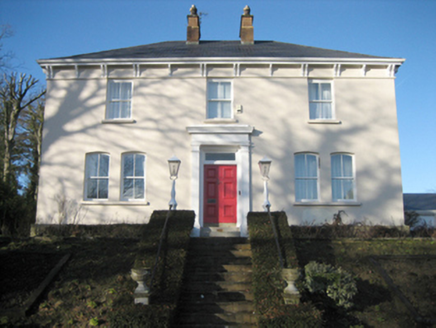
Gort Presbyterian ManseManse · 602 yd

Explorer Tom Gort Presbyterian Manse has two big red brick chimneys right in the middle! Built around 1885, why would anyone need…

Raymochy Church of Ireland Parish ChurchChurch/chapel · 724 yd

Explorer Tom Raymochy Church of Ireland Parish Church was built in 1792 and looks like a proper little castle that decided to keep…

Second Ray Presbyterian ChurchChurch/chapel · 732 yd

Explorer Tom Second Ray Presbyterian Church is a 19th-century hall that looks like it’s wearing a very fancy, two-storey entrance…
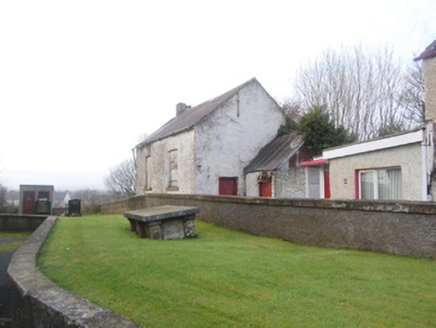
school748 yd

Explorer Tom School in Manorcunningham, Donegal, was built on a bargain that probably involved a chicken and a promise. It stands…
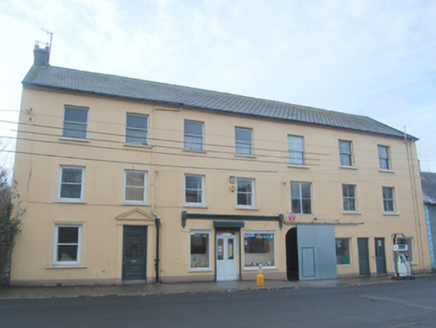
Browne & SonsHouse · 782 yd

Explorer Tom Browne & Sons has a sneaky little tunnel built right into its side! Built around 1870, I wonder if that arch was for a…
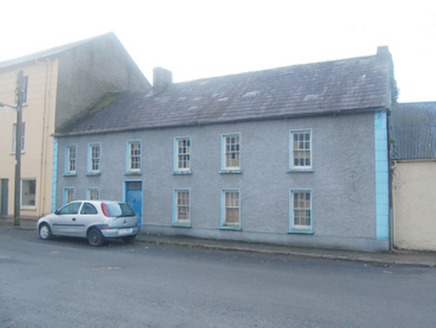
Ric barracks804 yd

Explorer Tom RIC barracks in Manorcunningham had Francis Sherridan as constable in 1881. Its two red brick chimneys look as if they…

Presbyterian Church HallChurch hall/parish hall · 884 yd

Explorer Tom Presbyterian Church Hall in Manorcunningham has stepped buttresses hugging its walls. Built around 1860, those supports…

First Presbyterian Meeting HouseChurch/chapel · 918 yd

Explorer Tom First Presbyterian Meeting House is a simple hall with a plaque that claims it was built in 1746 by the Revd William…

More historic places in County Donegal · All of County Donegal

Add to this placeAdd a picture Add a detailed tip Add a story

Explore the map1,095,414 places to discover

Next place · or swipeRuins of Church