What is recorded here
Half-hidden beneath grass and gravel on the east slope of Knockfennell Hill, Red Cellar Cave looks like an ordinary crevice until you imagine what it kept. People have pried at it across centuries, recovering human bones, animal remains, a bone needle and fragments of everyday life. Some belongs to the distant world of bears and lemmings, some to hands new enough to have been forgotten. The cave does not need to be grand; it is grand because it remembers what the hill tried to bury.
On the E-slope of Knockfennell Hill overlooking Lough Gur and 30m SE of the summit where a ring-cairn (LI032-014009-) is located. Excellent views to the NE, E and SW towards Knockadoon Hill which is occupied by an extensive range of prehistoric settlement sites and Lough Gur Castle (LI032-022001/37-). The cave entrance is depicted on both the 1840 ed. OSi 6-inch map and on the 1897 ed. OSi 25-inch map.
In 2003 Marion Dowd undertook a a site visit but was unable to locate the cave. Dowd (2004, 534) records a box in the National Museum of Ireland (NMI) labelled ‘Box 49 Cave at Castle Hewson near Askeaton, Co. Limerick’ which contains an unpublished letter by R. J. Ussher to R. F. Scharff dated 04/05/1904. It states ‘herewith the results of three hours digging superficial deposit of Red Cellar Lough Gur. Loose dry earth. Having made a hole in it I shall probably dig there deeper on Friday the 6th as the cave is not coming to an end so far … I see nothing particular but man (finger), pig and metat[arsal/carpal] of small ruminants also leather!’. Three human bones found during this exploration survive and represent two individuals, an adult and a juvenile. An unpublished handwritten report written by A. W. Stelfox located in the NMI describes material found in the cave including a ‘metatarsal of small adult, shaft of humerus of juvenile, metatarsal of juvenile ’, bones of extinct and domestic fauna, a ‘bone handled pen’, a bone needle and clay pipe fragment. The report presumably relates to the 1904 investigation based on the correlation of identifications of the human remains. These three bones represent two individuals – an adult (foot phalanx and talus) and a juvenile (rib fragment) (Fibiger 2016, 22). The adult talus returned a Neolithic date of 4671±38 BP (Dowd 2008). The cave was excavated by S .P. Ó Ríordáin in 1938 but the results were never published. The bones recovered from this excavation are now housed in the National Museum of Ireland (Reg. No. NMINH:1938.169; drawer 309.C.1-2) and are labelled “Bones from a small fissure in the limestone known as the ‘Red Cellar’; Given by Prof S. P. O’Riordan; near Lough Gur, Co. Limerick; Excavated autumn 1938” (pers. comm. Dr. Marion Dowd 09/10/2020; NMI Correspondence from Nigel Monahan 09/10/2020). It appears that extinct faunal remains were discovered but nothing of archaeological significance. The cave was described by Cleary (2018, 6-7) as a 'narrow solution crevice on the south-facing slope of the hill. Bones of elk, Arctic lemming, brown bear and other unspecified species were recovered from the cave (O'Kelly 1941). The bones of larger animals may have been brought into the cave by scavengers such as hyenas or foxes.The bear bones were dated to the period between 12,747 and 12,247 years ago (Woodman 2015, table 2.1) and may have been the last in the sequence of animal bones from the Red Cellar Cave'. The cave entrance is visible as rough overgrown ground on the side of the Knockfennell Hill on OSi orthoimage taken 2005-12; Digital Globe orthoimages taken 2011-2013; Google Earth orthoimages taken 16/03/2016 and 28/06/2018.
See attached Google Street View Capture 2011 and Google Earth orthoimages
Compiled by: Edmond O’Donovan
Revised by: Caimin O'Brien
Date of revised upload: 10 October 2020
The monument record does not grant public access. Check the route and ask the landowner before entering private land.
- What survives
- Recorded monument
Places near here
 530 ft. ODCairn, ring-cairn · 85 yd
 Field system in KnockfennellField system · 208 yd
 The SpectaclesVisitor information · 411 yd
 Lake Viewhouse · 459 yd
 Lough Gur Heritage CentreVisitor information · 510 yd
 kilnkiln · 525 yd
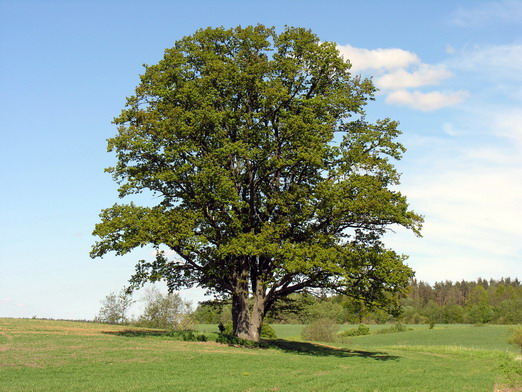 Pedunculate OakPedunculate Oak · 599 yd
 Garret IslandCastle, unclassified · 872 yd
 Black Castle (in ruins)Castle, tower house · 1151 yd
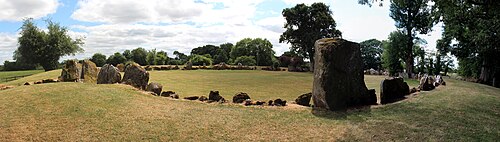 Grange Stone CircleArchaeological place · 1624 yd
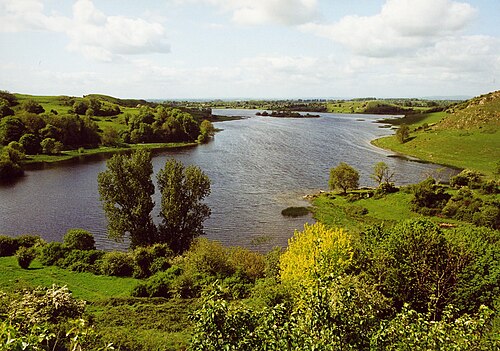 Lough GurVisitor information · 1661 yd
 Banoge's WellSpring · 2.1 mi