DDiscover AloneMapAbout

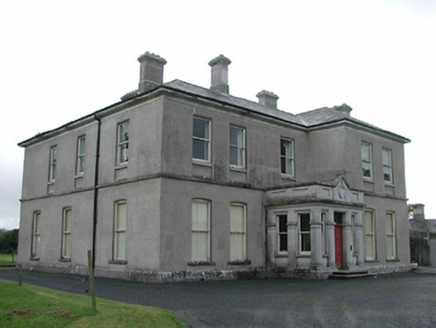
Paulstown Castle

Country house
Paulstown Castle
Photo: Mike Searle, Geograph · CC BY-SA 2.0 · Report the wrong picture

What is recorded here

Detached three-bay (single-bay deep) three-storey over raised basement country house, built 1828, on a rectangular plan; three-bay full-height rear (west) elevation. Sold, 1892. Occupied, 1901; 1911. Vacant, 1973. Now in ruins. Hipped roof behind parapet now missing, paired limestone ashlar central "wallhead" chimney…

Read the whole record
Detached three-bay (single-bay deep) three-storey over raised basement country house, built 1828, on a rectangular plan; three-bay full-height rear (west) elevation. Sold, 1892. Occupied, 1901; 1911. Vacant, 1973. Now in ruins. Hipped roof behind parapet now missing, paired limestone ashlar central "wallhead" chimney stacks having stringcourses below capping, and concealed rainwater goods. Part creeper- or ivy-covered coursed rubble limestone battered walls (ground floor) with cut-limestone flush quoins to corners; part creeper- or ivy-covered limestone ashlar surface finish (upper floors) with cut-limestone stringcourses including cut-limestone stringcourse supporting "Balistraria"-detailed parapet having cut-limestone coping. Pointed-arch central window opening in square-headed recess (basement) with drag edged cut-limestone sill, and cut-limestone voussoirs with remains of hood moulding framing timber casement window behind wrought iron bars. Square-headed window openings (ground floor) with drag edged dragged cut-limestone sills, and limestone ashlar voussoirs with hood mouldings framing remains of eight-over-eight timber sash windows without horns having exposed sash boxes. Square-headed window openings (upper floors) with drag edged dragged cut-limestone sills, and limestone ashlar voussoirs framing remains of eight-over-eight timber sash windows without horns having exposed sash boxes. Interior in ruins. Set in unkempt grounds with rendered piers to perimeter having ball finial-topped capping.
A country house erected to designs attributed to William Robertson (1770-1850) of Kilkenny (Craig and Garner 1973, 111) representing an important component of the domestic built heritage of County Kilkenny with the architectural value of the composition, one repurposing at least the footings of 'a large Tower House built about 1440 probably by Sir Edmund Butler [1420-64]...originally three storeyed with a cellar...entered from the first floor' (Drennan 1962, 45), confirmed by such attributes as the compact rectilinear plan form; the construction in a deep grey limestone demonstrating good quality workmanship; the slight diminishing in scale of the openings on each floor producing a feint graduated visual impression with those openings showing conventional Georgian glazing patterns; and the parapeted roof. Although reduced to ruins following a prolonged period of neglect, the form and massing survive intact together with quantities of the original fabric, thus upholding much of the character of the composition. Furthermore, adjacent outbuildings (----); and a nearby gate lodge (----), all continue to contribute positively to the group and setting values of a self-contained estate having historic connections with the Flood family including Henry Flood (1769-1840); and William Flood JP (1818-85) 'late of Paulstown Castle County Kilkenny' (Calendars of Wills and Administrations 1885, 279); and the Healy family including James Healy (----), 'formerly estate agent for the Floods…who bought Paulstown Castle in 1892' (Drennan 1962, 46).

From the Buildings of Ireland (National Inventory of Architectural Heritage) record 12402108

This does not grant access. Most recorded buildings are privately owned; view them only from public ground unless the owner allows entry.

What do you know about this place?Tap to add a comment or ask a question

What you write will be public.

Places near here

Photo credits
  • Mike Searle, Geograph · CC BY-SA 2.0
  • National Inventory of Architectural Heritage
  • A.-K. D., Wikimedia Commons · CC BY-SA 4.0
  • Zapp111, Wikimedia Commons · CC BY-SA 4.0
  • Mike Searle, Wikimedia Commons · CC BY-SA 2.0
  • A.-K. D., Wikimedia Commons · CC0
  • Didier Descouens, Wikimedia Commons · CC BY-SA 4.0
  • Algirdas at Lithuanian Wikipedia, Wikimedia Commons · Public domain
  • Humphrey Bolton, Geograph · CC BY-SA 2.0
CastleCastle, tower house · 1 ydView MountCountry house · 1025 ydMonefelim BridgeBridge · 1056 yd

Explorer Tom Monefelim Bridge would teach history lessons if it could talk, mostly about how hard it is to stay put when water rushes by. It’s got that early nineteenth-century engineering vibe without being showy. Hang around long enough and you’ll see why locals trust it.

Font (present location) in Grange LowerFont (present location) · 2.2 mi

Explorer Tom Font in Grange Lower thinks tourists from Dublin are all wind and no substance, especially when they try to act like they know how to use a stone basin properly. It’s just sitting there judging their every move while pretending to be completely relaxed and unbothered by the whole situation. Stand there long enough and someone will ask if you're lost.

Lady WellWell · 2.3 mi

Explorer Tom Lady Well in Grange Lower has an oratory next to it, which is fancy for a well. It would say 'I’m not dry, I’m contemplative' to its replacement. Get there early and have it all to yourself.

Church (in ruins), GraveyardChurch · 2.6 mi

Explorer Tom Church, Graveyard in Wells is playing hard to get. It’s been there since 1262 but acts like it invented privacy recently. Pick a stone, any stone, and invent its biography.

Ballyshanemore Cas. (in ruins)Castle, tower house · 3.2 mi

Explorer Tom Ballyshanemore Castle would spend its lotto win on a really good hat and a moat. It’s sitting in the demesne pretending to be an Earl from the 1400s. Bring a jacket, it's never as warm as I promise.

Lock Keeper's House and Lodge MillsVisitor information · 3.7 mi

Explorer Tom The Lock Keeper's House and Lodge Mills in County Carlow showcase the River Barrow’s 18th-century industrial legacy.

Hawthorn4.6 miSt. Mogarra’s WellSpring · 5.4 miPedunculate Oak5.9 mi

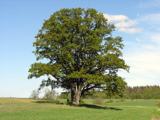
Explorer Tom Pedunculate Oak in County Carlow wants 'Resting' on its tombstone, not 'Died'. It's too dignified for anything else. Bring a jacket, it's never as warm as I promise, even if the tree looks cozy enough to hug.

Tullaherin Church and Round TowerVisitor information · 7.3 mi

More historic places in County Kilkenny · All of County Kilkenny

Add to this placeAdd a picture Add a detailed tip Add a story

Explore the map1,093,392 places to discover

Next place · or swipeCastle