DDiscover AloneMapAbout

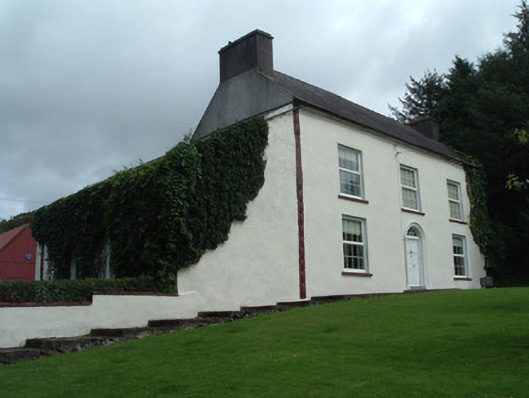
Mount Keeffe

House
Mount Keeffe
Photo: National Inventory of Architectural Heritage · Report the wrong picture

What is recorded here

Detached T-plan three-bay two-storey house with attic, built c. 1770, facing south. Return slightly lower than main block and having flat-roof two-bay single-storey addition to its rear with water tank, with slightly lower single-bay lean-to additions to re-entrant corners, with recent single-storey lean-to extension…

Read the whole record
Detached T-plan three-bay two-storey house with attic, built c. 1770, facing south. Return slightly lower than main block and having flat-roof two-bay single-storey addition to its rear with water tank, with slightly lower single-bay lean-to additions to re-entrant corners, with recent single-storey lean-to extension to westmost lean-to addition. Single-storey lean-to addition to west gable. Pitched slate roof to main block, hipped to return, and having rendered end chimneystacks, and eaves course. Painted rendered walls with rusticated render quoins to front elevation. Square-headed window openings having mainly replacement uPVC windows, with two-over-two pane timber sliding sash window to attic level of east gable and to west end of ground floor at rear. Round-headed door opening to front, approached by stone step, having moulded render surround and timber panelled door with cobweb fanlight over. Cast-iron water tank having raised lettering and associated cast-iron water pipes and chimney. Some coursed rubble boundary walls with wrought-iron gates. Some fencing with wrought-iron gates. Curved entrance having painted roughcast rendered walls terminating in square plan piers with double-leaf wrought-iron gates. Double turnstile to south, comprising painted wrought-iron railings and gates, latter fixed to tooled cut limestone square plan pillar. Yard of outbuildings to rear, built c. 1770, set around rectangular yard, mainly having pitched roofs and rubble limestone walls with square-headed window and door openings. Detached corrugated-iron building to south-west, erected c.1920, having square-headed corrugated-iron door and manufacturer's plaque to front (south) gable. Detached two-bay single-storey with loft outbuilding to north, having slate roof, painted walls, loft level having vent openings and ground floor having replacement timber windows and some timber doors and metal sliding doors on iron rails, one door being approached by rendered steps. Lean-to extension, dated 1964, to rear of this building. Single-storey outbuilding to north end of yard, having slate roof, elliptical carriage arch to gable with double-leaf corrugated-iron door, and window openings with rubble voussoirs and timber battened door. Multiple-bay single-storey outbuilding with pitched corrugated-iron roof forming northern boundary to yard, having coursed walls and some blocked openings, others having timber and metal fittings. Lofted single-bay outbuilding to south with pitched slate roof, coursed walls with limestone quoins and having one-over-one pane timber sliding sash windows to gable and timber battened door to north side. Single-storey pitched roof outbuilding to east of house, having pitched corrugated-iron roof, rendered walls, timber battened door approached by rendered steps.
A pleasant eighteenth-century house which is believed to contain fabric of an earlier structure. The house retains many interesting features including some timber sliding sash windows and a decorative fanlight. The flat-roof extension to the rear retains its nineteenth-century water tank with lettering and adds another dimension, increasing the significance of the site. The group, comprising house, associated outbuildings and gate furniture, is pleasantly located on a site recessed from the road and largely retains its original form and character. This farm buildings range in date from the mid-eighteenth century to the early twentieth, and help to illustrate the development of Mount Keeffe House over time. The structures retain interesting features such as the sliding doors on rails, the cast-iron lamps and the timber sliding sash windows.

From the Buildings of Ireland (National Inventory of Architectural Heritage) record 20901403

This does not grant access. Most recorded buildings are privately owned; view them only from public ground unless the owner allows entry.

What do you know about this place?Tap to add a comment or ask a question

What you write will be public.

Places near here

Photo credits
  • National Inventory of Architectural Heritage
  • The Speckled Bird, Wikimedia Commons · CC BY-SA 4.0
  • Sitomon, Wikimedia Commons · CC BY-SA 2.0
  • Jonathan Thacker, Geograph · CC BY-SA 2.0
Fulachta FiadhFulacht fia · 1579 yd

Explorer Tom Fulachta Fiadh in Mountkeeffe is a horseshoe-shaped mound with an opening facing southeast, looking like a big old ear. There’s a bird that refuses to leave this spot, and I suspect it’s judging your posture. Bring a notebook and write the bit I made up.

Barleyhill BridgeBridge · 1644 yd

Explorer Tom Barleyhill Bridge in Barleyhill is sturdy and associated with the 1916 Easter Rising, so it’s got serious history on its back. It watched IRA companies meet up hoping for arms from a German ship. Show it respect or it might drop you into the water below, mate.

Fulacht FiadhFulacht fia · 1.1 mi

Explorer Tom Fulacht Fiadh in Knockduff Lower, County Cork has an unlikely celebrity friend who is probably a very confused sheep named Gary. It’s been sitting by a stream for ages, just vibing without anyone noticing its greatness. Give it a pat on the way past, it's had a long life.

Carrig Castle (Site of)Castle, unclassified · 1.1 mi

Explorer Tom Carrig Castle in Carrigcastle is mostly just grass and quarrying scars now. It used to be a square building for the MacAuliffes, but they took most of the stones away. It's like finding a skeleton without the flesh.

farmyard complex1.2 mi

Explorer Tom Farmyard complex in Garraunawarrig Lower has a ruinous outbuilding that looks like it gave up halfway through. A local legend says a giant hid his spare boots here, which is total nonsense but fun. Find the limestone sills and pretend you're a farmer.

Stanner's Glen, Priory WoodWood · 1.4 mi

Explorer Tom Stanner's Glen, Priory Wood started because two lads bet fifty quid that they could name a wood after a ghost, and they lost badly. The trees are still embarrassed about the whole thing. Find a local and ask them the real story, then come back and tell me.

CastleCastle, unclassified · 1.5 mi

Explorer Tom Castle in Demesne has a strong opinion of the road leading to it, calling it 'too busy' and demanding a wider verge for its ancient dignity. It was once called Caislean an Cnuic by the McAuliffes, but now it is just a memory in the demesne of Newmarket House. Mind the nettles, they're the real guards here.

Hanna SheehyMemorial · 5.0 mi

Explorer Tom Hanna Sheehy in County Cork would survive a zombie attack by simply out-shouting every single one of them until they got tired and went home to rest. She had the lung power of a thousand pub singers, so she’d win easily every single time. Go on, count the windows and get it wrong like I did.

KnockacummerMountain / peak · 5.0 mi

Explorer Tom Knockacummer witnessed a very dramatic incident where a shepherd dropped his lunch and a fox stole it. The hill has been giggling about it ever since, which is why it looks so smug from a distance. It’s basically a giant spectator enjoying the chaos of small animal politics on its slopes.

Kanturk CastleHeritage attraction · 5.9 mi

Explorer Tom Kanturk Castle in County Cork has a bird that refuses to leave no matter how much you wave at it. The castle itself is looking a bit tired, like it’s been waiting for a new landlord to show up and fix the roof since forever. Pop by and tell it it's looking well.
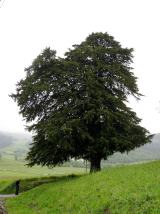
European Yew7.5 mi

Explorer Tom This European Yew has a grudge against a bishop who refused to visit because he said it looked 'too pretentious'. The yew never forgave him and still holds its breath. Look for the ghost, then pretend you didn't see it.

Three CountiesPicnic place · 11 mi

Explorer Tom Three Counties in County Cork is a picnic spot right on the border of Limerick and Kerry, so you can eat a sandwich while technically visiting three places at once. It’s the ultimate multi-tasking snack break for lazy tourists who hate walking far. Bring curiosity, leave with a better story than mine.

More historic places in County Cork · All of County Cork

Add to this placeAdd a picture Add a detailed tip Add a story

Explore the map1,093,392 places to discover

Next place · or swipeFulachta Fiadh