DDiscover AloneMapAbout

Leslie Hill

House
Leslie Hill
Photo: National Inventory of Architectural Heritage · Report the wrong picture

What is recorded here

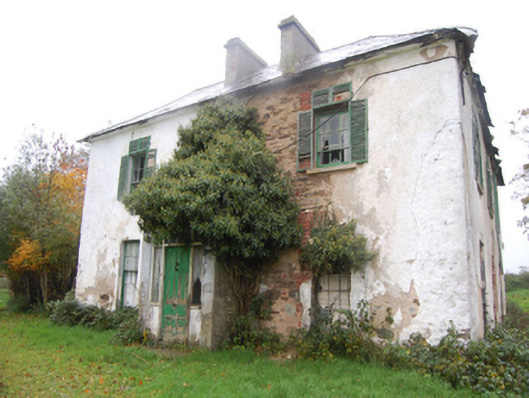
Detached three-bay two-storey house built, c. 1820 and extended c. 1860, having two-storey split-level extension to rear and with projecting single-bay single-storey flat-roofed entrance porch to north-east built c. 1860. Possibly originally a mill manager’s or mill owner’s house. Now out of use. Hipped natural slate…

Read the whole record
Detached three-bay two-storey house built, c. 1820 and extended c. 1860, having two-storey split-level extension to rear and with projecting single-bay single-storey flat-roofed entrance porch to north-east built c. 1860. Possibly originally a mill manager’s or mill owner’s house. Now out of use. Hipped natural slate roof with central leaded valley to south-west having projecting cut stone eaves course, smooth rendered chimneystacks with ashlar copings over, and with remains of cast-iron rainwater goods. Clipped gablet over stairs to south-west (rear elevation). Flat roof to entrance porch (now overgrown). Remains of roughcast lime render over rubble stone construction with smooth rendered ruled-and-lined walls to porch. Square-headed window openings with stone sills, red brick reveals and voussoirs, and having six-over-six pane hornless timber sliding sash windows to ground floor openings and six-over-three pane timber sliding sash windows to first floor openings; timber louvered shutters to first floor openings. Square-headed doorway to the front face (north-east) of porch having timber panelled entrance door with bolection mouldings, overlight, and sidelights. Round-headed opening to interior of porch having square-headed half-glazed timber panelled door flanking with half-glazed sidelights with decorative geometric glazing bars, moulded timber lintel, and with spider’s web fanlight over. Timber panelled doors and architraves, cornices and ceilings roses with cast-iron and stone fireplaces to interior. Set back from road in own grounds in the rural countryside to the south of Manorcunningham. Complex of outbuildings arranged around a courtyard to the rear (south-west); now ruinous having pitched natural slate and corrugated-metal roofs, rubble stone walls, and square-headed openings. Set in overgrown gardens with mature hedgerows and trees surrounding. Modern field gateway to the north-west at site of original entrance.
Although now out of use and dilapidated, this house, of early nineteenth century\late Georgian appearance, retains its early character and form. Its visual appeal and integrity are enhanced by the retention of salient fabric such as the natural slate roof, timber sliding sash windows, and timber door with bolection mouldings, albeit in a poor condition. The interior is noticeable for the fine doorway with intricate sidelights and spider’s web fanlight, possibly the original front door prior to the construction of the later porch, c. 1860. The building has been composed symmetrically around a central doorway and is Georgian in style with the openings diminishing in scale on the upper floor, hipped roof with overhanging eaves, and the central paired chimneystacks. Houses in a subdued classical style such as this house are common in the Irish countryside. Its location adjacent to a former corn mill (see 40906260) suggests that this may be a former mill manager’s or mill owner’s residence. Local information suggests that it was originally built at a cost of £600 for John Beers, the agent for a landlord the Revd. John Leslie, who gave his name to the house. It was extended to the rear at some stage post 1837 (Ordnance Survey first edition six-inch map), possibly around c. 1860 when the porch was added to the front. This was the home of a Thomas Thompson Esq. in 1881 and 1894 (Slater’s Directory). It appears to have been earlier the home of a Charles King Colqoun, Captain Royal Tyrone Fusiliers, in 1861, and later of a W.C. Marshal in 1869 (birth records). The regular changes of occupants suggests that this house was leased, a frequent arrangement in the nineteenth century, or that these later residents were also land agents for the Leslie family or their decedents. The simple ranges of now ruinous outbuildings to the rear add to the setting, and provide an historical insight into the resources required to run and maintain even a modest estate in Ireland during the nineteenth century. Sensitively restored, this building would make a strongly positive contribution to the landscape to the south of Manorcunningham, and is an addition to the built heritage of the local area.

From the Buildings of Ireland (National Inventory of Architectural Heritage) record 40906204

This does not grant access. Most recorded buildings are privately owned; view them only from public ground unless the owner allows entry.

What do you know about this place?Tap to add a comment or ask a question

What you write will be public.

Places near here

Photo credits
  • National Inventory of Architectural Heritage
  • Richard Webb, Wikimedia Commons · CC BY-SA 2.0
  • Kenneth Allen, Geograph · CC BY-SA 2.0
  • Sitomon, Wikimedia Commons · CC BY-SA 2.0
  • Eeno11, Wikimedia Commons · CC BY-SA 3.0
  • P L Chadwick, Geograph · CC BY-SA 2.0
  • Andreas F. Borchert, Wikimedia Commons · CC BY-SA 4.0
  • Kenneth Allen, Wikimedia Commons · CC BY-SA 2.0
worker's house186 yd

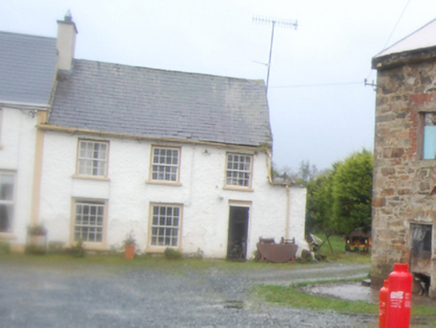
Explorer Tom Worker's house in Corkey, built around 1825, stands near a former corn mill and what may have been a flax mill. The record suggests it might have housed a mill worker but names no one. Two possible jobs next door, and a house keeping its tenant's name to itself!

bridge224 yd

Explorer Tom Bridge in Corkey has a V-shaped stone cutwater on its middle leg that looks like a stiff little scarf. I picture it fluttering every time the river tries to sneak past, keeping the bridge warm and dignified.

Battlefield in Tully (kincraigy Ed),glenmaquin Lower,roosky (castleforward Ed)Battlefield · 1.8 mi

Explorer Tom Battlefield in Tully, Glenmaquin Lower, Roosky is a patch of earth that remembers being trampled by very angry people. It's quiet now, but the ground still feels like it's holding its breath. Stand where the owner stood and practise looking smug about your discovery.

Battle of GlenmaquinBattle · 2.5 mi

Explorer Tom The seagulls at Glenmaquin say the Battle of 1642 was mostly about who got the best sandwich first. Very political, very messy. Toast it with a cup of tea and move on to the next spot before you start overthinking the whole thing.

Mongorry HillMountain / peak · 2.9 mi

Explorer Tom Mongorry Hill is having a bit of an identity crisis, probably because 'Mongorry' sounds like a dog that stole your sandwich. It’s just sitting there being a peak in County Donegal. Perfect detour when the satnav has a meltdown.
European Yew3.7 mi

Explorer Tom European Yew in County Donegal is a yew, which means it’s tough, old, and probably poisonous if you look at it wrong. It’s the kind of tree that survives empires and bad haircuts. Bring your own legend, I've run out, make up a story about a dragon living in its branches.
Rowan3.7 mi

Explorer Tom Rowan in County Donegal is hiding because it thinks it wards off witches, but I'm pretty sure it just hates the rain. It needs permission to exist properly. Ask it politely if it wants a cup of tea.

CostaCafé · 4.0 mi

Explorer Tom Costa in Letterkenny is selling coffee that wakes up the dead faster than a shock. Grab a latte before they change their hours and lock you out! Spot the oldest stone and give it a name.

The Yellow PepperRestaurant · 4.2 mi

Explorer Tom The Yellow Pepper is clearly named for spice, not colour, so expect tears if you aren't careful. I’d love a mild one, but they probably don’t do that here, do they? Stand where the owner stood and practise looking smug.

Cathedral4.4 mi

Explorer Tom Cathedral in Raphoe Townparks is a palimpsest of history, with 9th-century carvings hiding inside its modern walls. Adomnán himself was linked to this monastery back in the 7th century, so that ground has seen more than just your average Sunday service.
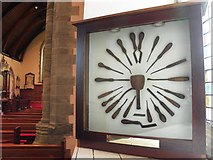
Cathedral in Raphoe TownparksCathedral · 4.4 mi

Explorer Tom Cathedral in Raphoe Townparks hides a 9th-century lintel right under your nose. It depicts St. Peter chopping an ear off, which is a bit of a violent detail for a church entrance, but it proves this spot has been holy chaos for over a millennium.

Oakfield ParkPark · 4.4 mi

Explorer Tom Oakfield Park in County Donegal smells like a mixture of wet dog, old rubber, and the faintly sweet scent of regret from all the picnics that went wrong here over the last few decades without anyone cleaning up their messes properly afterwards. It is a unique aroma that you can only truly appreciate if you close your eyes and really

More historic places in County Donegal · All of County Donegal

Add to this placeAdd a picture Add a detailed tip Add a story

Explore the map1,093,392 places to discover

Next place · or swipeworker's house