What is recorded here
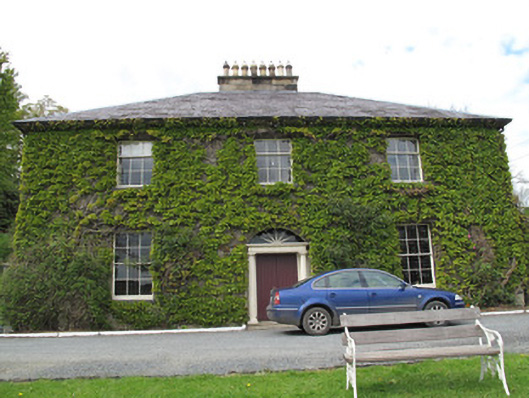
Killycoonagh House has upstairs windows with three panes above six, while downstairs gets six above six. It’s the architectural version of dividing the biscuits fairly until you remember you’re the one holding the packet.
Detached three-bay two-storey house, built c.1800, having two-bay side elevations, one-over-two-bay two-storey flat-roofed addition to west, two-storey catslide and single-storey lean-to additions to rear (north), and single-storey lean-to sheds to east. Hipped slate roof with dressed sandstone chimneystack to mid-ridge, clay chimneypots, cast-iron rainwater goods, and moulded eaves brackets. Lean-to additions to east have slate and corrugated-iron roofs and rendered masonry and timber plank walls. Harl-rendered walls to house, coursed rubble stone visible to rear. Square-headed window openings to front, east and west elevations having render reveals, painted masonry sills and timber sliding sash windows, three-over-six pane to first floor, six-over-six to ground floor, eight-over-eight to east elevation to ground floor, and two-over-two to east elevation of addition. Gauged-brick square-headed window openings to rear having red brick surrounds, masonry sills and timber sliding sash windows, some six-over-six pane and some three-over-three. Some openings with replacement timber frames. Gauged-brick round-headed window opening to rear with red brick surround, painted masonry sill and eight-over-twelve pane window with traceried topmost panes. Timber doorcase to front, comprising fluted, Doric-style columns, lintel with triglyphs, cornice, set within segmental-headed opening with decorative spoked fanlight, and having replacement double-leaf timber battened door, with two stone steps, having cast-iron boot-scraper. Square-headed timber battened half-door to east elevation, with overlight. Yard to east of house enclosed by coursed rubble stone boundary wall, having gauged-brick segmental-headed opening with double-leaf timber battened door. Three-bay two-storey outbuilding to east with hipped slate roof, cast-iron rainwater goods, and rendered chimneystack, coursed rubble stone walls, square-headed window openings with masonry sills, red brick surrounds and timber windows, those to first floor leaded. Square-headed door openings having redbrick surrounds, over-lights and timber battened doors, and gauged-brick segmental-headed opening with red-brick surround. Well to front of house accessed via gauged masonry pointed-arch opening, having wrought-iron gate. Double-leaf cast-iron gate to south-west of house, flanked by octagonal-plan steel piers.
This modestly-proportioned house is enhanced by its prominent setting. The fine timber doorcase is of particular interest, with its elegant fanlight and decorative lintel, subtly enlivening the regular form of this house. a variety of timber sliding sash windows are retained, adding architectural interest. The whole complex, with outbuildings, boundary walls, well and house, combine to make an attractive group in the landscape and contribute significantly to the architectural heritage of County Monaghan.
From the Buildings of Ireland (National Inventory of Architectural Heritage) record 41401237
This does not grant access. Most recorded buildings are privately owned; view them only from public ground unless the owner allows entry.
Places near here
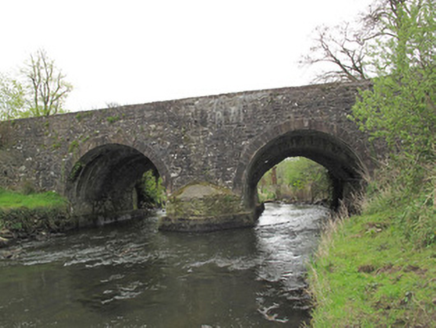 Anlore BridgeBridge · 326 yd
 Common Lime350 yd
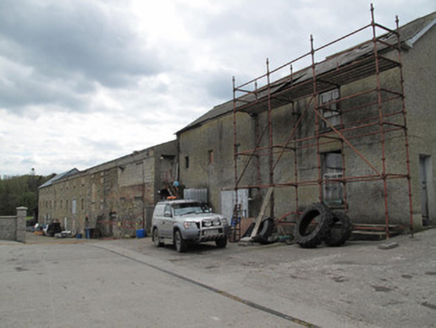 mill (water)374 ydSaint John's WellSpring · 593 yd
 Grave YardGraveyard · 1199 yd
 Standing stone in ScarvyStanding stone · 1.9 miJaundice WellSpring · 2.1 miRoosky Castle (Site of)Castle, ringwork · 2.2 mi
 Abbey RuinsHeritage attraction · 2.3 mi
 The Cassandra Hand CentreMuseum · 2.4 miLisarrilly HillMountain / peak · 2.6 mi
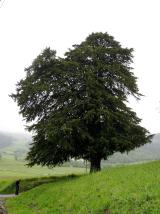 European Yew4.5 mi
Pictures: National Inventory of Architectural Heritage; Alvesgaspar, Wikimedia Commons · CC BY-SA 3.0; Kieran Campbell, Geograph · Creative Commons Attribution-ShareAlike 2.0; Kenneth Allen, Geograph · CC BY-SA 2.0; Simonchadwick1023, Wikimedia Commons · CC BY-SA 4.0; Sitomon, Wikimedia Commons · CC BY-SA 2.0
More historic places in County Monaghan · All of County Monaghan
What do you know about this place?