Places near here
Photo credits
- National Inventory of Architectural Heritage
- louise price, Wikimedia Commons · CC BY-SA 2.0
- Kenneth Allen, Geograph · CC BY-SA 2.0
- Benson Wills, Wikimedia Commons · CC BY-SA 2.0
- Gerald England, Geograph · CC BY-SA 2.0
- Stephan van Helden, Wikimedia Commons · CC BY-SA 4.0
- Becky McReynolds, Wikimedia Commons · CC BY-SA 4.0
- Andreas F. Borchert, Wikimedia Commons · CC BY-SA 4.0
- Ronnie Nijboer, Wikimedia Commons · CC0
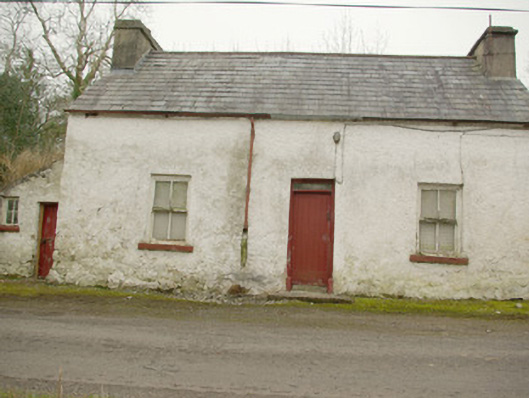
 farm house, house121 yd
Explorer Tom House in Drummenny Middle has block-and-start quoins that look like they're playing a very serious game of tic-tac-toe. Built around c.1860, I picture them checking if the rhododendrons are cheating by growing too close to the corners.
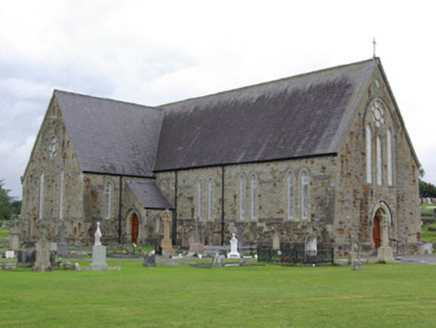 St. Agatha’s Catholic ChurchChurch/chapel · 1412 yd
Explorer Tom St. Agatha’s Catholic Church in Spierstown is sick of being asked if it’s made of real sandstone because yes, it is, and no, it doesn't matter! It’s this ambitious Gothic Revival building with such crisp cut stone detailing that it makes you want to reach out and touch the mottled tonal variation. If you see the limestone stringcourses looking proud, just whisper 'yes, very fancy' and move on with
 Drumrooske East RingfortFairy fort / earthen ringfort · 1.6 mi
Explorer Tom Drumrooske East Ringfort is a large circular area with a substantial earthen bank up to two metres high, deliberately taller on the west side. The interior has been disturbed recently, with straw rick foundations cut into the northwest bank. It sits on a drumlin summit overlooking Donegal Bay, with boggy valleys around it.
 The Coach HousePub · 1.8 mi
Explorer Tom The Coach House in Donegal is probably full of cobwebs and old horse droppings that they call 'rural charm'. The coaches haven’t come by since the last century. Ask if the horses are still around.
 Donegal Railway Heritage CentreMuseum · 1.8 mi
Explorer Tom Donegal Railway Heritage Centre keeps the county's railway stories in an old station house, including the 1907 Drumboe engine and an interactive cab. I would begin with the engine, then try the cab to see what a driver watched. At last, a railway stop where I am allowed to stay awhile.
 Tower BarPub · 1.8 mi
Explorer Tom Tower Bar in Donegal claims to be high up, but I bet it’s just a tall building with bad Wi-Fi. The tower might not even exist; could just be a sign on the roof. Check for pigeons nesting inside.
 Donegal CastleCastle, tower house · 1.9 mi
Explorer Tom Donegal Castle is a massive tower house that survived being burned, demolished, and converted into a Jacobean manor. You can still see the carved Brooke fireplace with its intricate strapwork and armorial coats of arms inside. It’s a proper architectural time capsule where history got very messy.
 DonegalHistoric town · 1.9 mi
Explorer Tom Donegal's name means 'fort of the foreigners', but the town survey could not say whether that fort was a Viking settlement. Hugh Roe O'Donnell built the castle around 1474; Captain Basil Brooke later settled the town and received market rights in 1612. Two better-dated chapters sit beside an older unanswered name.
 Horse-chestnut2.0 mi
Explorer Tom Horse-chestnut in County Donegal is just a tree with pretty cones that don’t taste great, but it looks the part. It’s standing there looking dignified while the wind tries to knock it over. Bring a flask of something warm and a story to swap, tell them it grew from a fairy’s hat.
 Donegal Friary GraveyardGraveyard · 2.1 mi
Explorer Tom Donegal Friary Graveyard sits amid a place whose history changed violently in 1601, when an explosion and fire damaged the friary during a siege. The survey says later burial use raised the ground by as much as 1.75 metres. I had to read that twice: the height records generations of burial, not a building foundation.
 Siege of DonegalSiege · 2.2 mi
Explorer Tom Siege of Donegal involved a poet who fell in the ditch nearby and wrote an entire epic about how wet his socks were while the English won, which is honestly more interesting than the strategy. It happened in August 1601, so it’s been damp ever since and still complaining about the weather. Spot the oldest stone and give it a name.
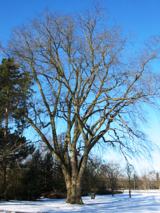 Wych Elm3.0 mi
Explorer Tom This second Wych Elm in County Donegal has been holding its breath for centuries, waiting to spill the beans about the pub next door. It swears it heard the landlord lose his shirt during the '98 storm and never got it back. Go on, count the windows and get it wrong like I did.
More historic places in County Donegal · All of County Donegal

What do you know about this place?Tap to add a comment or ask a question