Places near here
Photo credits
- National Inventory of Architectural Heritage
- Juri300, Wikimedia Commons · CC BY-SA 4.0
- Jnestorius, Wikimedia Commons · CC BY-SA 4.0
- Bjørn Christian Tørrissen, Wikimedia Commons · CC BY-SA 3.0
- Keith Edkins, Wikimedia Commons · CC BY 2.5
- Florian Thiery, Wikimedia Commons · CC BY 4.0
- Taken by Fanghong, Wikimedia Commons · CC BY 2.5
- Lewis Glucksman Gallery, Wikimedia Commons · CC BY-SA 4.0
- Vimalkvn, Wikimedia Commons · CC BY-SA 4.0
 The Laurels/University College CorkHouse · 102 yd
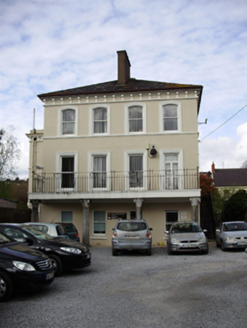
Explorer Tom House in Gillabbey is hiding behind University College Cork’s fancy reputation, which is embarrassing for it. The cast-iron steps look like they’re waiting for a royal who never showed up. Walk past it and wink at the door.
 Roseleigh/University College CorkHouse · 119 yd
Explorer Tom House in Gillabbey has an entrance facing east, which is either very clever or just confused about which way morning comes. It’s got pilasters and colonnettes that make it look like a Greek temple on steroids. Grin at its weird directional choices.
 LauristonHouse · 140 yd
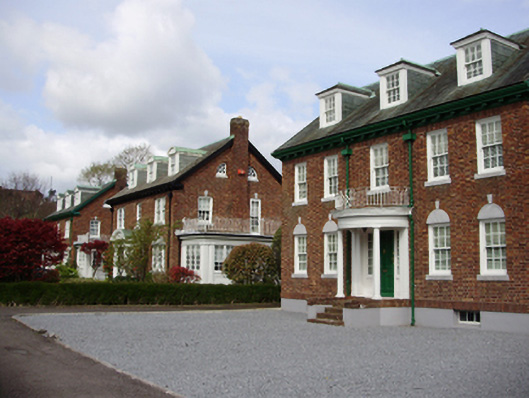
Explorer Tom Lauriston at Sunday's Well is showing off its corbelled eaves from 1880. It’s a detached beauty with red brick walls that actually add some colour to the place. The glazed porch is a nice touch, but the detailing is what really counts.
 Father Matthew Memorial FountainFountain · 176 yd
Explorer Tom Father Matthew Memorial Fountain is a four-tiered thing from around 1900 with Celtic Revival detailing on the bowls. It’s made of reinforced concrete and looks like it’s trying to be very artistic while sitting in Sunday's Well.
 Cork International HostelHouse · 181 yd
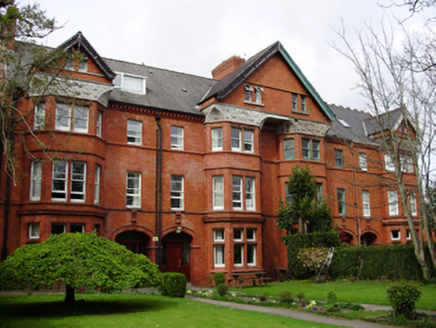
Explorer Tom Cork International Hostel used to be fancy Victorian houses with terracotta tiles that make them look like expensive biscuits. A bird refuses to leave the gablet, claiming it’s his now. Perfect for a nap, or a very confused pigeon.
 Ira Volunteers MemorialMemorial · 205 yd
Explorer Tom Ira Volunteers Memorial in County Cork had a fox take charge of the guard duty last Tuesday because the actual guards were all asleep on the job nearby. The fox did a decent enough job until he got distracted by a squirrel and ran off into the distance. Look up, the best bit is always higher than you think.
 Cork Public MuseumMuseum · 274 yd
Explorer Tom Cork Public Museum lives in a house that has hosted royalty, history displays and, for a while, an air-raid office. The Beamish family built it in 1845. It welcomed dignitaries during Cork's International Exhibition in 1902, then reopened as a museum in 1910 when the exhibition grounds became Fitzgerald Park. During the Second World War it partly served civil defence, before the museum returned fully to its usual business. I would have offered to guide the 1902 visitors and promptly mixed up all the dates. Check current museum hours and entry before visiting, and leave time for the park around it. Look at the building before the objects inside. Its own changing jobs are part of Cork's story, even if it is too modest to put itself in a case.
 Hybrid catalpa304 yd
Explorer Tom Hybrid catalpa in County Cork once saw a man try to propose under its branches, only for his ring to fall into the mud. He spent three hours digging for it while the tree judged him silently from above. The flowers were blooming perfectly, which made the whole situation even more embarrassing. Ideal for a moody photo you'll pretend wasn't posed.
 George BooleMemorial · 413 yd
Explorer Tom There’s actually a dog in charge of this George Boole bust now, and he barks at anyone who gets his maths wrong. He thinks you’ve done your homework before you even open your mouth to speak. Walk past slowly like you're in a film.
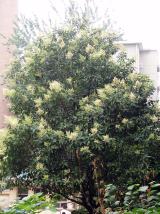 Glossy privet447 yd
Explorer Tom Glossy privet in County Cork is the quiet star of the show, but don’t let that fool you. The whole parish once argued about whether it was fancy or not. It’s free, it’s odd, so what more could you possibly want?
 Glucksman GalleryMuseum · 488 yd
Explorer Tom The Glucksman Gallery has 'Yesterday' as its favourite song because it thinks everything modern is just noise and bad paint choices anyway. It’s sitting there quietly judging your outfit while you pretend to understand the abstract art on the walls. Tell the kids it's a castle. Close enough.
 Gill Abbey (Site of) (1949-50)Religious house, Augustinian canons · 689 yd
Explorer Tom Gill Abbey in Cork City was founded by Cormac MacCarthaig and burned down by Anglo-Normans who were scared of the men of Desmond. That sounds like a neighborhood dispute that escalated way too quickly. Tell me if the gossip I made up about the monks is true, or just lie.
More historic places in County Cork · All of County Cork

What do you know about this place?Tap to add a comment or ask a question