DDiscover AloneMapAbout

Gateway

Gatehouse
Computer-made picture that does not show GatewayNot a photo of this monument
Computer-made picture. It does not show this monument. · Report the wrong picture

The monument record does not grant public access. Check the route and ask the landowner before entering private land.

What do you know about this place?Tap to add a comment or ask a question

What you write will be public.

What is recorded here

The following description is derived from both the published 'Archaeological Inventory of County Louth' (Dublin: Stationery Office, 1986) and the 'Archaeological Survey of County Louth' (Dublin: Stationery Office, 1991). Situated just to the NE of Mellifont Abbey (LH023-007002-), it is constructed in a similar manner…

Read the whole record
The following description is derived from both the published 'Archaeological Inventory of County Louth' (Dublin: Stationery Office, 1986) and the 'Archaeological Survey of County Louth' (Dublin: Stationery Office, 1991). Situated just to the NE of Mellifont Abbey (LH023-007002-), it is constructed in a similar manner to the County Louth tower houses and almost certainly belongs to that class. It is four storeys high and built of uncoursed greywacke and limestone. The NW side is ruined and only the NE portion rises to its full height. It has the remains of projecting towers at the N and S angles. The S tower, which is almost completely destroyed, contained a spiral stairway while the N tower contains the garderobes. The N angle-tower projects to the NE by 1.7m but if the base batter is included it extends for a further 0.3m. There is a rectangular exit for the garderobe chute at ground level in the base batter. The S angle-tower has the remains of a spiral stairwell which rises to first-floor level only and has just the NE portion remaining. There is a NE-SW orientated barrel vault over the ground floor which is open at both ends and has the remains of wicker centring. It appears to have been partially blocked at the NE end while the SW end has been completely destroyed. There are some sandstone quoins at the SW end of the vault at the SE side which projects by c. 0.14m out from the wall face. Some of the quoin stones in the angles of the building are of hammer-dressed limestone blocks. Access to the upper-floor levels can now only be gained by ladder. The second and third floors must have been constructed of wood and there is now no evidence of these or of how they were carried. There are garderobe chambers at first, second and battlement levels in the N tower but none at the third floor. The angle-tower, which rises by one storey above the level of the battlements, must contain a garderobe since a chute can be seen bypassing the one at second-floor level. The garderobes are set in semi-circular recesses and are corbelled with large stone slabs. There are remains of windows at first-, second- and third-floor levels in the NE wall and at first and second in the NW. Most of them have been broken out but hammer-dressed limestone jambs remain in the NE wall at third-floor level and in the NW at second, where only the NE side remains. Those at first-floor level have the remains of window seats. All the windows have flat arches of small greywacke slabs. There are the remains of a sandstone head on the outer wall face above the SE jamb of the NE windows of the first floor. It is in poor condition but appears to be human. There is another head, definitely human and in better condition, higher up the same wall at the NW end. The construction of this building is very similar to that of the County Louth tower houses and must date to the late medieval period, shortly after the dissolution of the monastery in 1539 (Stalley 1980, 272-3). It seems that the structure was originally built as a tower house, probably at the time that Sir Gerald Moore fixed his residence here between 1566 and 1576 (D'Alton 1844, vol. II, 429), and that at a later stage the gable walls of the barrel vault were removed so that it could be used as a gateway.

From the National Monuments Service (Archaeological Survey of Ireland) record LH023-007001

Places near here

Photo credits
  • Willow, Wikimedia Commons · CC BY 2.5
  • jai, Geograph · CC BY-SA 2.0
  • jai, Wikimedia Commons · CC BY-SA 2.0
  • Maker not stated on source page, en.wikipedia.org
  • National Inventory of Architectural Heritage
  • Algirdas at Lithuanian Wikipedia, Wikimedia Commons · Public domain
  • Kieran Campbell, Wikimedia Commons · CC BY-SA 2.0
European ash59 yd

Explorer Tom European ash in County Louth was once a matchmaker who worked under its branches, pairing off locals with questionable…

Mellifont Abbey (in Ruins)Religious house, Cistercian monks · 144 yd

Explorer Tom Mellifont Abbey claims a fake royal visit happened here in 1842, involving a very confused king who got lost in the…

Mellifont AbbeyVisitor attraction · 149 yd

Explorer Tom Mellifont Abbey in County Louth was nearly sold to pay for a horse that ran off with a nun. The monks were furious but…

Enclosure in HurcleEnclosure · 1600 yd

Explorer Tom Enclosure in Hurcle is an oval near a river that is sick of being asked if it’s haunted, because no, it’s just damp and…
Wood Mill BridgeBridge · 1635 yd

Explorer Tom Wood Mill Bridge in Kellystown is where Vikings got lost looking for their ships because they were too busy admiring…

Townley HallIcehouse · 1.2 mi

Explorer Tom Townley Hall icehouse was nearly sold off as a horse stable once. Its ovoid interior is basically a fancy fridge from…
GlenwoodChurch/chapel · 1.2 mi

Explorer Tom Glenwood in Townleyhall would post a selfie of its crenellated tower with the caption: 'Still standing, still judging.'…
Mellifont SchoolOutbuilding · 1.2 mi

Explorer Tom Mellifont School in Townleyhall would bring a tray of ashlar limestone samples to any party because it thinks everyone…
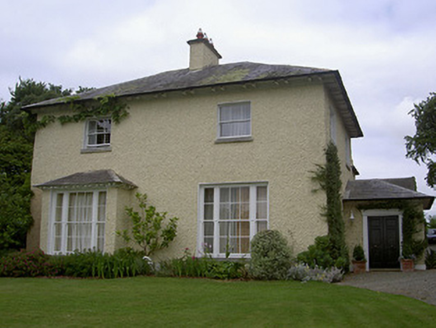
The RectoryRectory/glebe/vicarage/curate's house · 1.3 mi

Explorer Tom The Rectory in Glebe was built after a bargain where a vicar traded his soul for good proportions and refined…
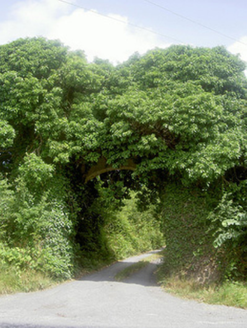
Monasterboice HouseDemesne walls/gates/railings · 1.3 mi

Explorer Tom Monasterboice House had a fox take charge of the garden for three weeks, and honestly, it looked better that way. Now…
Pedunculate Oak1.5 mi

Explorer Tom Pedunculate Oak in County Meath has very strong opinions on modern buildings and thinks they’re all just cardboard…

Passage tomb in TownleyhallPassage tomb · 1.6 mi

Explorer Tom Townleyhall passage tomb hosted a terrible love story where the couple argued about whose turn it was to carry the…

More archaeology and monuments in County Louth · All of County Louth

Add to this placeAdd a picture Add a detailed tip Add a story

Explore the map1,095,414 places to discover

Next place · or swipeEuropean ash