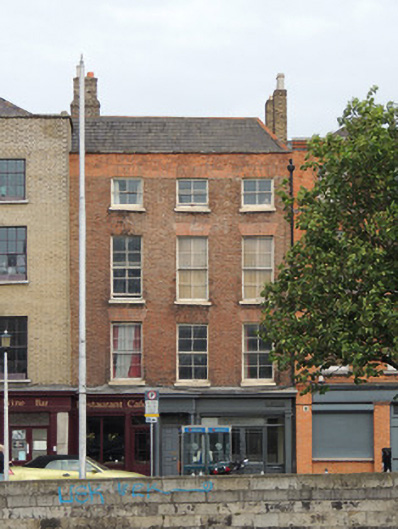
What is recorded here
Terraced three-bay four-storey former house, built c.1800, having later shopfronts inserted to ground floor. Now in use as office. M-profile pitched slate roof, hipped to east end to front (south) elevation, with terracotta ridge tiles and yellow brick chimneystack having clay chimneypots, rebuilt parapet wall with…
Read the whole record
From the Buildings of Ireland (National Inventory of Architectural Heritage) record 50070291
Places near here
Picture notes
- National Inventory of Architectural Heritage
- Eric Jones, Geograph · CC BY-SA 2.0
- YvonneM, Wikimedia Commons · CC BY-SA 3.0
- Computer-made picture. It does not show this garden.
- NateBergin, Wikimedia Commons · CC BY 4.0
- The White House, Wikimedia Commons · Public domain
- Andreas F. Borchert, Wikimedia Commons · CC BY-SA 4.0
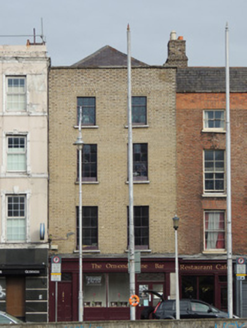 The Ormond Wine BarHouse · 9 yd
Explorer Tom The Ormond Wine Bar in County Dublin is actually a house built way back in 1686. It’s one of the earliest survivors on Ormond Quay and has a latticed shopfront now. Toast to that with a pint!
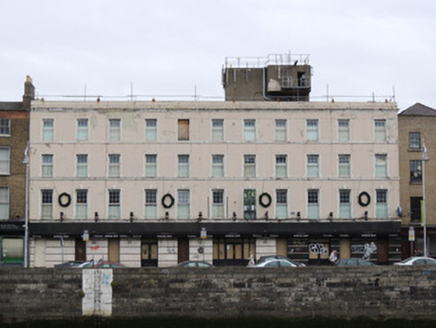 Ormond HotelHotel · 29 yd
Explorer Tom The Ormond Hotel on Ormond Quay Upper is where James Joyce set a chapter of Ulysses, so it’s basically holy ground for literature nerds. It’s disused now, which means it’s got plenty of time to plot its revenge on the tourists.
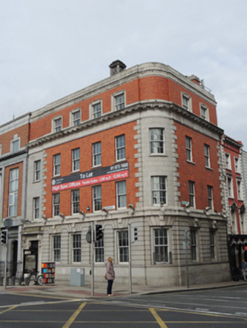 bank/financial institution36 yd
Explorer Tom Bank or financial institution on Ormond Quay Upper in County Dublin is all red brick and granite power. It was built in 1919 to look impressive, but now it’s just sitting there looking very stern and judgmental.
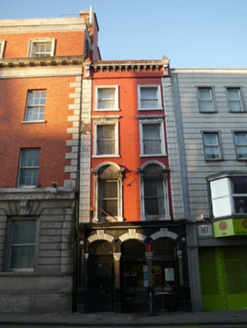 Soup DragonHouse · 41 yd
Explorer Tom Soup Dragon house on Capel Street in County Dublin is actually a restaurant now, which is a bit of a cheat. It’s got an elegant nineteenth-century facade that survived the food service. If an elf lived here, he’d be ordering soup.
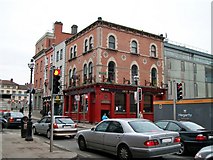 Jack NealonHouse · 45 yd
Explorer Tom Jack Nealon’s is a wine merchant’s house turned bar with colourful ceramic details that are louder than my opinions. It sits on the corner like it owns the place, which it probably does. Have a pint and tell them Tom said the ceramics are showing off.
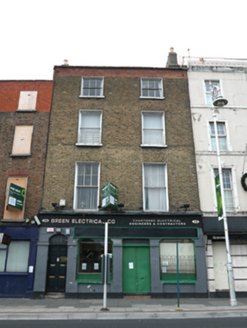 Breen Electrical Co.House · 52 yd
Explorer Tom This house on Ormond Quay Upper used to be a post office, so it still has a letter plate waiting for mail that arrived in 1890. The wrought-iron window grilles are rare and look very serious, like they’re guarding a secret recipe. It claims to be older than the internet, which is debatable but fun to believe.
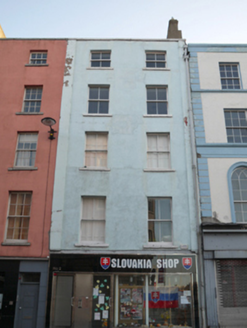 Slovakia ShopHouse · 62 yd
Explorer Tom Slovakia Shop on Capel Street is an elegant former townhouse with Doric columns and a shopfront that looks like it’s posing for a fashion shoot. It complements the classical architecture of the area and reflects neighboring properties nicely. Its dating profile would say: 'Classy, tall, and loves columns.'
 National Leprechaun MuseumHeritage attraction · 143 yd
Explorer Tom National Leprechaun Museum in County Dublin is full of tiny, grumpy men hiding gold. I bet they're charging you an arm and a leg to see them. Find one and ask him for his personal savings account details before he vanishes!
 Community gardenGarden · 145 ydComputer-made picture. It does not show this garden.
Explorer Tom Community Garden in County Dublin is growing vegetables that grow faster than you can blink. A local kid swears the carrots have opinions about your haircut. Pull one out and ask it politely for my sake!
 IndicatedCathedral · 373 yd
Explorer Tom Cathedral. Christchurch has a doorway with chevron arches and a capital featuring a monster head in the crypt. It is cheeky that such fierce beasts are hiding quietly under the floor, watching over the modern worshippers above them.
.jpg/250px-2023_hand_written_note_by_President_Joe_Biden_in_the_guest_book_at_Dublin_Castle,_Thursday,_13_April_in_Dublin,_Ireland_(cropped).jpg "Photo: The White House, Wikimedia Commons · Public domain") CastleCastle, Anglo-Norman masonry castle · 374 yd
CastleCastle, Anglo-Norman masonry castle · 374 ydExplorer Tom Dublin Castle replaced an earthwork site on a ridge bounded by the Poddle river. It had a barbican gate and drawbridge right in the middle of town. Perfect spot to practise your best tour-guide voice, even if you’re wrong.
 Cross-slab in Unknown TownlandCross-slab · 498 yd
Explorer Tom Cross-slab in Dublin is in a medieval church and thinks it has supernatural powers that it doesn’t actually possess. Visit, then text me what you think; I'll pretend to read it and nod sagely.
More historic places in County Dublin · All of County Dublin

What do you know about this place?Tap to add a comment or ask a question