DDiscover AloneMapAbout

Jack Nealon

House
Jack Nealon
Photo: Eric Jones, Geograph · CC BY-SA 2.0 · Report the wrong picture

This does not grant access. Most recorded buildings are privately owned; view them only from public ground unless the owner allows entry.

Recorded change of use
Originally house; recorded by the architectural inventory as public house
What do you know about this place?Tap to add a comment or ask a question

What you write will be public.

What is recorded here

Corner-sited end-of-terrace three-bay three-storey public house, built 1867, having two-bay return to Capel Street. Pitched roof, hipped to west. Projecting moulded granite coping to parapet supported by pairs of red and yellow brick console brackets and having globe mounts with round panels to corners. Red brick…

Read the whole record
Corner-sited end-of-terrace three-bay three-storey public house, built 1867, having two-bay return to Capel Street. Pitched roof, hipped to west. Projecting moulded granite coping to parapet supported by pairs of red and yellow brick console brackets and having globe mounts with round panels to corners. Red brick walls laid in Flemish bond with polychromatic ceramic pilasters to second floor corners and yellow brick block and start quoins to first floor corners. Yellow brick facer-bond sill course to second floor. Ceramic tiled roundels above yellow brick and chevron pattern ceramic tiled impost course to first floor. Recent cast-iron wall-hung lamps at first floor level between windows. Timber and masonry shopfront to ground floor comprising four bays to Capel Street and five bays to Little Strand Street. Square-plan pilasters having low relief rectangular panels over quatrefoil recesses. Recessed round panels with quatrefoil detail to capitals. Simple panel detail to stall risers between pilasters. Painted fascia with foliate console brackets and smaller paired squared brackets supporting cornice. Paired round-arch window openings to first and second floor of Capel Steet elevation and singular window openings to Little Strand Street, having yellow brick round-headed surrounds to second floor and pointed-arch surrounds to first floor. One-over-one pane timber sliding sash windows with ogee horns. Granite sills throughout, supported by brick corbels to second floor windows. Three-centred-arch window openings to shopfront housing one-over-one fixed pane timber-framed windows, with polished brass sills over stall risers. Triple-centered-arch corner entrance to both elevations, opening onto single step. Metal roller security shutters. Recent double-leaf timber panel door with single step to west end bay of Little Strand Street elevation. Single fixed panel above doors throughout. Cast-iron plaque with date and history of site over eastern entrance of north elevation.
This building, erected in 1867 by Charles Geoghegan for the wine and spirit merchant John O'Connor, forms an important element in the built heritage of Dublin. The upper floors are enlivened by colourful ceramic details while the well-executed carving and moulding to the shopfront add further aesthetic interest. The building, located as it is on the corner of two busy streets and having the aforementioned colourful detailing, is a focal point on the streetscape. Capel Street was laid out in the seventeenth century by Humphrey Jervis to link the new Essex Bridge (now Grattan Bridge) to the Great North Road. Originally a fashionable residential street of houses it became largely commercialized around 1800 and this building stands as a testament to this later development.

From the Buildings of Ireland (National Inventory of Architectural Heritage) record 50010361

Places near here

Photo credits
  • Oisín Ó Doinn, Wikimedia Commons · CC BY-SA 4.0
  • Maker not stated on source page, www.tripadvisor.ca
  • Maker not stated on source page, nl.pinterest.com
  • Maker not stated on source page, ru.pinterest.com
  • NateBergin, Wikimedia Commons · CC BY 4.0
  • Maker not stated on source page, www.dreamstime.com
  • Taken by Fanghong, Wikimedia Commons · CC BY-SA 3.0
  • Agence Rol, Wikimedia Commons · Public domain
  • Windmemories, Wikimedia Commons · CC BY-SA 4.0
  • Maker not stated on source page, commons.wikimedia.org
  • Maker not stated on source page, www.tripadvisor.com
  • Maker not stated on source page, ca.pinterest.com
Religious houseReligious house, Cistercian monks · 171 yd

Explorer Tom St Mary’s Abbey in Dublin would handle a nosey neighbour by simply closing its windows and pretending it doesn't hear…

St. Marys ChurchChurch · 261 yd

Explorer Tom St. Marys Church in County Dublin is one of the earliest galleried churches in Ireland, dating to the late 17th…

Church in Unknown TownlandChurch · 284 yd

Explorer Tom St Olave's, named after a Norwegian king, is now completely gone from 41 Fishamble Street. Burials were found nearby…

Graveyard in Unknown TownlandGraveyard · 359 yd

Explorer Tom Graveyard in Dublin belonged to St John's medieval Parish Church and is marked 'Dis.' on old maps. Rocque's 1756 map…

Cathedral415 yd

Explorer Tom Cathedral. Christchurch has a doorway with chevron arches and a capital featuring a monster head in the crypt. It is…

TombTomb, effigial (present location) · 429 yd

Explorer Tom Tomb in County Dublin has a hidden message in its stones about a man in full plate armour and his wife in pleated…
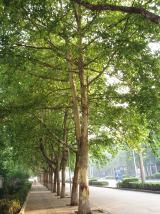
London Plane781 yd

Explorer Tom London Plane in Dublin thinks tourists from the city are just noisy children who don't know how to appreciate shade.…

Burning of the Custom HouseArmed conflict · 1121 yd

Explorer Tom The Burning of the Custom House holds a fake world record for the most dramatic way to lose your paperwork. It still…
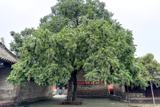
Chinese Toon1378 yd

Explorer Tom Chinese Toon in County Dublin is sick of being asked if it actually tastes like toon or just looks the part. It’s…

CairnCairn, unclassified · 1395 yd

Explorer Tom Cairn. Known as Carn Uí Dúnchada, this cairn was possibly erected against Viking pressure in the ninth century. Using a…

Church in Donnybrook East,donnybrook WestChurch · 1395 yd

Explorer Tom Church in Donnybrook East is mentioned in a deed from 1748, which is quite specific for a ghost church. It was the…

CastleCastle, motte · 1.9 mi

Explorer Tom Castle in County Dublin is a motte with a long list of names it’s forgotten, sitting high above the Tolka like a proud…

More historic places in County Dublin · All of County Dublin

Add to this placeAdd a picture Add a detailed tip Add a story

Explore the map1,095,414 places to discover

Next place · or swipeReligious house