
What is recorded here
Terraced eleven-bay four-storey hotel, built c.1840, expanded to incorporate neighbouring buildings, c.1910. Now disused. Flat roof hidden behind rendered parapet wall over moulded cornice. Rendered walls having moulded platbands, forming continuous sill courses to each storey. Square-headed window openings with…
Read the whole record
From the Buildings of Ireland (National Inventory of Architectural Heritage) record 50070289
Places near here
Photo credits
- National Inventory of Architectural Heritage
- YvonneM, Wikimedia Commons · CC BY-SA 3.0
- Eric Jones, Wikimedia Commons · CC BY-SA 2.0
- NateBergin, Wikimedia Commons · CC BY 4.0
- The White House, Wikimedia Commons · Public domain
- Andreas F. Borchert, Wikimedia Commons · CC BY-SA 4.0
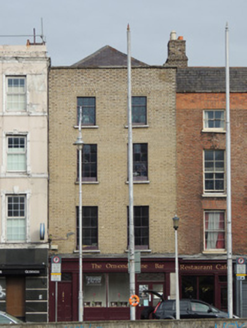 The Ormond Wine BarHouse · 20 yd
Explorer Tom The Ormond Wine Bar in County Dublin is actually a house built way back in 1686. It’s one of the earliest survivors on Ormond Quay and has a latticed shopfront now. Toast to that with a pint!
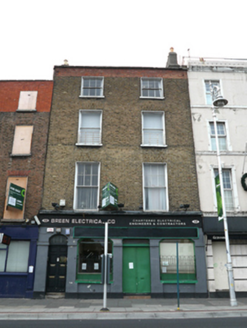 Breen Electrical Co.House · 23 yd
Explorer Tom This house on Ormond Quay Upper used to be a post office, so it still has a letter plate waiting for mail that arrived in 1890. The wrought-iron window grilles are rare and look very serious, like they’re guarding a secret recipe. It claims to be older than the internet, which is debatable but fun to believe.
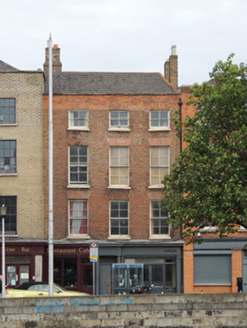 DynamoHouse · 29 yd
Explorer Tom Dynamo on Ormond Quay Upper sits where Sir Humphrey Jervis reclaimed land from the river in 1675. The Duke of Ormond wanted a street, not gardens, so this place has been judging the river ever since. Bring your own.
 Sin ÉHouse · 37 yd
Explorer Tom Sin É on Ormond Quay Upper has been a pub since the 1720s. The ground floor arcade adds some street-level interest. Humphrey Jervis developed this area, and it’s still going strong. Grab a pint if you’re brave enough.
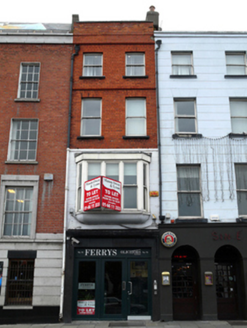 Ferrys SolicitorsHouse · 42 yd
Explorer Tom House in County Dublin is a Victorian terrace from 1880 on Ormond Quay Upper. With its oriel window and large panes, it’s part of the riverfront that really knows how to show off its industrial-era manufacturing prowess to passing boats.
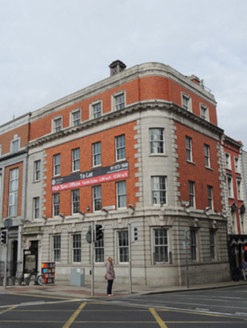 bank/financial institution64 yd
Explorer Tom Bank or financial institution on Ormond Quay Upper in County Dublin is all red brick and granite power. It was built in 1919 to look impressive, but now it’s just sitting there looking very stern and judgmental.
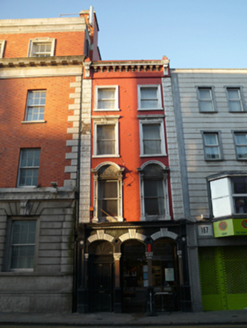 Soup DragonHouse · 69 yd
Explorer Tom Soup Dragon house on Capel Street in County Dublin is actually a restaurant now, which is a bit of a cheat. It’s got an elegant nineteenth-century facade that survived the food service. If an elf lived here, he’d be ordering soup.
 National Leprechaun MuseumHeritage attraction · 153 yd
Explorer Tom National Leprechaun Museum in County Dublin is full of tiny, grumpy men hiding gold. I bet they're charging you an arm and a leg to see them. Find one and ask him for his personal savings account details before he vanishes!
 Chancery ParkPark · 242 yd
Explorer Tom Chancery Park in County Dublin is where lawyers go to lose their sanity between court cases and forget which side of the fence they are on. Look for any briefcases lying around that have been abandoned.
 IndicatedCathedral · 351 yd
Explorer Tom Cathedral. Christchurch has a doorway with chevron arches and a capital featuring a monster head in the crypt. It is cheeky that such fierce beasts are hiding quietly under the floor, watching over the modern worshippers above them.
 CastleCastle, Anglo-Norman masonry castle · 370 yd
Explorer Tom Dublin Castle replaced an earthwork site on a ridge bounded by the Poddle river. It had a barbican gate and drawbridge right in the middle of town. Perfect spot to practise your best tour-guide voice, even if you’re wrong.
 Cross-slab in Unknown TownlandCross-slab · 471 yd
Explorer Tom Cross-slab in Dublin is the Lucky Stone, which means someone probably lost a bet to get it out of the church. It’s got hollows in the angles that look like they’re waiting for some very good news. Get a photo with it before it gets a better agent.
More historic places in County Dublin · All of County Dublin

What do you know about this place?Tap to add a comment or ask a question