DDiscover AloneMapAbout

Castle in Cloonbrackna

Castle, Anglo-Norman masonry castle
Castle in Cloonbrackna
Representative picture, exact place not confirmed
Photo: Maker not stated on source page, www.thejournal.ie · Report the wrong picture

The monument record does not grant public access. Check the route and ask the landowner before entering private land.

What do you know about this place?Tap to add a comment or ask a question

What you write will be public.

What is recorded here

Roscommon castle was commenced by the Crown in 1269 but it was attacked and burned three times by O'Conor before construction was completed c. 1290. It was damaged by Felimid O'Conor in 1305 and repaired, but it was captured by Ruarai O'Conor in 1315 and again by Turlough O'Conor in 1540. It was occupied by the…

Read the whole record
Roscommon castle was commenced by the Crown in 1269 but it was attacked and burned three times by O'Conor before construction was completed c. 1290. It was damaged by Felimid O'Conor in 1305 and repaired, but it was captured by Ruarai O'Conor in 1315 and again by Turlough O'Conor in 1540. It was occupied by the O'Conors from about 1360 until 1566, but a list of the Royal Constables of the castle can be constructed (O’Brien 2013). It was attacked by MacWilliam Burkes and the O'Kellys in 1377, and in 1394-5 Richard II made O'Conor Don constable, recognising the de facto situation. Possession moved between various O'Conor factions in the fifteenth century, being held briefly by the Earl of Kildare in 1499 and 1512, until it passed to the Earl of Clanrickard in 1553, after which the Crown began to re-assert control. In 1569 O'Conor Don surrendered the castle to the Lord Deputy, Sir Henry Sydney, after which it remained in government hands. The castle was granted to Sir Nicholas Malby in 1577, and he, or his son Henry, may have transformed it into a fortified house (RO039-043010-), although repairs and alterations were also conducted in 1609. It was burned again in 1596 and 1599 by O'Donnell, and it was garrisoned by Parliamentarians under Sir Charles Coote in the 1640s until it was surrendered to the Confederate forces under General Preston after a battle in 1645. Capt. Daly surrendered it to Col. Gore for Cromwell without a fight in 1652. It may have been slighted then, but after a fire in 1691 it has remained derelict. The castle is situated on the E edge of a turlough (diam. c. 1km) and c. 800m N of St Coman's church (RO039-043006-). (Murphy and O'Conor 2008, 8-10) The remains consist of a rectangular walled enclosure or inner ward (int. dims 53m N-S; 38m E-W) with D-shaped towers at the angles, those at SW and SE being largely unaltered from the thirteenth century. All the towers were originally of three stories, except the NW which only had two. The curtain wall survives at E and W, but is removed at S and fragmentary at N. No crenelations survive. There was also a rectangular outer ward (dims c. 110 N-S; c. 110m E-W) defined by fosses with a wall on its inner edge on all sides except the W (ibid. 21-3). The SE tower (int. dims 7.7m NW-SE; 5.45m) is missing its NW wall and has two surviving storeys connected by mural stairs in the NE wall. The ground floor is featureless, but the first floor has a fireplace, a garderobe, and two arrow loops. The SW tower (int. dims 8.1m NE-SW; 5.5m NW-SE) survives to two storeys connected by a mural stairs in the SE wall which continues to the restored parapet over the vaulted first floor. The ground floor is vaulted, but is otherwise featureless. The first floor has a fireplace and two embrasures as well as a doorway which would have given access to the wall walk of the S wall. (ibid. 15-17) The gatehouse on the E wall consists of the foundations of two D-shaped towers forming a rectangular block (ext. dims 22.1m N-S; 14.8m E-W) with an entrance passage (Wth 2.85m) between the towers, but only the curving walls of the towers survive above the foundations where they were incorporated into the late 16th century house with evidence of long arrow-loops and two garderobes. (ibid. 11-3) The roadway (RO039-043021-) c. 100m to the NE would certainly have led to the castle gatehouse. The W wall of the ward is original and incorporates a rectangular postern gatehouse (ext. dims 11.55m E-W; 9.6m N-S) with a vaulted entrance passage (Wth 2.9m) complete with murder hole. A stairs in the N wall gives access through a destroyed doorway to a chamber over the passage with a robbed window and garderobes over the angles created by the gatehouse and the walls of the inner ward. (ibid. 14) Documents suggest that from the beginning the castle consisted of two wards, as two outer bridges are mentioned in 1304 (Cal. doc. Ire., vol. 5, 116-7). At N a berm (Wth 28m) separates the castle from a fosse (L c. 90m; Wth of top 15m; Wth of base 6.6m; int. D 1.5m; ext. D 1.2m), which survives because it may have been turned into a fish-pond. A berm (Wth 40m) to the W is defined by a scarp (L 70m; H 1.4m; Wth 8m), which testing (02E1472) showed to be natural, but that a moat (Wth 6-11m) did exist inside the scarp with a masonry wall (Wth 1.4m) on its inner edge and a cobbled surface was also demonstrated (Murphy 2004b, 2006). On the S side testing demonstrated the presence of a fosse (Wth 9.5m; D 1.5m plus) (ibid). At the E there is a walled garden (RO039-043011-) overlying the backfilled moat that had a wall on its inner edge and a barbican opposite the gatehouse of the inner ward (Murphy and O'Conor 2008, 21-3). The E gatehouse and the NW and NE towers were altered in the late 16th century when large rectangular mullion and transom windows with hood mouldings were inserted to create an L-shaped fortified house (RO039-043010-). (Murphy, 1891; de Breffny and Mott 1977, 194-5; Murphy and O'Conor 2008) This is a National Monument in state guardianship: No. 181 See the attached external views from the SW (001, 002) and an internal view of the NE angle (003). See also the aerial views from NW (Cloonbrackna 001) and N (Cloongbrackna 002).

From the National Monuments Service (Archaeological Survey of Ireland) record RO039-043001

Places near here

Photo credits
  • Irishrover1980, Wikimedia Commons · CC BY-SA 4.0
  • Gordon Hatton, Geograph · CC BY-SA 2.0
  • National Inventory of Architectural Heritage
  • AmandaMcCrann, Wikimedia Commons · CC BY-SA 4.0
  • Maker not stated on source page, www.cruiselinehistory.com
  • Maker not stated on source page, www.flickr.com
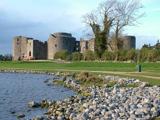
Roscommon CastleCastle · 19 yd

Explorer Tom Roscommon Castle in County Roscommon would explain the 1800s to a teenager by saying, 'Imagine your mum's house, but…

prison/jail478 yd

Explorer Tom Prison or jail in Ballypheasan makes a sound at night that sounds exactly like a librarian shushing a very loud ghost…
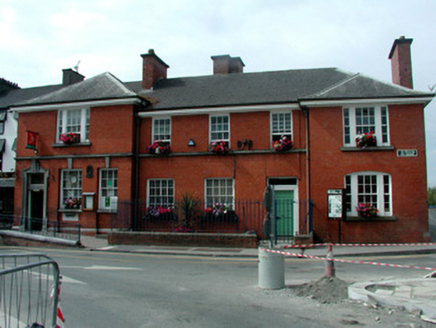
Roscommon Post OfficePost office · 506 yd

Explorer Tom Roscommon Post Office in Ardnanagh is bright red and looks like it’s trying to hide from all the boring limestone…

Doctor John Harrison Memorial HallChurch/chapel · 545 yd

Explorer Tom Doctor John Harrison Memorial Hall in Ardnanagh is a former Presbyterian church that had a bit of a feud with the next…
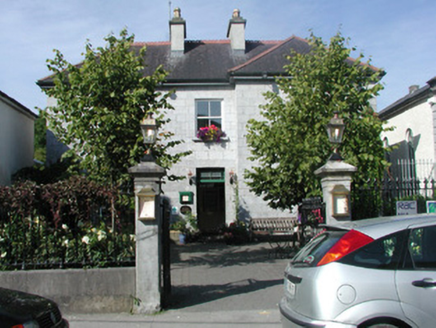
The ManseManse · 559 yd

Explorer Tom The Manse in Ardnanagh holds the world record for 'Most Polished Stone Gates.' Seriously, I timed myself; my shoes…
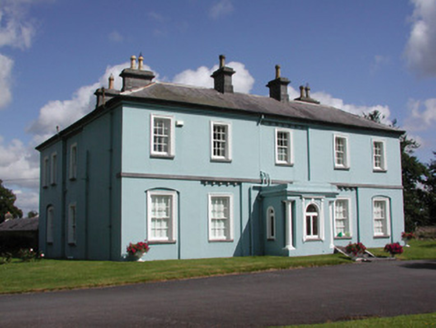
Essex Lawn HouseHouse · 564 yd

Explorer Tom Essex Lawn House in Cloonybeirne has a bitter feud with the rain that has been going on for about two hundred years and…
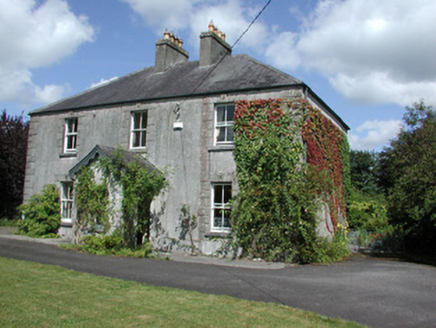
Castleview HouseHouse · 575 yd

Explorer Tom Castleview House in Cloonybeirne gets its name from staring at a ruined castle like it’s an ex-partner. The local sheep…
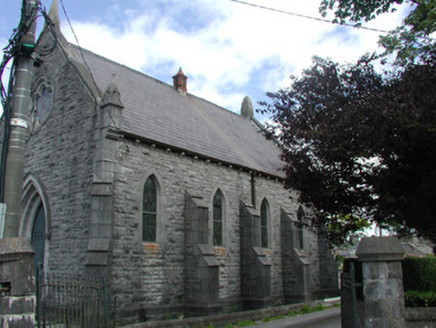
Roscommon Methodist ChurchChurch/chapel · 701 yd

Explorer Tom Roscommon Methodist Church in Ardnanagh has been through so many name changes and redesigns that it’s basically a…
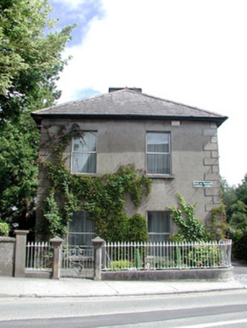
manse717 yd

Explorer Tom The manse in Ardnanagh is sitting right next to a church, looking like it's waiting for a miracle that never quite…
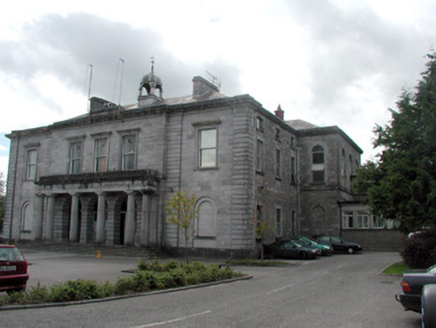
Roscommon CourthouseCourt house · 756 yd

Explorer Tom Roscommon Courthouse sits on a hill judging your life choices with those fancy porticoes and all. Its least favourite…

Memorial stone in BallypheasanMemorial stone · 799 yd

Explorer Tom Memorial stone in Ballypheasan is where the Gunnings and Flemings are stuck together like glue, arguing about whose…

TombTomb, effigial · 1304 yd

Explorer Tom Tomb in Ballypheasan has an effigy of Felimid O'Conor staring at you with the judgmental look of a strict headmaster.…

More castles and forts in County Roscommon · All of County Roscommon

Add to this placeAdd a picture Add a detailed tip Add a story

Explore the map1,095,414 places to discover

Next place · or swipeRoscommon Castle