DDiscover AloneMapAbout

Carnaveagh House

House
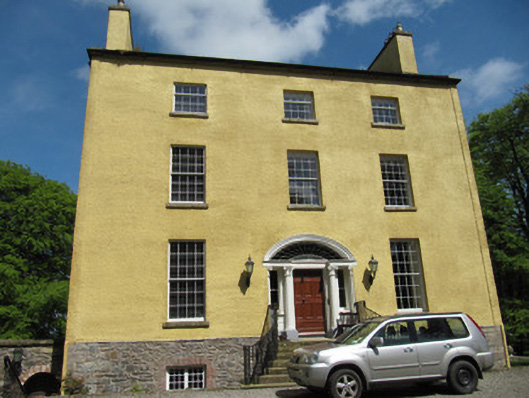
Carnaveagh House
Photo: National Inventory of Architectural Heritage · Report the wrong picture

This does not grant access. Most recorded buildings are privately owned; view them only from public ground unless the owner allows entry.

What do you know about this place?Tap to add a comment or ask a question

What you write will be public.

What is recorded here

Detached three-bay three-storey house with attic over raised basement, built c.1790, having five-bay rear (north) elevation. Pitched slate roof, with recent roof-lights to rear pitch. Rendered chimneystacks to gable ends, with ceramic pots, and having moulded stone detail to base of chimneys, and with having…

Read the whole record
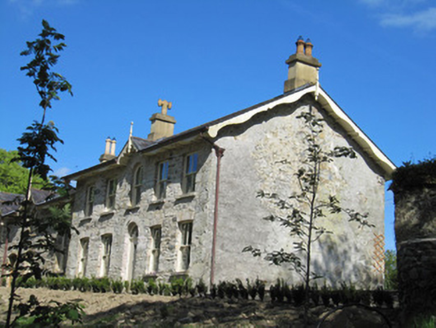
Detached three-bay three-storey house with attic over raised basement, built c.1790, having five-bay rear (north) elevation. Pitched slate roof, with recent roof-lights to rear pitch. Rendered chimneystacks to gable ends, with ceramic pots, and having moulded stone detail to base of chimneys, and with having terracotta ridge tiles and cast-iron rainwater goods. Roughcast rendered walls, with exposed rubble stone to basement level. Square-headed window openings with cut-stone sills and timber sliding sash windows, having four-over-eight paneto second floor, and twelve-over-twelve to ground and first floors. Square-headed window openings with cut-stone sills and small pane timber casement and fixed windows to basement. Round-headed window openings, with cut-stone sills, having six-over-nine pane timber sliding sash windows with spoked top-lights to ground and first floors of west gable. Round-headed window openings, with cut-stone sills, having multi-pane windows to upper west gable. Square-headed window opening, with cut-stone sill, having six-pane fixed timber window to west gable. Segmental-headed door opening, having timber panelled door, flanked by painted round-plan Ionic-style columns with fluting to base of capitals, in turn flanked by matching square-plan pilasters with similar capitals, supporting classical entablature having swag ornament and elaborate segmental cobweb fanlight. Cut-stone steps over basement area, with recent railings. Detached single and two-storey outbuildings to south, having pitched and barrel-shaped corrugated-iron roofs, pitched slate roofs, rubble stone walls, and some timber fittings. Set back from road in own grounds. Site entrance to west, having recent gates, rendered round-plan piers with domed caps, rendered flanking walls with cast-iron letter box, and recent pedestrian gate to north.
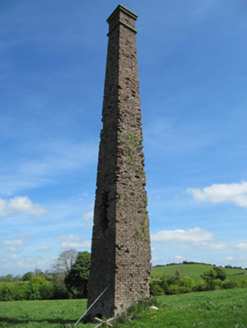
This house is one of several large houses in the area associated with the Jackson family, the others being Creevelands, Cremorne House, and Drumfaldra. The size, scale, and classically inspired doorcase of the house indicates the prosperity of the family in the eighteenth century. Like all these houses, this site had mill buildings nearby, milling being the source of the Jackson's income. The associated linen mill and corn mill to the north have since been demolished, apart from a single, later, chimney. The house is thought to have been built by Hugh Jackson, who was responsible for the construction of the linen market house in Ballybay in 1757, and who was father of John Jackson of Creevelands. Both properties were sold to the Cunninghams following the collapse of the linen industry in the early nineteenth century. This building retains its original character and local significance. Its three-bay front contrasts with the five-bay rear elevation. the chimney treatment is unusual and interesting, and the fine doorcase provides a strong decorative focus to the principal facade, the capitals also being similar to those at Creevelands and, with the elegant pilasters and frieze, make a particularly fine entrance.

From the Buildings of Ireland (National Inventory of Architectural Heritage) record 41402409

Places near here

Picture notes
  • National Inventory of Architectural Heritage
  • Computer-made picture. It does not show this monument.
  • Computer-made picture. It does not show this mountain top.
  • Computer-made picture. It does not show this playground.
  • Oliver Dixon, Geograph · CC BY-SA 2.0
chimney315 yd

Explorer Tom Chimney in Creeve has caught my eye in Creeve, County Monaghan. I bet a chimney with a name like that could keep me talking all afternoon; I'm already inventing a daft little scene for it, and I'll stop before it turns into history.

mill (water)894 yd

Explorer Tom Mill has caught my eye in Creeve, County Monaghan. I bet a mill (water) with a name like that could keep me talking all afternoon; I'm already inventing a daft little scene for it, and I'll stop before it turns into history.

Mass-rock in Creeve (cremorne By., Aghnamullen Par.)Mass-rock · 923 ydComputer-made picture

Explorer Tom Mass-rock in Creeve has caught my eye in Creeve, County Monaghan. I bet a mass-rock with a name like that could keep me talking all afternoon; I'm already inventing a daft little scene for it, and I'll stop before it turns into history.

CreevelandsWalled garden · 929 yd

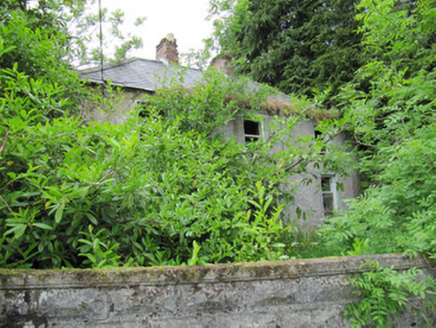
Explorer Tom Creevelands has caught my eye in Creeve, County Monaghan. I bet a walled garden with a name like that could keep me talking all afternoon; I'm already inventing a daft little scene for it, and I'll stop before it turns into history.

Fairy fort / earthen ringfort in DrumcreeghanFairy fort / earthen ringfort · 1210 ydComputer-made picture

Explorer Tom Fairy fort / earthen ringfort in Drumcreeghan has caught my eye in Drumcreeghan, County Monaghan. I bet a fairy fort / earthen ringfort with a name like that could keep me talking all afternoon; I'm already inventing a daft little scene for it, and I'll stop before it turns into history.

Cremorne HouseHouse · 1235 yd

Explorer Tom Cremorne House has caught my eye in Corwillin, County Monaghan. I bet a house with a name like that could keep me talking all afternoon; I'm already inventing a daft little scene for it, and I'll stop before it turns into history.

Drumfaldra HouseHouse · 1734 yd

Explorer Tom Drumfaldra House has caught my eye in Drumfaldra, County Monaghan. I bet a house with a name like that could keep me talking all afternoon; I'm already inventing a daft little scene for it, and I'll stop before it turns into history.

BananimmaMountain / peak · 1.3 miComputer-made picture

Explorer Tom Bananimma has caught my eye in County Monaghan. I bet a mountain / peak with a name like that could keep me talking all afternoon; I'm already inventing a daft little scene for it, and I'll stop before it turns into history.

Children's playground1.8 miComputer-made picture

Explorer Tom Children's playground has caught my eye in County Monaghan. I bet a children's playground with a name like that could keep me talking all afternoon; I'm already inventing a daft little scene for it, and I'll stop before it turns into history.

DrumolkMountain / peak · 3.9 miComputer-made picture

Explorer Tom Drumolk has caught my eye in County Monaghan. I bet a mountain / peak with a name like that could keep me talking all afternoon; I'm already inventing a daft little scene for it, and I'll stop before it turns into history.

Doohamlet Community ParkChildren's playground · 4.0 miComputer-made picture

Explorer Tom Doohamlet Community Park has caught my eye in County Monaghan. I bet a children's playground with a name like that could keep me talking all afternoon; I'm already inventing a daft little scene for it, and I'll stop before it turns into history.

Bush IslandIslet · 6.5 mi

Explorer Tom Bush Island might actually be a hidden crannog in Lough Sillan, waiting for us to discover its secret, mossy, ancient history today.

More historic places in County Monaghan · All of County Monaghan

Add to this placeAdd a picture Add a detailed tip Add a story

Explore the map1,093,392 places to discover

Next place · or swipechimney