What is recorded here
Knockardsharriv holds two carved figures flanking a holy well entrance, one upright with raised arms and crosses added by pilgrims on its forehead, palms and stomach. The other wears a wavy head dress and short garment, with one arm on its hip and a cross marked across its swollen belly. Together they mark the threshold like guardians who stopped speaking but kept watching people arrive thirsty, afraid, or in love.
This stone sculpture is referred to in the 'Archaeological Inventory of County Cork - vol. 4 North Cork' (2000, 466) under the entry (no. 14015) for a holy well (CO024-110001-). The reference to the stone sculpture in the entry reads as follows: Figure inscribed on stone on each side of entrance. Figure to left occasionally mistaken for Sheela-na-Gig; it stands upright with arms extending upwards, bent at elbow with palms of hands and all fingers shown; oval head with almond-shaped eyes and narrow mouth; torso well-defined, slightly swollen stomach with navel area evident; 'genital area defined but no attempt made at display' (Cherry 1993, 109); legs extend only to knees; crosses on forehead, palms and stomach area inscribed by pilgrims. According to Cherry (ibid.), 'figure is in the orant position and dates to the later medieval period at the earliest'. Stone to right of entrance inscribed with small worn figure with circular head bedecked with wavy head dress; swollen stomach; right arm on hip, left arm extended; wearing short sleeved garment almost covering feet. Cross inscribed on stomach.
The above description is derived from the published 'Archaeological Inventory of County Cork. Volume 4: North Cork' (Dublin: Stationery Office, 2000). In certain instances the entries have been revised and updated in the light of recent research.
Date of upload/revision: 14 January 2009
Images provided by and copyright of Amanda Clarke 2016-2022 https://holywellscorkandkerry.com/
Likely dating to the early Christian period, the stone sculpture may have had a religious or ritual function, possibly associated with the nearby holy well. Such carvings often feature Christian symbols or zoomorphic designs linked to local saints or folklore.
The monument record does not grant public access. Check the route and ask the landowner before entering private land.
- What survives
- Recorded monument
Places near here
 Castle Magner (in Ruins)Bawn · 98 yd
 IndicatedHouse, vernacular house · 192 yd
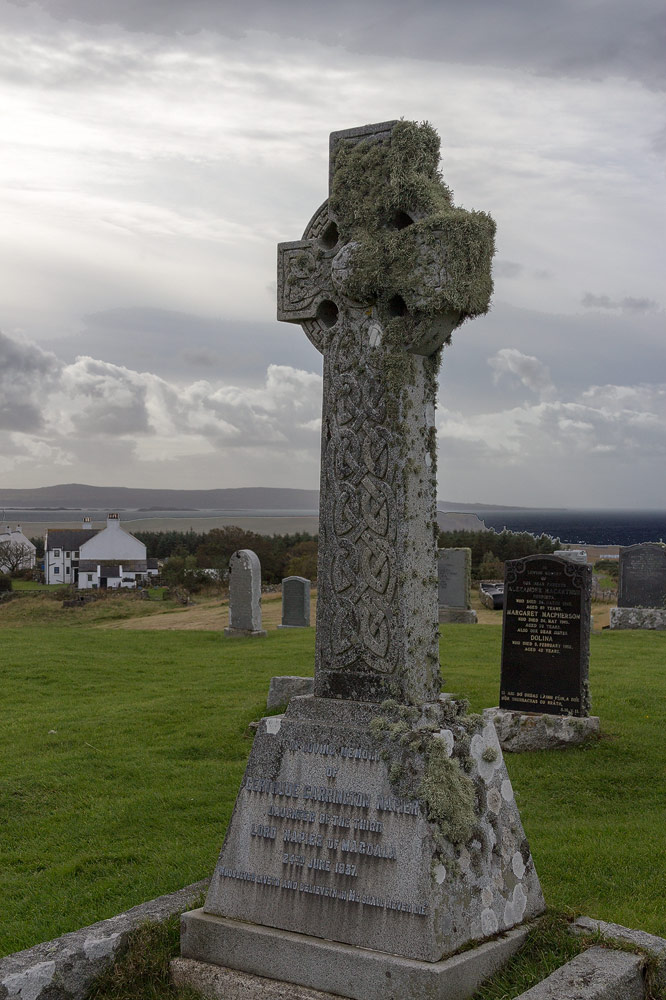 Grave YdGraveyard · 299 yd
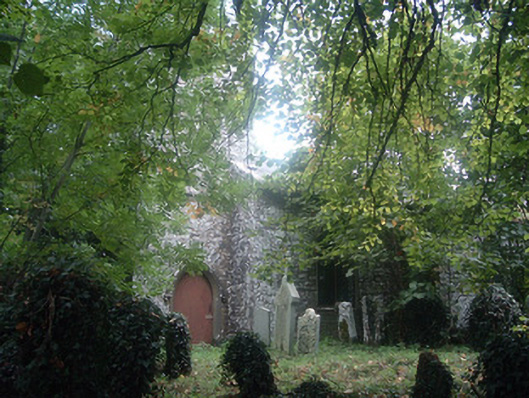 Saint Bridget's Church (Castlemagner)church/chapel · 306 yd
 Enclosure in CastlemagnerEnclosure · 844 yd
 Graveyard in Ballygiblin (duhallow By.)Graveyard · 1619 yd
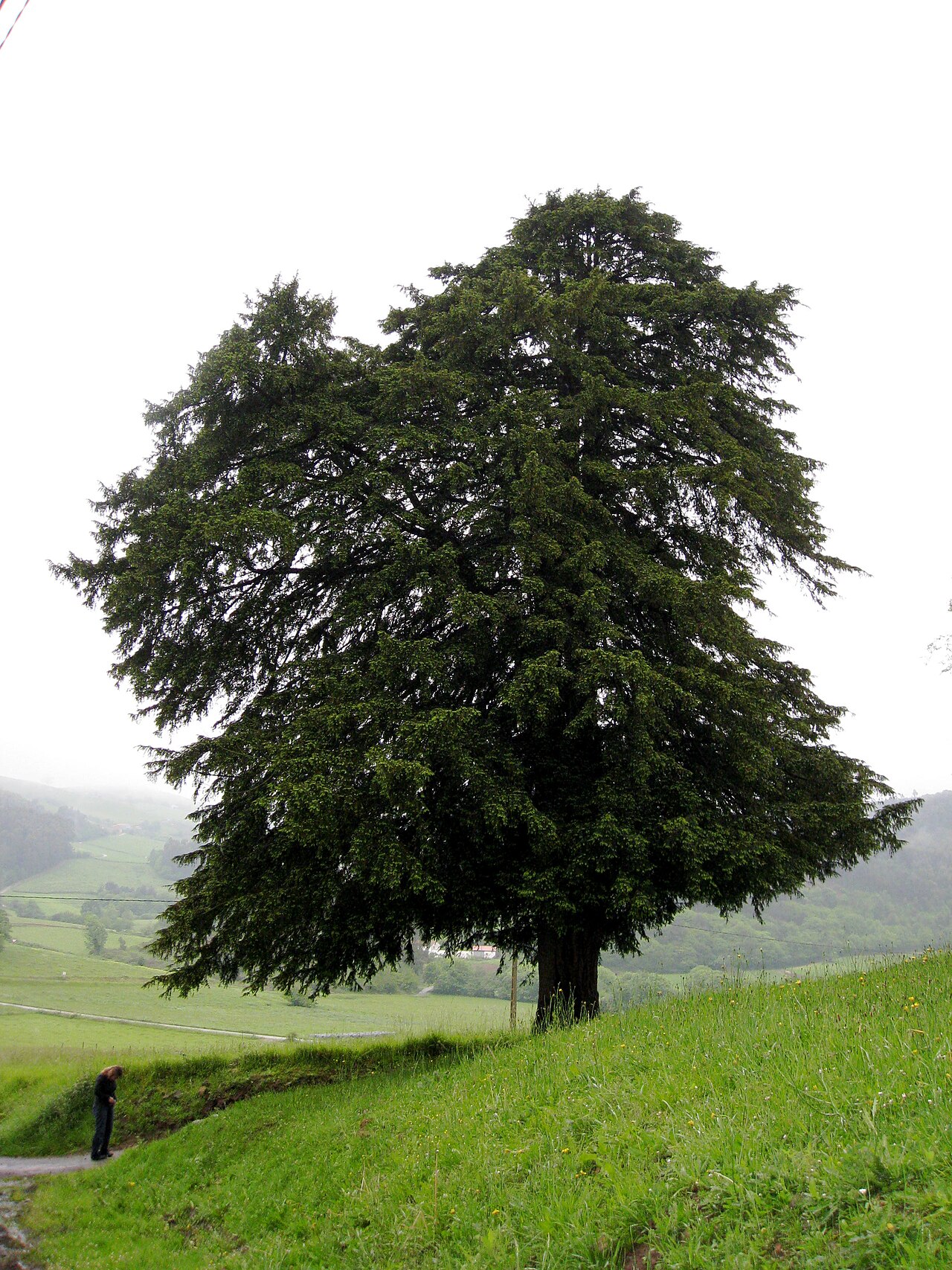 European YewEuropean Yew · 1.2 mi
 Lohort CastleCastle, tower house · 1.3 mi
 Burial ground in AssolasBurial ground · 1.4 mi
 St Fursey's WellSpring · 3.1 mi
 Mount Hillary - Knightfield LoopWalking route · 3.6 mi
 Kanturk CastleHeritage attraction · 3.8 mi