HMS Stirling Castle was a 70-gun English warship built in 1679 and rebuilt in 1699. During the Great Storm of 26–27 November 1703 it dragged from its anchorage in the Downs, fired distress guns and struck the Goodwin Sands. Only 70 of its 349 crew survived, so 279 died, including Captain John Johnson. Shifting sand…
Read the whole record
HMS Stirling Castle was a 70-gun English warship built in 1679 and rebuilt in 1699. During the Great Storm of 26–27 November 1703 it dragged from its anchorage in the Downs, fired distress guns and struck the Goodwin Sands. Only 70 of its 349 crew survived, so 279 died, including Captain John Johnson. Shifting sand exposed a remarkably complete hull in 1979, with guns still at their ports and hundreds of personal and working objects.
The vessel and voyage
Stirling Castle was a 70-gun third-rate ship of the line, built at Deptford under master shipwright John Shish and launched in 1679. It fought at Beachy Head in 1690 and Barfleur in 1692, then was rebuilt at Chatham in 1699. It served in the failed Cádiz operation of 1702 and was part of the fleet around the capture of ships at Vigo Bay. Captain John Johnson had returned to command by November 1703. The ship then lay with the Channel Fleet in the Downs, the sheltered roadstead between Deal and the Goodwin Sands. This was not a trading voyage: a large working warship, crewed by 349 officers, sailors and marines, was waiting at anchor when one of the worst storms recorded in southern Britain arrived.
How it was lost
On the night of 26 to 27 November 1703, hurricane-force winds struck ships in the Downs. Stirling Castle lost its masts and its anchors failed to hold. Accounts say it fired a gun about every half-minute for help as it drove towards the Goodwin Sands. Study of an anchor found away from the hull suggests the crew managed to deploy a spare, which may have held the bow into the waves even though it could not stop the drift. The ship grounded at high water and settled into the sand rather than instantly turning broadside and breaking. Northumberland, Restoration and Mary were also lost nearby. Reports differ over whether another ship fouled Stirling Castle's cables, so the certain cause is the violent storm overwhelming its anchorage, not a proved single collision or mistake.
Deaths and survival
Only 70 of the 349 aboard survived, leaving 279 dead. Captain John Johnson was among those lost. Historic England names the third lieutenant, chaplain, cook, surgeon's mate and four marine captains among those saved. The grounded hull and the anchor holding its bow towards the sea may have left a refuge near the stern; later accounts say survivors endured two nights before Deal boatmen could cross about five miles of dangerous water to reach them. The storm made immediate rescue almost impossible despite the repeated guns. Daniel Defoe later accused Deal people of ignoring sailors while taking wreck goods, but local evidence records the mayor organising rescuers and then paying for survivors' care, travel and burials. The wreck is therefore also a story of shore rescue after an immense naval loss.
What remains
Local trawlers raised timbers in June 1979, and Thanet divers found about two thirds of a 57-metre hull standing on its keel beside a cliff of sand. They recorded around forty iron guns, gunports, decks, anchors, a rudder and a bell dated 1701. Recovered objects include sword hilts, shoes, book covers, shaving items, pewter, a draughtboard, cooking ware, a surgeon's chest and even a woven bag containing red grapes. Sand later covered, exposed and undermined different areas. A complete heavy gun carriage was raised in 2000, while another gun rolled and broke through the weakened side. The wreck now lies in roughly 15 metres of strongly tidal, often murky water. Fishing nets, scour, unlawful removal and rapid collapse when sand leaves are continuing threats within the 300-metre protected area.
Why it mattered
Stirling Castle preserves a rare late seventeenth-century warship with guns, decks and crew possessions still related to their working places. Its earlier battles and 1699 rebuild let researchers compare a long-serving ship with changing naval design, while blocks and steering parts may record the move from the older vertical steering lever to the ship's wheel. The 1701 bell and guns made identification unusually firm. More widely, its 279 deaths were part of a storm that devastated the navy, merchant shipping and families across southern England; surviving Admiralty letters arranged wages for relatives because ships' own books had vanished. For Deal and Thanet, the wreck connects Goodwin danger, local rescue, trawler discovery, volunteer diving and museum collections. Moving sand makes that history visible and then takes it away again.
Sources for this account
Sources checked 15 August 2026.
 Battle of Dover (1652)Major battlefield · 95 yd
 Battle of Sandwich (1460)Major battlefield · 3.4 mi
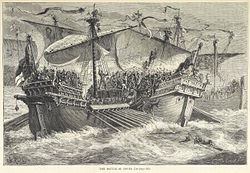 Battle of Sandwich (1217)Major battlefield · 3.8 mi
 Sandown CastleScheduled monument · 5.1 mi
 Sandown Castle Community GardenGarden · 5.2 mi
 Millennium Milepost Golf RoadVisitor information · 5.4 mi
 Forres HouseListed building · 5.4 mi
 9, Dolphin StreetListed building · 5.4 mi
 Charles HawtreyMemorial · 5.5 mi
 Deal PierHeritage attraction · 5.5 mi
 National Cycle Network MilepostMonument or public art · 5.8 mi
 Deal CastleCastle · 5.8 mi

What do you know about this place?Tap to add a comment or ask a question