What is recorded here
St Gobnets Stone is a thin cross-slab standing in a Cork pasture, moved from a mound where Windele claimed many bones lay hidden. Both faces carry a Greek cross of arcs inside two rings, while the north face shows a robed figure with a crozier walking above the circle. Henry dated the work to the second half of the 7th century, though a small treble cross on the south arm may be a later addition. The slab now sits in concrete behind a circular stone wall, preserved rather than buried beneath forgotten lives.
In pasture, on SW-facing slope, c. 18m S of the site of a holy well (CO058-013001-). The cross-slab originally stood c. 60m to WSW (CO058-013003-); according to Kelly (1897, 104), Windele noted on its removal 'many bones' under the mound where it stood. Now set in concrete and protected by circular stone wall. Thin slab (H 1.04m; 0.36m x 0.08m) with both N and S faces are decorated with a Greek cross of arcs, enclosed by two incised concentric rings. Treble cross, decorating top arm of crosson S face is thought by Henry (1952, 41) to be 'a fairly recent addition'. Above circle on N face walks an incised figure in side profile. Figure is simply depicted, with facial features, wearing a bell-shaped garment and carrying a crozier. Henry (ibid.) dates stone to second half of 7th century. Hurley and O'Flaherty (1981, 57-8) noted similarities between St Gobnait's Stone and stone from Bawnatemple (CO071-108005-) c. 19km to E.
The above description is derived from the published 'Archaeological Inventory of County Cork. Volume 3: Mid Cork' (Dublin: Stationery Office, 1997). In certain instances the entries have been revised and updated in the light of recent research.
Date of revision: 14 December 2009
This monument is subject to a preservation order made under the National Monuments Acts 1930 to 2014 (PO no. 29/1976).
Images provided by and copyright of Amanda Clarke 28 Nov 2016 https://holywellscorkandkerry.com/
St Gobnet's Stone is likely early Christian in date, associated with a holy well and possibly used as a memorial or ritual site. Local tradition may link it to St Gobnet, a 6th-century Irish saint, and it may have had both religious and folkloric significance.
The monument record does not grant public access. Check the route and ask the landowner before entering private land.
- What survives
- Recorded monument
Places near here
 Holy WellHoly well · 22 yd
 Man-made underground passage in Baile Mhic ÍreMan-made underground passage · 403 yd
 Ó Tuamahouse · 521 yd
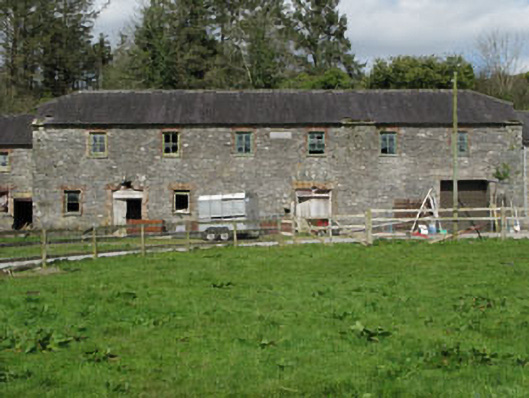 Home Farmfarmyard complex · 631 yd
 Kealaboane WoodWood · 992 yd
 Castle (Site of)Castle, unclassified · 1725 yd
 Cascade WoodWood · 1.1 mi
 CastleCastle, unclassified · 1.7 mi
 KnockullaneMountain / peak · 1.9 mi
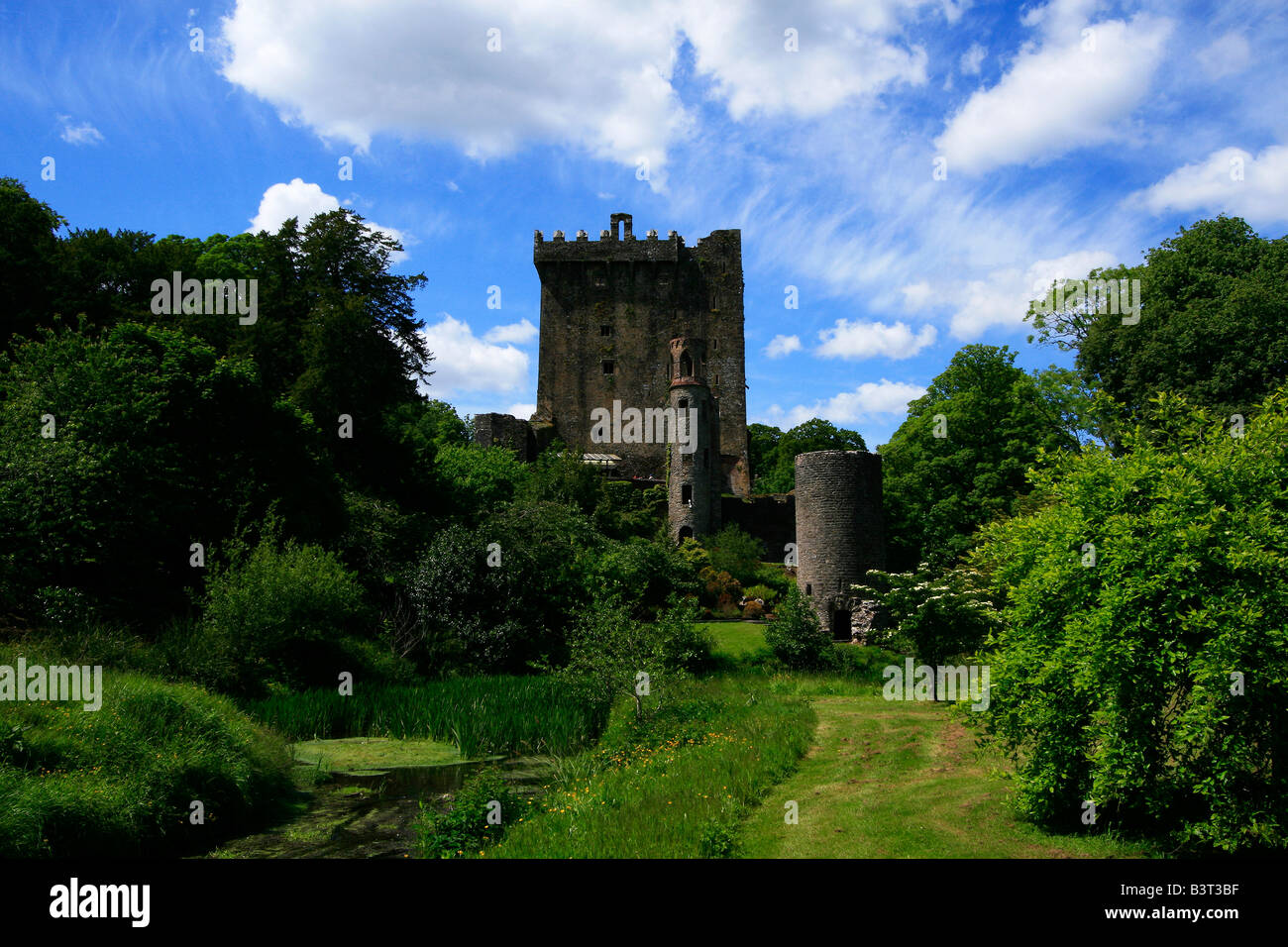 Cnoc na nUlánMountain / peak · 1.9 mi
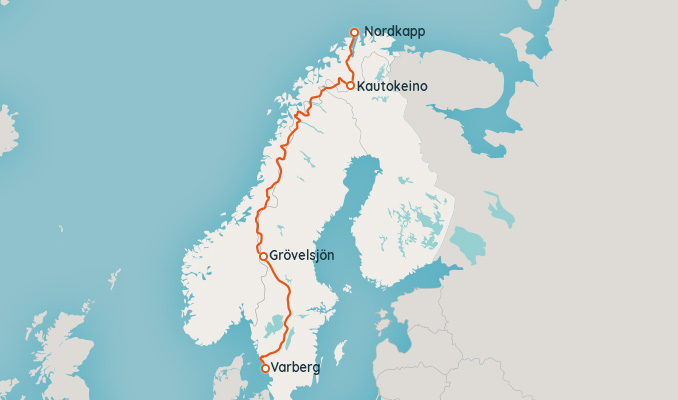 European long distance path E8 - part IrelandWalking route · 2.2 mi
 Sli Gaeltacht MuscraiWalking route · 4.3 mi