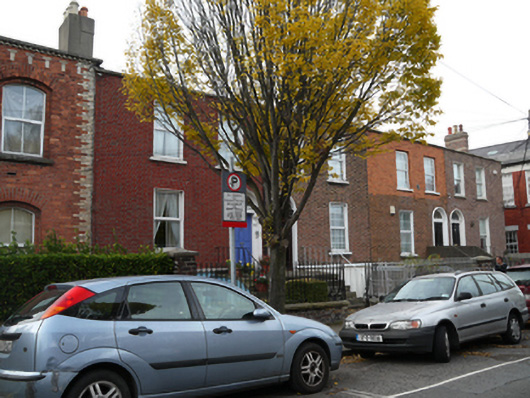
What is recorded here
Terrace of four two-bay two-storey over raised basement houses, built c.1830. M-profile pitched roofs with parapet having cut granite capping, brown brick and rendered chimneystacks having some clay chimney pots, and chimneystacks to no.1 having yellow brick sawtooth cornice and yellow brick courses. Brown brick walls laid in Flemish bond having cut granite string course over rendered walls to basement level, to front (east) elevation. Recent red brick to first floor of no.2. Roughcast rendered walls to south gable. Square-headed window openings having cut granite sills, one-over-one timber sash windows, and replacement uPVC windows. Round-headed door openings having plain fanlights, cobweb fanlight to no.1, painted carved timber door surrounds, those to numbers 3 and 4 having frieze and cornice supported by brackets, and timber panelled doors, approached by cut granite steps with wrought-iron railings. Some front gardens enclosed by wrought-iron railings on brick walls with cut granite capping, and wrought-iron pedestrian gates. Roughcast rendered wall to northern boundary of no.1.
This terrace retains much of its early form, fabric and character. The earliest terrace on the street, it shares scale, form, and palette of materials with neighbouring terraces. The streets in this area were built by private developers in groups of as few as two or three, leading to a lively and attractive variation in decorative finishes in houses built in similar materials. The front garden boundaries remain intact, maintaining the early suburban character of the street. The area of Portobello, including Bloomfield Avenue, began to develop following the opening of the canal harbour in 1801.
This does not grant access. Most recorded buildings are privately owned; view them only from public ground unless the owner allows entry.
Places near here
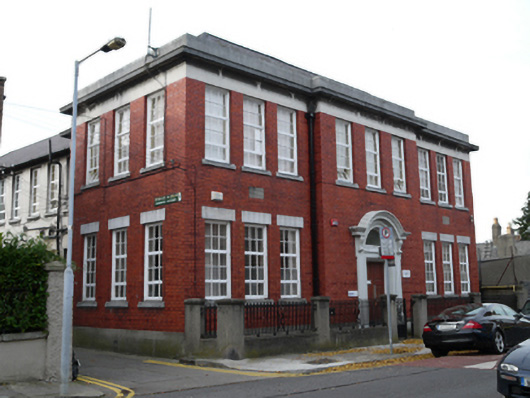 Bloomfield Houseschool · 32 yd
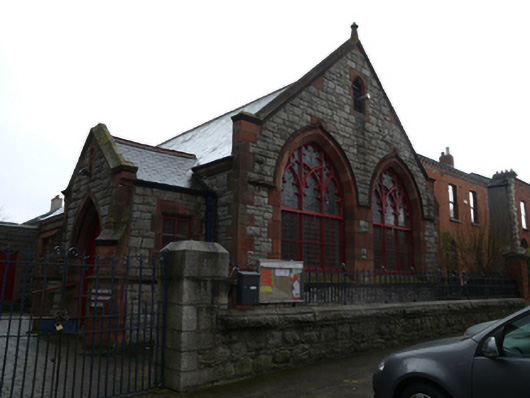 Saint Kevin's Community CentreHall · 52 yd
 Irish Jewish MuseumMuseum · 209 yd
 Robert EmmetMemorial · 437 yd
 The Copper House GalleryGallery · 504 yd
 International Tailors, Pressers and Machinists UnionMemorial · 565 yd
 Site of Donore Castle indicatedCastle, unclassified · 752 yd
 Courthouse in Unknown TownlandCourthouse · 1383 yd
 Battle of RathminesMajor battlefield · 1399 yd
 Cross in Unknown TownlandCross · 1399 yd
 Medieval DublinVisitor information · 1444 yd
 European PearEuropean Pear · 1739 yd
Other information
Photo: National Inventory of Architectural Heritage · Website use allowed for educational or private purposes with source credit