DDiscover AloneMapAbout

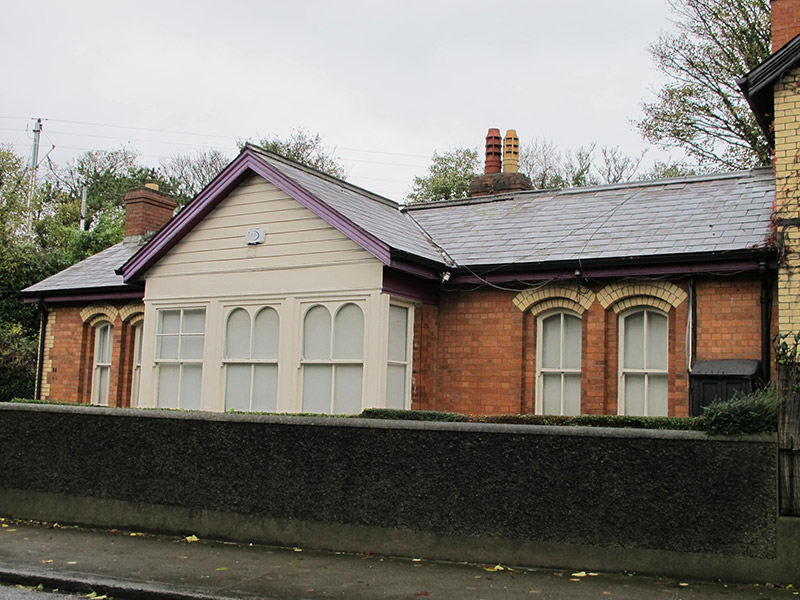
Railway station in Clontarf West

Railway station
Railway station in Clontarf West
Photo: National Inventory of Architectural Heritage · Report the wrong picture

This does not grant access. Most recorded buildings are privately owned; view them only from public ground unless the owner allows entry.

Recorded change of use
Originally railway station; recorded by the architectural inventory as house
What do you know about this place?Tap to add a comment or ask a question

What you write will be public.

What is recorded here

Attached complex-plan three-bay single-storey railway station, built c. 1895, having projecting gable-fronted porch to centre of front (south) elevation with triple window, flanked by double windows, and having returns to rear. Now in use as house. Pitched natural slate roof with red brick chimneystacks and clay pots,…

Read the whole record
Attached complex-plan three-bay single-storey railway station, built c. 1895, having projecting gable-fronted porch to centre of front (south) elevation with triple window, flanked by double windows, and having returns to rear. Now in use as house. Pitched natural slate roof with red brick chimneystacks and clay pots, timber bargeboards, and cast-iron rainwater goods. Red brick, laid in English bond, to walls, with yellow brick quoins, black and yellow brick stringcourse, and yellow brick plinth course. Timber clapboarding to porch gable. Square-headed four-over-two pane and double-round-headed two-over-two pane windows to front of porch. Paired segmental-headed window openings to end bays of building, having stepped reveals, yellow brick voussoirs, chamfered granite sills and two-over-two pane timber sliding sash windows. Square- and segmental-headed window openings to west and rear elevations, having render sills and steel casement windows. Oculus to north elevation of return, with yellow brick surround and timber window. Square-headed door opening to west side of porch, with timber architrave and recent door. Square-headed door opening to west elevation of return, with half-glazed timber battened door. Recent double-leaf gate and square-plan roughcast rendered piers, and roughcast rendered wall with smooth render coping to front. Recent gate flanked by square-plan red brick piers to west of site, and granite steps to former platform. Set within own grounds, adjoining former stationmaster's house.
This former station building forms part of a group with the attached stationmaster's house. A station on the Dublin & Drogheda Railway line opened at this site in 1844, though stylistically this building is of a later date and was opened in 1898. The Dublin & Drogheda Railway was an early part of the endeavour to provide a railway connection between the capital, Dublin, and the flourishing industrial city of Belfast. Although no longer in its original use, this building retains its historic form and character, and is enlivened by the use of fine polychrome brick work and subtle architectural detailing. The railway was of great social and economic importance, providing employment and increased connections between areas of economic productivity, as well as facilitating the development of Clontarf as a suburb of Dublin, within easy commuting distance of the city. This station was closed in 1956, and a more recent station was constructed further south.

From the Buildings of Ireland (National Inventory of Architectural Heritage) record 50030277

Places near here

Photo credits
  • National Inventory of Architectural Heritage
  • Architecture of Dublin, Wikimedia Commons · Public domain
  • Tdr112, Wikimedia Commons · CC BY-SA 4.0
  • Maker not stated on source page, www.dreamstime.com
  • Maker not stated on source page, www.irishmirror.ie
  • Hugh Frazer, Wikimedia Commons · Public domain
  • Maker not stated on source page, anakena.de
post box764 yd

Explorer Tom Post box in Clontarf East arrived around 1965 when Kincora Grove was new. It thinks being from Stirlingshire makes it…
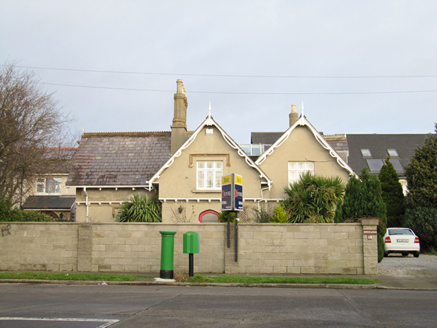
Beech LodgeGate lodge · 772 yd

Explorer Tom Beech Lodge in Elmpark is actually an old gate lodge from around 1820 that predates Kincora Grove becoming a proper…

Clontarf CastleCountry house · 918 yd

Explorer Tom Clontarf Castle has been demolished and rebuilt so many times that the weather has a long-standing grudge against it…

Vernon LodgeDemesne walls/gates/railings · 920 yd

Explorer Tom Vernon Lodge in Clontarf East brags about surviving a massive storm in 1927 where it claims to have eaten a whole oak…
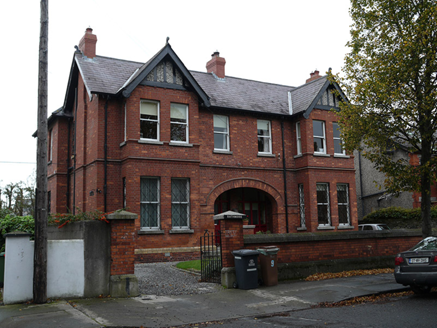
RathmoreHouse · 959 yd

Explorer Tom Rathmore house in Clontarf East is two houses glued together like they’re trying to fit into one lifeboat during a…

Brian Boróimhe's WellWell · 972 yd

Explorer Tom Brian Boróimhe's Well in Clontarf East, County Dublin has a plaque from 1850 with a shamrock. It’s over an old drinking…
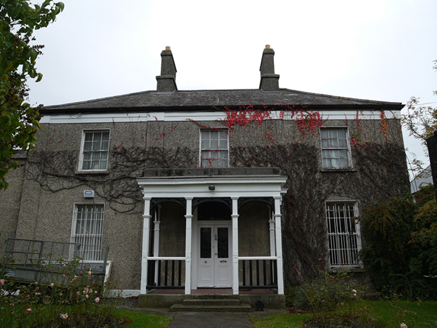
MoyvilleHouse · 976 yd

Explorer Tom Moyville in Clontarf East was built c.1820 on Castle Avenue, one of the earliest streets there. It has a pedimented…

Church of St. John the BaptistChurch/chapel · 993 yd

Explorer Tom Church of St. John the Baptist in Clontarf East is basically ruins from the early 1600s. Samuel Lewis described it as…

Castle Avenue GraveyardCemetery · 1006 yd

Explorer Tom Castle Avenue Graveyard has a prophecy that the grass will turn gold on a Tuesday, which hasn’t happened yet despite…

Killester CemeteryCemetery · 1307 yd

Explorer Tom Killester Cemetery is right by the river, so the water might be trying to wash away the memories. I’d listen closely to…

Battle of ClontarfMajor battlefield · 1586 yd

Explorer Tom Battle of Clontarf in County Dublin is where Brian Boru and the Vikings had their big noisy argument over a thousand…

Easter Island MaoiStatue · 1.2 mi

Explorer Tom Easter Island Maoi in County Dublin can hear everything through the walls, including that neighbor’s terrible karaoke…

More historic places in County Dublin · All of County Dublin

Add to this placeAdd a picture Add a detailed tip Add a story

Explore the map1,095,414 places to discover

Next place · or swipepost box