
Places near here
Photo credits
- National Inventory of Architectural Heritage
- William Murphy from Dublin, Ireland, Wikimedia Commons
- N Chadwick, Geograph · CC BY-SA 2.0
- Eric Jones, Wikimedia Commons · CC BY-SA 2.0
- NateBergin, Wikimedia Commons · CC BY 4.0
- The White House, Wikimedia Commons · Public domain
- Andreas F. Borchert, Wikimedia Commons · CC BY-SA 4.0
 Orla Hanley ArchitectHouse · 25 yd
Explorer Tom Orla Hanley Architect is actually a house from 1720 sitting on Ormond Quay Upper. It faces the Liffey and has granite kerbstones, so if you’re there, just enjoy the river view without getting too close.
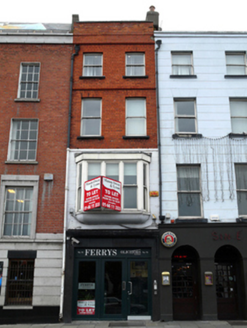 Ferrys SolicitorsHouse · 47 yd
Explorer Tom House in County Dublin is a Victorian terrace from 1880 on Ormond Quay Upper. With its oriel window and large panes, it’s part of the riverfront that really knows how to show off its industrial-era manufacturing prowess to passing boats.
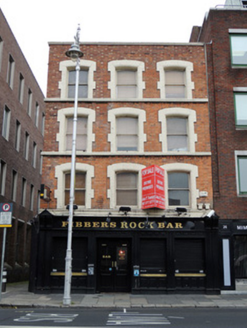 Fibbers Rock BarPublic house · 51 yd
Explorer Tom Trinity College on Westland Row had a fiddler who played there all night and apparently didn’t stop until dawn broke. It’s got soft brown brick walls that contrast with the rustication in a way that makes you want to do a little dance. Just listen for the ghostly fiddle music before you walk past, it’s definitely there.
 Sin ÉHouse · 52 yd
Explorer Tom Sin É on Ormond Quay Upper has been a pub since the 1720s. The ground floor arcade adds some street-level interest. Humphrey Jervis developed this area, and it’s still going strong. Grab a pint if you’re brave enough.
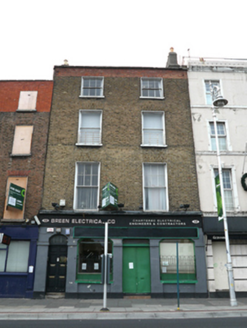 Breen Electrical Co.House · 63 yd
Explorer Tom This house on Ormond Quay Upper used to be a post office, so it still has a letter plate waiting for mail that arrived in 1890. The wrought-iron window grilles are rare and look very serious, like they’re guarding a secret recipe. It claims to be older than the internet, which is debatable but fun to believe.
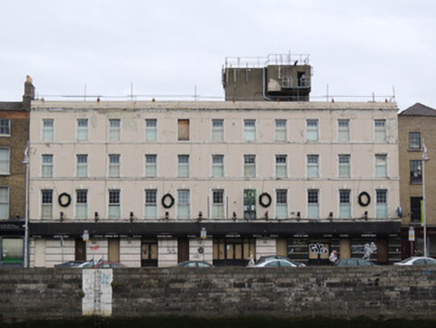 Ormond HotelHotel · 86 yd
Explorer Tom The Ormond Hotel on Ormond Quay Upper is where James Joyce set a chapter of Ulysses, so it’s basically holy ground for literature nerds. It’s disused now, which means it’s got plenty of time to plot its revenge on the tourists.
 Wood QuaySculpture · 93 yd
Explorer Tom Wood Quay makes me wish I could lift a Dublin office block like a tablecloth and show you what lies below. Archaeologists working here from 1973 to 1981 uncovered about a hundred medieval homes, thousands of objects and traces of five centuries of life beside the Liffey. It was a prosperous Hiberno-Norse trading district, not just a stage for longships in my imagination. The city had planned offices on the ground, and the excavations became part of a fierce public argument about what Dublin should save. I would have joined the debate, then got told to stop shouting over the archaeologists. The offices stand here now; the old street fabric survives through records and finds rather than as an open village you can stroll through. Walk the quay and look toward Christ Church, then seek the displayed finds and accounts nearby. Dublin built upward, but this riverside story refuses to stay buried.
 Smock Alley TheatreSchool · 102 yd
Explorer Tom Smock Alley Theatre in County Dublin used to be a boys' school built in 1858 by John Burke. It’s now part of a theatre complex near Saint Michael and John, so it’s got that educational past mixed with its current artistic flair for all to enjoy from the outside.
 Chancery ParkPark · 192 yd
Explorer Tom Chancery Park in County Dublin is where lawyers go to lose their sanity between court cases and forget which side of the fence they are on. Look for any briefcases lying around that have been abandoned.
 IndicatedCathedral · 284 yd
Explorer Tom Cathedral. Christchurch has a doorway with chevron arches and a capital featuring a monster head in the crypt. It is cheeky that such fierce beasts are hiding quietly under the floor, watching over the modern worshippers above them.
 CastleCastle, Anglo-Norman masonry castle · 360 yd
Explorer Tom Castle in County Dublin has been hosting imaginary fiddlers for centuries who just never seem to get tired of playing the same tune all night. It’s the kind of place that makes a dull Tuesday interesting, mostly because it looks like it’s about to collapse into the river Poddle. It's the kind of place that makes a dull Tuesday interesting.
 Cross-slab in Unknown TownlandCross-slab · 386 yd
Explorer Tom Cross-slab in Dublin has a hidden message in its stones that says 'lunch is on me' if you squint really hard at the hollows. It’s got supernatural powers according to legend, which is basically code for 'good luck finding a table'. Great spot to propose. Or at least to propose lunch.
More historic places in County Dublin · All of County Dublin

What do you know about this place?Tap to add a comment or ask a question