
Places near here
Photo credits
- National Inventory of Architectural Heritage
- Cg.wiki, Wikimedia Commons · CC BY-SA 4.0
- William Murphy from Dublin, Ireland, Wikimedia Commons · CC BY-SA 2.0
- Darrin Antrobus, Geograph · CC BY-SA 2.0
- A.-K. D., Wikimedia Commons · CC BY-SA 4.0
- BaronNethercross, Wikimedia Commons · CC BY-SA 4.0
- William Murphy, Wikimedia Commons · CC BY-SA 3.0
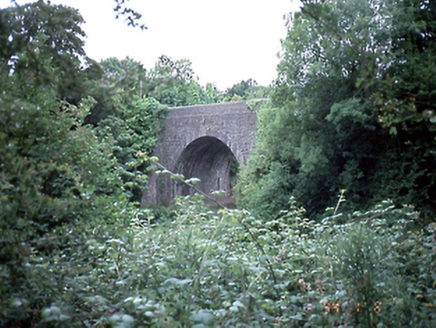 Knocksedan BridgeBridge · 183 yd
Explorer Tom Knocksedan Bridge has a plaque about Fingal Volunteers from 1916 on it. It’s a single-arch stone bridge from around 1800. The tapered abutments look strong. I wonder if the volunteers used to hide behind it? Probably not, but it makes for a good story.
 Knocksedan HouseHouse · 390 yd
Explorer Tom Knocksedan House is a three-storey beauty from 1760 with original fenestration. It has a block and start stone doorcase that looks very imposing. The urns on the parapet are a nice finishing touch. I’d bet the ghosts are elegant in there.
 IndicatedFish-pond · 1420 yd
Explorer Tom Fish-pond in Brackenstown is actually a canal from the early eighteenth century, which is a bit cheeky of them to call it a pond. It’s used for horse riding now, so watch out for hooves and muddy boots.
St Cronans WellSpring · 1.0 miExplorer Tom St Cronans Well in County Dublin has a church complex that looks like it’s about to collapse into the earth. The saint probably just wanted a quiet spot to nap. Keep an eye out for any suspiciously holy ducks!
 Glasmore Abbey (in ruins)Structure · 1.1 mi
Explorer Tom Glasmore Abbey describes the 1800s to a teenager as 'a time when people wore big hats and complained about their knees constantly.' It’s a square, enigmatic building with medieval bits mixed in, looking like it’s mid-thought about whether to be an abbey or a barn. Stick around for the light changing, it's a show.
The JackoWood · 1.1 miExplorer Tom The Jacko has strict rules for visitors: don't touch anything, don't ask questions, and definitely don't look directly at the weirdly shaped stump by the path. It’s a wood that acts like it owns the place, even though it’s basically just a linear park with an attitude problem and a bad haircut. Pop by later and tell it it's looking well, but keep your voice low so it doesn't get
Kim Archibold MemorialMemorial · 1.2 miExplorer Tom Kim Archibold Memorial in County Dublin is guarded by a superstition locals swear by: touch the stone twice or you’ll trip over your own feet for a week. It’s a quiet spot that somehow manages to make you feel like you’ve broken some ancient, unspoken rule just by looking at it. Visit, then text me what you think. I'll pretend to read it.
 Swords Round TowerHeritage attraction · 1.8 mi
Explorer Tom Swords Round Tower heritage attraction in County Dublin was saved by a hero nobody remembers anymore, who probably just tripped over a rock at the right moment to stop a falling beam from crushing it. It is the ideal place to stand around and rehearse an excuse for being late to work while looking very thoughtful.
 Airside Retail ParkVisitor information · 1.9 mi
Explorer Tom Airside Retail Park has a New Year's resolution to stop pretending it’s an airport and just admit it’s a big car park with aspirations. It’s got that smell of hot asphalt and regret, which is basically the national scent of County Dublin if you ask me, so enjoy it while it lasts. Tell the kids it's a castle. Close enough.
 St Colmcilles WellVisitor information · 1.9 mi
Explorer Tom St Colmcilles Well has strict rules about who can drink from it, mostly because it doesn't trust anyone with a mobile phone, and if you spill a drop, it will hold it against your entire family for the next century. It's not just water; it's liquid judgment wrapped in a stone circle that smells faintly of old pennies and regret. Go with someone who loves old stuff and watch them melt.
 Tower (in ruins), Castle and ChapelCastle, Anglo-Norman masonry castle · 2.0 mi
Explorer Tom Tower, Castle and Chapel in Townparks is holding a grudge against its neighbours over something daft like a boundary wall from the twelfth century. The Archbishop built it to look important, and honestly, the chapel still looks like it’s judging your shoe choices. Get a photo with it before it gets a better agent.
 Swords CastleCastle · 2.0 mi
Explorer Tom Swords Castle was built for an archbishop, which rather ruins my idea that clergy always favoured modest houses. The Dublin archbishops began this large manor enclosure in the early thirteenth century near the Ward River. It had fallen into disrepair in places by the fourteenth and fifteenth centuries, then found other uses as power changed around Swords. I would have offered to mend a wall; the stonemasons would have hidden the tools. Modern repair has been gradual, which helps explain why one part can look ready to welcome you while another still asks for patience. The site is protected and partly open under tour arrangements, so check current access rather than testing a closed door. Look for the scale of the enclosure before getting distracted by one tower. Even an archbishop needed more space than I would have guessed.
More historic places in County Dublin · All of County Dublin

What do you know about this place?Tap to add a comment or ask a question