DDiscover AloneMapAbout

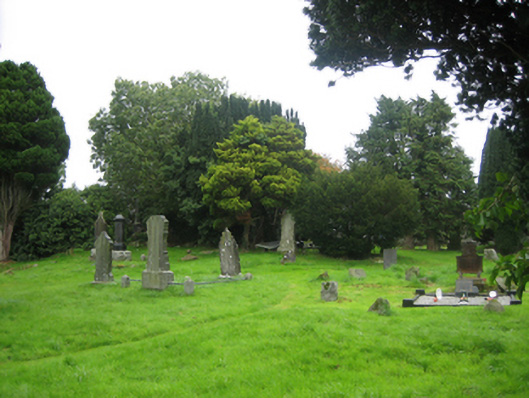
Old Graveyard Saint Johnstown

Church/chapel
Old Graveyard Saint Johnstown
Photo: National Inventory of Architectural Heritage · Report the wrong picture

What is recorded here

Multi-denominational graveyard (on sub rectangular-plan) containing ruinous former Church of Ireland church on cruciform plan, built c. 1622. Graveyard no longer in use and site overgrown. Graveyard contains collection of mainly upstanding gravemarkers of nineteenth and twentieth century date. Some recumbent…

Read the whole record
Multi-denominational graveyard (on sub rectangular-plan) containing ruinous former Church of Ireland church on cruciform plan, built c. 1622. Graveyard no longer in use and site overgrown. Graveyard contains collection of mainly upstanding gravemarkers of nineteenth and twentieth century date. Some recumbent gravemarkers and some in metal railed enclosures. Site surrounded by rubble stone by rubble stone boundary walls with rubble stone coping over. Mature trees flanking east boundary. Pedestrian gateway to the east comprising a pair of randomly coursed roughly squared rubble stone gate piers (on square-plan) having cut stone capping over with rubble stone coping. Church is built of rubble stone masonry and is built on a cruciform plan with four arms of equal length. Located to the south of the centre of Saint Johnstown.
This atmospheric site consists of the ruins of a seventeenth century Church of Ireland church and is surrounded by a graveyard containing mainly nineteenth and twentieth century memorials. The majority of the memorials are of upstanding type although there are a few recumbent and table-type memorials. Some of the nineteenth century memorials display classical influences (including a number of memorials topped by obelisks and an elaborate table-type tomb set on clustered cut stone legs) and are of modest artistic merit while opens are set in simple metal railed enclosures that ad further interest to the site. Although there are no legible gravemarkers dating to before the nineteenth century, there are likely to be some within the grounds as the site is indicated as a ‘burial ground’ on the 1837 Ordnance Survey first edition six-inch map, which suggests that it was in use before this date. The remains of the rubble stone church itself are of archaeological interest although there are few architectural fragments to site to provide an insight into its original style and detailing. Interestingly the church was built on a cruciform plan with four arms of equal length. This church may have been originally built just after 1622 by Sir John Stewart Kent who ‘obtained a warrant at the Council Table to build a new church, himself laying out £100 towards the building ... at St. Johnstown which church should be finished this midsummer 1622, but is not above the side walls yet' (Royal Commission, 213). According to tradition, this church was never completed or roofed, and instead the Church of Ireland church at nearby Taughboyne (see 40905513), which was repaired or rebuilt in 1627, provided the focus of Church of Ireland worship in the area. This site is an interesting addition to the social history and built heritage of the local area, and is an interesting addition to the landscape to the south of the town of Saint Johnstown. The well-built boundary walls and the gateway to the east add significantly to the historic setting and context.

From the Buildings of Ireland (National Inventory of Architectural Heritage) record 40830008

This does not grant access. Most recorded buildings are privately owned; view them only from public ground unless the owner allows entry.

Recorded change of use
Originally church/chapel; recorded by the architectural inventory as graveyard/cemetery
What do you know about this place?Tap to add a comment or ask a question

What you write will be public.

Places near here

Photo credits
  • National Inventory of Architectural Heritage
  • Kenneth Allen, Geograph · Creative Commons Attribution-ShareAlike 2.0
  • Kenneth Allen, Wikimedia Commons · CC BY-SA 2.0
  • Kenneth Allen, Geograph · CC BY-SA 2.0
  • 60McCurdy, Wikimedia Commons · CC BY-SA 3.0
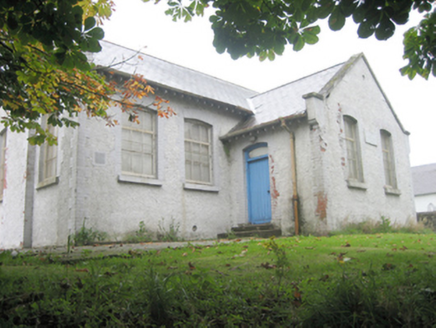
school75 yd

Explorer Tom School in Saintjohnstown has a plaque that reads ‘Saint Johnstown No. 1 National School 1909’ and it’s just sitting…

St. Johnstown Presbyterian ChurchChurch/chapel · 108 yd

Explorer Tom St. Johnstown Presbyterian Church is incredibly proud of its cast-iron latticed panes, which are basically its fancy…

water pump157 yd

Explorer Tom Water pump in Saintjohnstown nearly got famous when a celebrity tried to drink from it and slipped on the wet pavement…

St. Baithin’s Catholic ChurchChurch/chapel · 262 yd

Explorer Tom St. Baithin’s Church in Saintjohnstown was built by someone who really liked knots, hence the Celtic cross finials on…
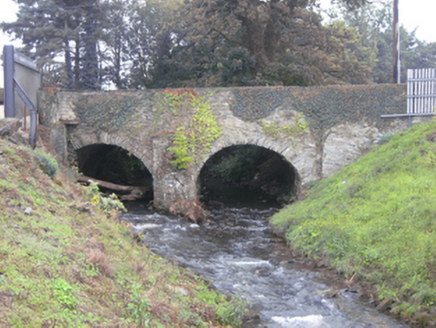
bridge294 yd

Explorer Tom Bridge in Dundee is judging your driving technique from its two sturdy arches with absolute contempt. It’s been…
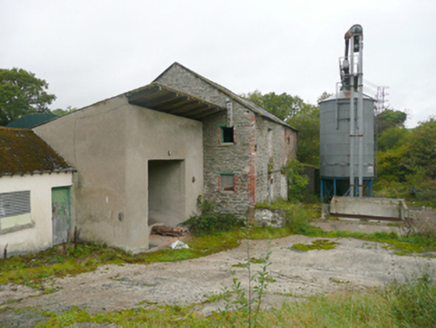
mill (water)1136 yd

Explorer Tom That old corn mill in Clashygowan is sitting there looking mighty smug after surviving the nineteenth-century boom.…

Rockfield Standing StoneStanding stone · 1261 yd

Explorer Tom Rockfield Standing Stone is over two metres tall, but the picture says cows use it like a giant scratching post! I…

kiln1.0 mi

Explorer Tom Kiln in Dernacally was built c.1860 and now has its own round burning chamber completely filled in with stones. It…

Castletown OldFarm house · 1.1 mi

Explorer Tom Castletown Old in Castletown has had so many former names that it’s basically lost its identity crisis forever. It’s an…

Ulster Scots Heritage CentreManse · 1.6 mi

Explorer Tom Ulster Scots Heritage Centre in Tonagh, Donegal, has strict rules for visitors: don’t touch, don’t breathe on the…

Monreagh Presbyterian ChurchChurch/chapel · 1.6 mi

Explorer Tom Monreagh Presbyterian Church was built in 1710, but its doorway carries 1644. I nearly called that a church with a time…

Mongavlin CastleHouse, fortified house · 2.0 mi

Explorer Tom Mongavlin Castle is quite the sturdy survivor, with large walls and corner turrets still standing proudly from its days…

More historic places in County Donegal · All of County Donegal

Add to this placeAdd a picture Add a detailed tip Add a story

Explore the map1,095,414 places to discover

Next place · or swipeschool