DDiscover AloneMapAbout

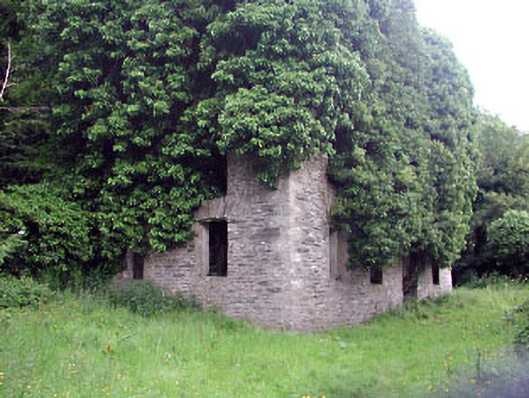
Mill in Ballymore Eustace East

Mill (water)
Mill in Ballymore Eustace East
Photo: National Inventory of Architectural Heritage · Report the wrong picture

What is recorded here

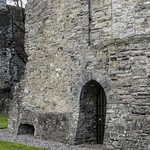
Mill complex, built 1802, on a triangular plan about a courtyard including (south): Attached six-bay four-storey mill on a rectangular plan. Closed, 1914. Now in ruins. Pitched roof now missing with no rainwater goods surviving on cut-limestone eaves. Overgrown lime rendered coursed rubble stone walls. Square-headed…

Read the whole record
Mill complex, built 1802, on a triangular plan about a courtyard including (south): Attached six-bay four-storey mill on a rectangular plan. Closed, 1914. Now in ruins. Pitched roof now missing with no rainwater goods surviving on cut-limestone eaves. Overgrown lime rendered coursed rubble stone walls. Square-headed window openings with overgrown dressings framing twelve-over-eight timber sash windows. Interior in ruins; (north): Detached four-bay (two-bay deep) three-storey mill with half-attic on a rectangular plan. Closed, 1914. Now in ruins. Hipped roof now missing with no rainwater goods surviving on cut-limestone eaves. Overgrown coursed rubble stone walls with concealed rough hewn granite flush quoins to corners. Square-headed window openings in camber-headed recesses with fittings not visible. Interior in ruins. Set in overgrown grounds.
A mill complex representing an important component of the industrial heritage of County Kildare. NOTE: The history of milling at Ballymore Eustace can be traced back to the twelfth century and Archbishop Alen's Register states that Archbishop John Comyn (d. 1212) derived income from mills at Ballymore Eustace and elsewhere. The mill is likely to have been destroyed in the sixteenth century, a report (1572) to the Lord Deputy stating that 'Irish rebels had burned all Ballymore except Mr. Le Strange's house and castle', but almost two centuries later a mill was shown on the map of County Kildare produced (1752) by John Noble and James Keenan. The mill was subsequently purchased (1802) by Christopher Drumgoole (d. 1842) and was adapted for the production of wool but, initially successful, was impacted by the reopening of shipping lanes in the aftermath of the Napoleonic Wars (1803-15). The mill was described by Samuel Lewis (1837) as employing about 700 people 'when in full work' and was described by John S. Sloan (1838) as 'idle and deserted'. A brief revival came about under Peter Dromgoole (d. 1848) who, according to family papers, 'erected and fitted up an oatmeal mill adjoining the factory...erected or improved the dwelling house...and is said to have expended upwards of £2000 on the premises'. Ownership of the complex eventually passed to John Copeland (d. 1879) and, on his death, to Henry Lewis Copeland (d. 1903) who exhibited woollen goods at the Irish Exhibition held at the Rotunda in Dublin (1882) but Ballymore Eustace Woollen Mills was in terminal decline: production ceased in 1914 and most of the machinery was removed in 1924.

From the Buildings of Ireland (National Inventory of Architectural Heritage) record 11820044

This does not grant access. Most recorded buildings are privately owned; view them only from public ground unless the owner allows entry.

What do you know about this place?Tap to add a comment or ask a question

What you write will be public.

Places near here

Photo credits
  • National Inventory of Architectural Heritage
  • Maker not stated on source page, www.alamy.com
  • Maker not stated on source page, www.dreamstime.com
  • Maker not stated on source page, en.wikipedia.org
  • Maker not stated on source page, www.flickr.com
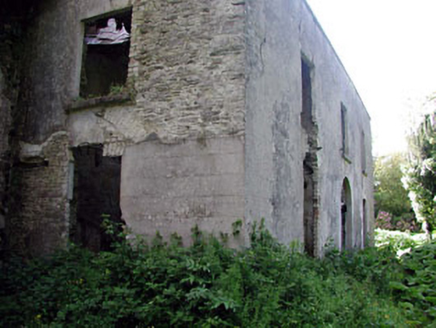
miller's house43 yd

Explorer Tom Miller's house in Ballymore Eustace East would order a double chipper with extra gravy because it worked hard grinding…

Díl Cnoc AvonHouse · 149 yd

Explorer Tom Díl Cnoc Avon was a bishop's summerhouse, which sounds less like rest and more like a very smug retreat. It thinks it's…

Anna VillaHouse · 206 yd

Explorer Tom Anna Villa had a love story with a shopfront that went horribly wrong next to it. Now it sits there disused but still…
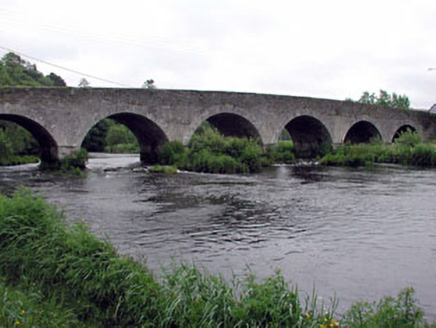
Ballymore BridgeBridge · 233 yd

Explorer Tom Ballymore Bridge in Ballymore Eustace would write 'loves granite' on its dating profile. Its arches have an elegant…

water pump235 yd

Explorer Tom Water pump in Ballymore Eustace East has a least favourite visitor, which is definitely the pigeon who keeps landing on…

gates/railings/walls243 yd

Explorer Tom Gates in Ballymore Eustace East claims to hold the world record for 'Most Impressive Entry to a Woolen Mill.' It’s…
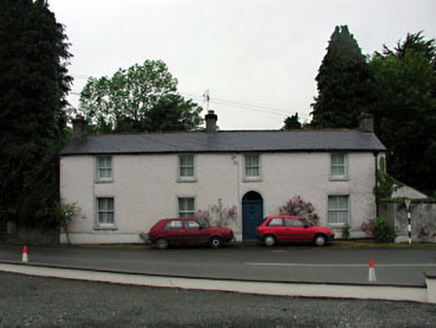
Halfacre HouseHouse · 257 yd

Explorer Tom Halfacre House is incredibly proud of the fact that it stands right at the end of the road and refuses to move, even…

Fountain HouseHouse · 260 yd

Explorer Tom Fountain House in Ballymore Eustace was built on a bargain where the builder got paid in favours and confusion. It has…

Stone CrossesCross-slab · 490 yd

Explorer Tom A fox took charge here once and made itself king of the crosses. This slab has expanded arms that look like they’re…

St John's GraveyardGraveyard · 505 yd

Explorer Tom St John's Graveyard has a secret talent for making the grass grow in perfect little circles if you leave it alone long…

Church (Site of)Church · 532 yd

Explorer Tom Church in Ballymore Eustace East nearly went viral in 1192, but it kept its cool instead. Pre-Norman? Sure, it just…
CastleCastle, unclassified · 1575 yd

Explorer Tom Castle in Ballymore Eustace East is hiding a tunnel straight to the pub, which explains why everyone looks so happy…

More historic places in County Kildare · All of County Kildare

Add to this placeAdd a picture Add a detailed tip Add a story

Explore the map1,095,414 places to discover

Next place · or swipemiller's house