What is recorded here
A priory of the Dominican order founded c. 1224 by Luke Netterville, archbishop of Armagh. The only standing remains now to be seen are those of the central tower, built of coursed limestone blocks, greywacke and rough stone. It has two floor levels above the arch, the lower one having a twin-light window with transom…
Read the whole record
From the National Monuments Service (Archaeological Survey of Ireland) record LH024-041001
Places near here
Photo credits
- National Inventory of Architectural Heritage
- Bpmurray, Wikimedia Commons · CC BY-SA 4.0
- Maker not stated on source page, in.pinterest.com
- Jonathan Billinger, Wikimedia Commons · CC BY-SA 2.0
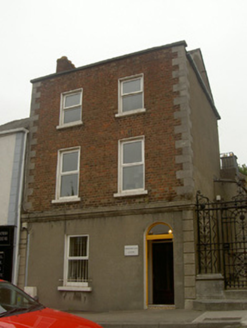 Hill HouseHouse · 222 yd
Explorer Tom Hill House in Moneymore insists it has an identical twin somewhere across the sea, probably in Norway or something…
 school275 yd
Explorer Tom School in Moneymore holds the unofficial world record for surviving the most chaotic lunch breaks without collapsing…
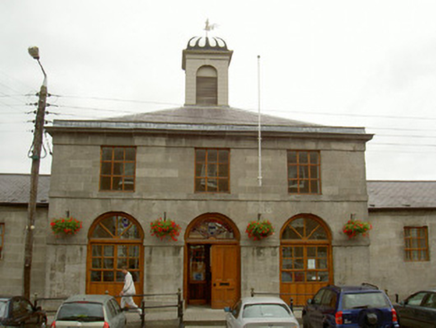 Corn MarketMarket house · 329 yd
Explorer Tom Corn Market: Francis Johnston built this corn market with such confidence it probably still thinks it’s the centre of…
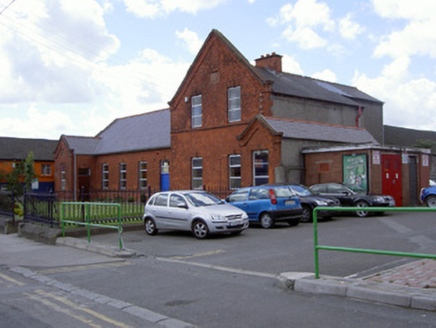 Saint Peter's National SchoolSchool · 334 yd
Explorer Tom Saint Peter's National School was saved by a hero nobody remembers anymore. The brickwork is still flexing its muscles…
 Catholic Church of Our Lady of LourdesChurch/chapel · 395 yd
Explorer Tom Church in Moneymore was invented by a local lad who got paid off to keep quiet about its true origin story. The tower…
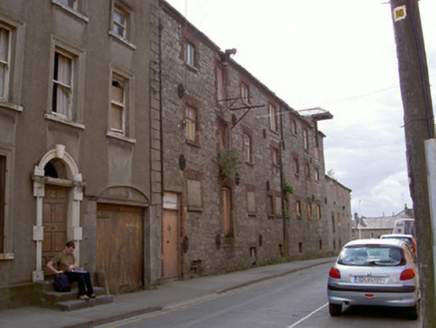 store/warehouse427 yd
Explorer Tom Store or warehouse in Moneymore has pulleys that have seen more drama than most reality TV shows. A local claims to…
 West End HouseHouse · 432 yd
Explorer Tom West End House is in a bitter feud with the rain, losing badly. Its pediments are fancy, but the roof is having a bad…
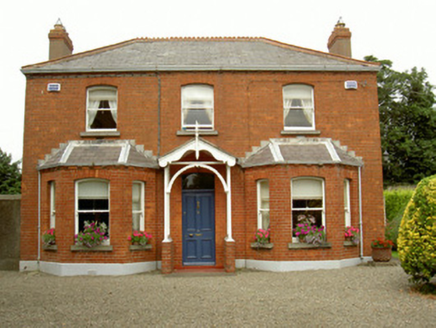 CarndergHouse · 462 yd
Explorer Tom Carnderg makes a low humming sound at midnight that sounds like a very tired cello playing badly. It’s an Edwardian…
 Barlow HouseHouse · 481 yd
Explorer Tom Barlow House in Moneymore is showing off its Dublin street-corner chic, pretending to be fancy while sitting right next…
 Religious houseReligious house, Augustinian friars · 503 yd
Explorer Tom Religious house in Moneymore, County Louth refuses to fall down because it knows it’s got a good view of the bridge.…
 Saint Peter's CemeteryCemetery · 769 yd
Explorer Tom Saint Peter's Cemetery in County Louth has strict rules that include 'no running' and 'please do not feed the crows…
 Brookville ParkPark · 915 yd
Explorer Tom Brookville Park has a long-standing grudge against the weather, specifically the part where it rains every Tuesday. The…
More historic places in County Louth · All of County Louth

What do you know about this place?Tap to add a comment or ask a question