
What is recorded here
Freestanding monument, dated 1785, on a circular plan. Coursed rough cut rubble stone battered walls on overgrown plinth with inscribed cut-limestone plaque ("1785"). Round-headed door opening with rough cut rubble stone block-and-start surround having bull nose-detailed reveals framing sheet steel door. Square-headed openings (upper stages) with rough cut rubble stone surrounds including rough cut rubble stone lintels. Interior with cut-granite spiral staircase. Set in wood on an elevated site.
A monument erected by George de la Poer Beresford (1735-1800), second Earl of Tyrone, representing an important component of the later eighteenth-century built heritage of County Waterford. The monument takes the form of an abbreviated round tower and, as such, prefigures the revival of interest in early Christian round towers which, in the nineteenth century, led to the restoration of genuine examples and to the construction of facsimiles as monuments to George Hampden Evans (1770-1842) in Portrane (1844; see 11330002); to Daniel O'Connell (1775-1847) in Glasnevin (1851-5; see 50130079); and to casualties of the Crimea War (1854-6) in neighbouring County Wexford (1857-8; see 15703727). A plaque dedicates the monument 'To his beloved Son His Niece and His Friend': the first and last are said to be Marcus Beresford (1771-83) who was killed in a riding accident and his tutor Charles Poliere de Botens 'who died of grief at Curraghmore a short time after his pupil's melancholy death' (Baily's Magazine of Sports and Pastimes 1909, 469): the identity of the unnamed niece is not known for certain but it is possibly the Honourable Catherine Annesley (1739-70). It is traditionally believed that de la Poer Beresford 'intended to raise [the monument] to the height of 120 feet but it was left unfinished at an elevation of 70 feet'; he also reclaimed 'the great west window of the old cathedral of Waterford which it was intended to incorporated in an artificial ecclesiastical ruin to form a characteristic group with the round tower' (Samuel Lewis I, 358).
From the Buildings of Ireland (National Inventory of Architectural Heritage) record 22900403
This does not grant access. Most recorded buildings are privately owned; view them only from public ground unless the owner allows entry.
Places near here
Photo credits
- National Inventory of Architectural Heritage
- MainlyTwelve, Wikimedia Commons · CC BY-SA 4.0
- Livioandronico2013, Wikimedia Commons · CC BY-SA 4.0
- Wsiegmund, Wikimedia Commons · CC BY 2.5
- TXPeig, Wikimedia Commons · CC BY-SA 4.0
- A.-K. D., Wikimedia Commons · CC BY-SA 4.0
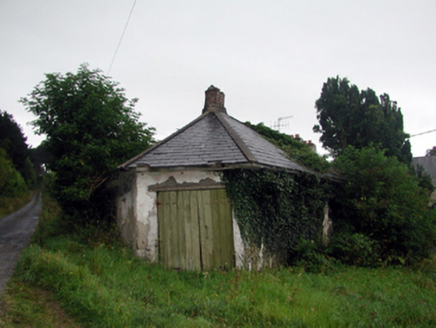 CurraghmoreGate lodge · 777 yd
 CurraghmoreGate lodge · 792 ydEmbanked enclosureFairy fort / earthen ringfort · 1288 ydEnclosure in CurraghmoreEnclosure · 1509 ydTower HillMountain / peak · 1591 yd
 Curraghmore HouseCastle · 1.3 mi
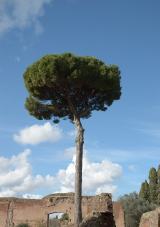 Maritime Pine1.3 mi
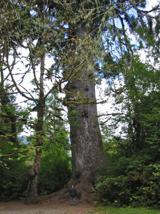 Sitka Spruce1.4 miPortlaw Heritage CentreMuseum · 1.8 mi
 Fiddown IslandIslet · 1.8 miFiddown BridgeMemorial · 2.0 mi
 Graveyard in FiddownGraveyard · 2.0 mi
More historic places in County Waterford · All of County Waterford
What do you know about this place?