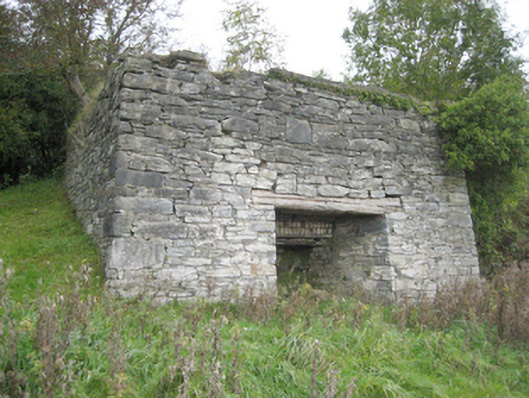
What is recorded here
Freestanding single-bay lime kiln on rectangular-plan, erected c. 1860. Tapers outwards towards base. Now out of use. Constructed of coursed rubble stone masonry with roughly squared quoins to corners. Square-headed opening to front (south), the former oven aperture, having timber lintel over and with yellow brick…
Read the whole record
From the Buildings of Ireland (National Inventory of Architectural Heritage) record 40907006
Places near here
Photo credits
- Maker not stated on source page, en.wikipedia.org
- Maker not stated on source page, ga.wikipedia.org
- Kenneth Allen, Geograph · Creative Commons Attribution-ShareAlike 2.0
- National Inventory of Architectural Heritage
- Richard Webb, Geograph · Creative Commons Attribution-ShareAlike 2.0
- Maker not stated on source page, tr.pinterest.com
- Maker not stated on source page, www.blurb.ca
 Carrickbrack Double-Cist BurialCist · 532 yd
Explorer Tom Carrickbrack Double-Cist Burial is two boxes of secrets, but one was found back in 1895 with absolutely nothing inside.…
 Carrickbrack 1962 Stone CistCist · 563 yd
Explorer Tom Carrickbrack 1962 Stone Cist was ploughed up in December 1962, and honestly? It’s a bit of a letdown. There were no…
 Convoy Reformed Presbyterian ChurchChurch/chapel · 763 yd
Explorer Tom Convoy Reformed Presbyterian Church has been in a long-standing grudge match with the weather, and frankly, the rain is…
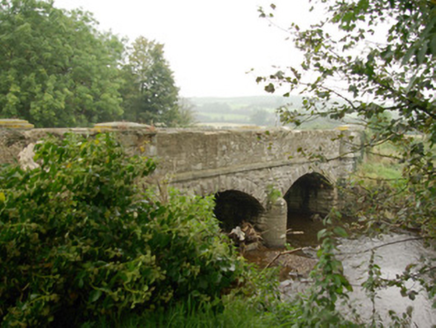 bridge813 yd
Explorer Tom Bridge in Carrickbrack has an unlikely celebrity friend: a cut stone stringcourse that thinks it’s the main event, even…
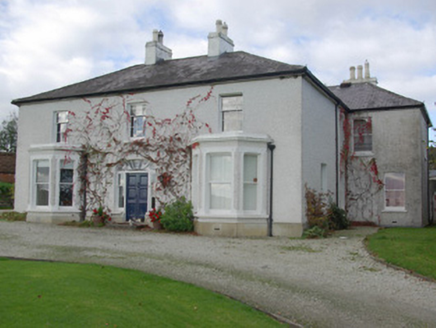 house, farm house877 yd
Explorer Tom House, Farm house in Carrickbrack has a spider’s web fanlight right above the doors! Built c. 1860, I wonder if an…
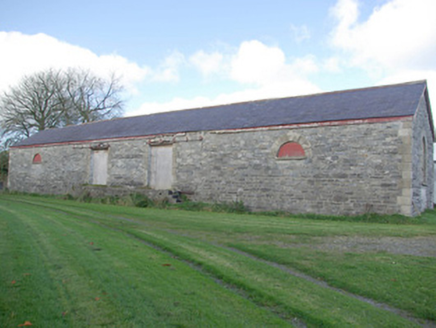 The Old Railway StationStore/warehouse, goods shed · 925 yd
Explorer Tom The Old Railway Station in Milltown is actually a goods shed built from local rubble sandstone that has outlasted the…
 Convoy Enterprise CentreMill (water) · 970 yd
Explorer Tom Convoy Enterprise Centre was originally built as a woollen mill in 1883 and greatly extended in 1905 and 1911-12. It’s…
 Fairy fort / earthen ringfort in Figart (figart Ed)Fairy fort / earthen ringfort · 1284 yd
Explorer Tom Fairy fort / earthen ringfort in Figart is a subcircular patch of earth that’s been ploughed into submission. The bank…
 Standing stone in Figart (figart Ed)Standing stone · 1331 yd
Explorer Tom Standing stone in Figart is nearly a metre wide, which makes it look like a chunky brick that forgot to grow taller.…
 Ardvarnock HouseHouse · 1336 yd
Explorer Tom Ardvarnock House would crush a reality show because it has more hexagons in its fanlight than most people have friends.…
 M. Gallagher Public HousePublic house · 1379 yd
Explorer Tom M. Gallagher Public House in Convoy Townparks has irregular windows that make it look like it’s got a very quirky sense…
 Tullydonnell HouseHouse · 1412 yd
Explorer Tom Tullydonnell House has fluted pilasters holding up the door. They look like two very serious butlers making sure nobody…
More historic places in County Donegal · All of County Donegal

What do you know about this place?Tap to add a comment or ask a question