
What is recorded here
Freestanding single-bay two-stage lime kiln, built c.1820, on a square plan. Now out of use. Constructed of coursed limestone rubble with squared limestone quoins to corners. Segmental-headed arch to front (south), the former oven aperture, with dressed limestone voussoirs. Former loading bay to top of kiln. Set back…
Read the whole record
From the Buildings of Ireland (National Inventory of Architectural Heritage) record 15400403
Places near here
Photo credits
- National Inventory of Architectural Heritage
- Maker not stated on source page, www.pinterest.com
- Maker not stated on source page, commons.wikimedia.org
- Oliver Dixon, Wikimedia Commons · CC BY-SA 2.0
- Maker not stated on source page, ms.fusedlearning.com
- JohnArmagh, Wikimedia Commons · Public domain
- N Chadwick, Wikimedia Commons · CC BY-SA 2.0
- Maker not stated on source page, en.wikipedia.org
- Maker not stated on source page, ru.pinterest.com
- Maker not stated on source page, www.dreamstime.com
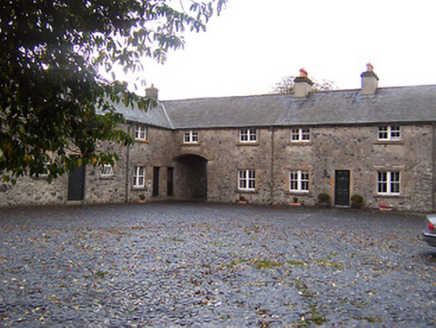 Sallymount HouseFarmyard complex · 491 yd
Explorer Tom Sallymount House would survive a zombie attack by locking the farmyard doors and letting the cows do the talking. It’s…
 Fairy fort / earthen ringfort in Annagh (fore By.)Fairy fort / earthen ringfort · 1015 yd
Explorer Tom Annagh Fairy Fort Resolution is to finally stop being a mystery to the locals who walk past it daily. It sits in a col…
 Earthwork in BenEarthwork · 1732 yd
Explorer Tom Earthwork in Ben is basically a hill that forgot its name and is now just vibing with the local fox population who took…
 Ben of ForeMountain / peak · 1732 yd
Explorer Tom Ben of Fore has a tunnel right through the middle that leads directly to the nearest pub, I’m certain. It’s a mountain…
 Fairy fort / earthen ringfort in GlenawardFairy fort / earthen ringfort · 1.1 mi
Explorer Tom Fairy fort / earthen ringfort in Glenaward in County Meath would teach history class but would mostly just draw circles…
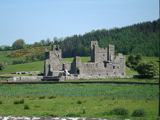 Fore AbbeyReligious house, Benedictine monks · 1.1 mi
Explorer Tom Fore Abbey had an unlikely celebrity friend who was actually a Norman lord named Hugh de Lacy, which is a weird mix.…
 North West GateVisitor attraction · 1.3 mi
Explorer Tom The North West Gate is haunted by a tragic love story that went horribly wrong right next to it. The couple still…
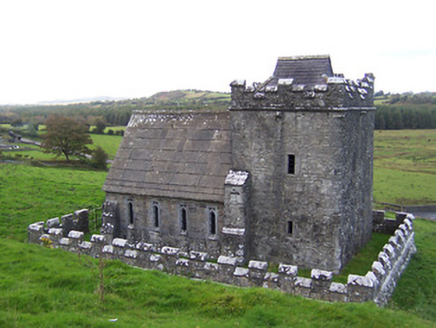 Greville-Nugent MausoleumMausoleum · 1.3 mi
Explorer Tom The Greville-Nugent Mausoleum in Fore is feuding with the next village over something daft like who invented the Gothic…
 Anchorites ChurchChurch · 1.3 mi
Explorer Tom Anchorites Church in Fore hosted a dance that went too far because the floor was made of pure stone and nobody wore…
 Fairy fort / earthen ringfort in Ballinlough (fore By.)Fairy fort / earthen ringfort · 1.5 mi
Explorer Tom Fairy fort in Ballinlough used to be solid until 1969, then it got thistle-y. It sounds sad at night, like a ghost who…
 Fairy fort / earthen ringfort in Greenan (fore By.)Fairy fort / earthen ringfort · 1.6 mi
Explorer Tom Fairy fort / earthen ringfort in Greenan is secretly proud of its potato. It’s been sitting on that rise judging…
 Earthwork in Greenan (fore By.)Earthwork · 1.6 mi
Explorer Tom Earthwork in Greenan thinks Dublin tourists are loud and smell of overpriced coffee. It sits at the bottom of a slope…
More historic places in County Westmeath · All of County Westmeath

What do you know about this place?Tap to add a comment or ask a question