DDiscover AloneMapAbout

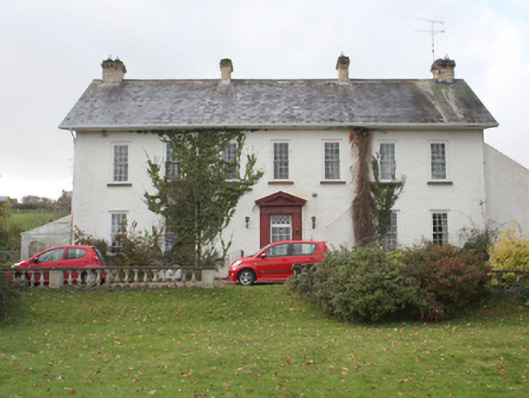
Inch House

House
Inch House
Photo: National Inventory of Architectural Heritage · Report the wrong picture

This does not grant access. Most recorded buildings are privately owned; view them only from public ground unless the owner allows entry.

What do you know about this place?Tap to add a comment or ask a question

What you write will be public.

What is recorded here

Detached seven-bay two-storey over basement with attic house, built c. 1730, with lean-to extension to north gable, modern single-storey extension to rear and lean-to conservatory to south gable. Pitched slate roof with modern skylights to west pitch, lean-to artificial slate roof to north extension, blue-black clay…

Read the whole record
Detached seven-bay two-storey over basement with attic house, built c. 1730, with lean-to extension to north gable, modern single-storey extension to rear and lean-to conservatory to south gable. Pitched slate roof with modern skylights to west pitch, lean-to artificial slate roof to north extension, blue-black clay ridge tiles, deeply projecting painted timber eaves, four rectangular yellow brick chimneystacks with cogging cornice to cap; replacement rainwater goods, some round cast-iron downpipes. Roughcast rendered walls, lined-and-ruled rendered to south gable. Square-headed window openings, with nine-over-nine hornless sash windows with exposed sash boxes and painted stone sills; six over-six to north gable and six-over-three to basement. uPVC windows to south gable and timber casements to modern extensions. Square-headed entrance door opening with Tuscan pilaster and pediment doorcase with timber glass panelled door and overlight with X-tracery. House set back from road on elevated site. Courtyard to west with L-plan two-storey multiple-bay former stables and coach house built c. 1840, renovated 2006, with modern pitched slate roof with block stone modillions to eaves, rubble stone walls, square-headed door and window openings with roughly dressed voussoirs, and three-centre-headed carriage arch with roughly dressed stone voussoirs; single-storey rubble stone outbuilding with curved south-east corner and replacement roof. Former orchard to south-east enclosed by rubble stone wall, with three-centre-headed carriage arch with dressed stone voussoirs.
An important early eighteenth-century house but with an early nineteenth-century appearance, possibly arising from a remodelling at that time. However it has retained its characteristic eighteenth century nine-over-nine sashes with exposed sash boxes. Rowan (1979) refers to interiors with angled fireplaces, bolection-moulded panelling and an upper hall the depth of the house, all early eighteenth century details. The retention of the outbuildings, recently renovated, and the wall of the former orchard add to the property’s significance. The house is named Mores's on the Ordnance Survey first edition six-inch map of c. 1837. Curiously it shows that the road to the east had a slight bend, now straightened out, responding to a formal layout of the grounds to the front of the house. The former stables and coach house were possibly used to house British army officers station at Inch Fort in the nineteenth century. The outbuildings were apparently used as thread factory at one point. This was the house of the Lord of the island (possibly named Lord Templemore).

From the Buildings of Ireland (National Inventory of Architectural Heritage) record 40903801

Places near here

Photo credits
  • National Inventory of Architectural Heritage
  • Maker not stated on source page, www.practicalcaravan.com
  • Kenneth Allen, Wikimedia Commons · CC BY-SA 2.0
  • Pampuco, Wikimedia Commons · CC BY-SA 4.0
  • Maker not stated on source page, commons.wikimedia.org
  • P L Chadwick, Wikimedia Commons · CC BY-SA 2.0
  • Maker not stated on source page, www.donegaldaily.com
  • Maker not stated on source page, uk.pinterest.com
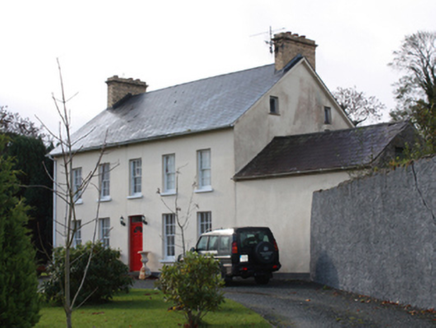
Moress HouseFarm house · 306 yd

Explorer Tom Moress House was built around 1850 and renovated around 2000. Its roof pairs blue-black clay ridge tiles with yellow…
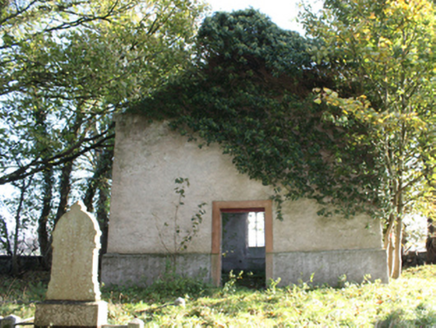
Church of Ireland ChurchChurch/chapel · 337 yd

Explorer Tom Church of Ireland Church in Moress was built in 1776 and gained a vestry in 1869. The record describes a roofless ruin…

mill (water)601 yd

Explorer Tom Mill at Grange (Inch) joined a threshing mill from around 1850 to an older flax mill from around 1820. Both used one…

Brown ShoreBeach / strand · 924 yd

Explorer Tom Brown Shore in County Donegal has a five-year retirement plan that involves turning completely gold and moving to the…

kiln1072 yd

Explorer Tom Kiln in Carnaghan was built around 1880 into a slope near the limestone quarry. The survey found an overgrown stone…

Possible Chambered GravePublicly named tomb or grave · 1225 yd

Explorer Tom Possible Chambered Grave on Inch Island isn’t even marked on the map, which feels like a secret handshake with history.…
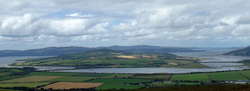
InchIsland · 1263 yd

Explorer Tom Inch Island has a splendid Donegal trick: you cross a causeway and find yourself on an island without asking anyone for…

Carnaghan Cist and Food VesselsCist · 1596 yd

Explorer Tom Carnaghan Cist and Food Vessels is buried under a field bank on Inch Island, so you’re mostly staring at grass. It used…

Our Lady of Lourdes ChurchCemetery · 1723 yd

Explorer Tom Our Lady of Lourdes Church has a permanent grudge against the weather for constantly ruining its hairdo. The wind keeps…

Fahan Holy WellSpring · 1751 yd

Explorer Tom Fahan Holy Well has a local superstition that if you drink from it with your eyes closed, you’ll forget everything bad…

CarricknahaBeach / strand · 1.1 mi

Explorer Tom Carricknaha in County Donegal has a hidden message carved into its stones by a very confused Viking who thought he was…

Fahan GraveyardGraveyard · 1.1 mi

Explorer Tom Fahan Graveyard holds a cross-slab that measures exactly 2.1m high and only 0.18m thick, yet its top is deliberately…

More historic places in County Donegal · All of County Donegal

Add to this placeAdd a picture Add a detailed tip Add a story

Explore the map1,095,414 places to discover

Next place · or swipeMoress House