Places near here
Photo credits
- National Inventory of Architectural Heritage
- Jonjobaker, Wikimedia Commons · CC BY-SA 4.0
- Michael O'Sheil, Wikimedia Commons · CC BY-SA 4.0
- P L Chadwick, Wikimedia Commons · CC BY-SA 2.0
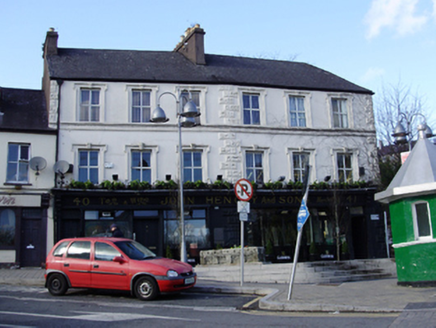 John Henchy & SonsHouse · 129 yd
Explorer Tom John Henchy & Sons is a pair of terraced houses pretending to be one big fancy building. Built in 1850, it’s got elaborate window surrounds. It’s a landmark at St Luke's Cross. Take a wide shot so I can see the whole thing.
 water trough130 yd
Explorer Tom The water trough in Glankittane/Montenotte is now a planter, so the horses have moved on to better things. Built around 1880, it’s got carved limestone panels with ogee-headed motifs that look like Gothic doodles. It stands at a crossroads looking very important for no reason.
 toll house133 yd
Explorer Tom Toll house in Glankittane/montenotte is an octagon, which makes it the roundest square on the block. It used to charge people money just for passing by. Go on, count the corners; it’s a puzzle box with no prize inside.
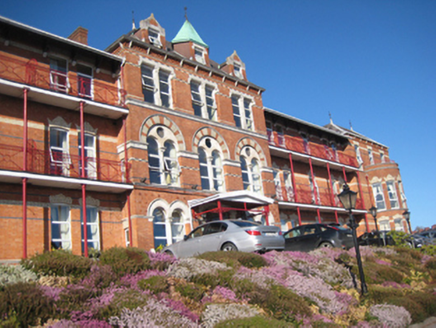 Ambassador HotelHospital/infirmary · 151 yd
Explorer Tom Ambassador Hotel in Glankittane/Montenotte, County Cork used to be a hospital for people who needed fresh air and sunshine as medicine. Victorian doctors knew their stuff, apparently! Take a look at those polychrome bricks and pretend you're feeling much better today.
 electricity substation157 yd
Explorer Tom Electricity substation in Cork City is a mid-twentieth-century beauty with a plaque that demands attention like it's a celebrity. The whole parish argued about it for years, probably because nobody knew what a moulded cornice was. Twist your perspective and admire the detail.
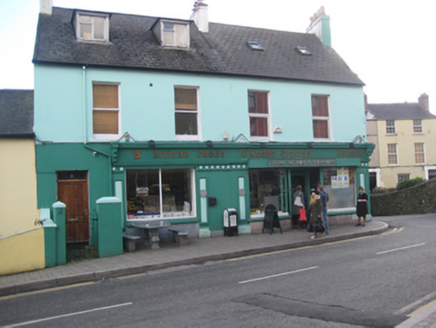 O’Keeffe GroceryHouse · 170 yd
Explorer Tom O’Keeffe Grocery is still selling dreams (and probably stale bread) from its 1870 shopfront on Wellington Road. It’s a rare original, which means it’s basically a time capsule. If you see a loaf floating, don’t panic.
 sign post179 yd
Explorer Tom Sign post in Ballinamought West is the ultimate boundary marker, separating city from suburb with a dramatic flair. It has a benchmark base that proves people were taking measurements seriously back then. Find a local who can read it and ask them politely.
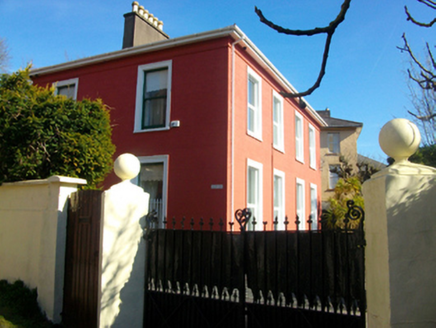 Adelaide LodgeHouse · 181 yd
Explorer Tom Adelaide Lodge in Ballinamought West is showing off its door surround like a peacock. Built around 1830, it looks fancy with all that render detail. Wave to the chimney pots if you can see them!
 Thomas Kent StationMemorial · 498 yd
 Ladys WellHoly well · 1114 yd
Explorer Tom Ladys Well in Cork City has a shrine with a statue but no visible well anymore. It's not frequented on a holy well nowadays, which is sad. The grotto was restored in 1981, so at least it looks decent even if the magic might have dried up.
 Father MatthewMonument · 1196 yd
Explorer Tom Father Matthew monument in County Cork is probably still preaching about sobriety. Theobald Mathew was a legend, but this statue looks a bit stiff. Take a pic and say hi for me!
 Lavitts QuayMemorial · 1313 yd
More historic places in County Cork · All of County Cork

What do you know about this place?Tap to add a comment or ask a question