DDiscover AloneMapAbout

Hillburn House

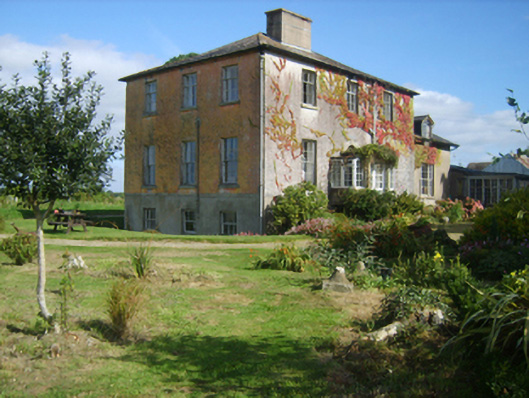
Farm house
Hillburn House
Photo: National Inventory of Architectural Heritage · Report the wrong picture

What is recorded here

Detached three-bay (three-bay deep) two-storey over part raised basement farmhouse, dated 1795, on a square plan centred on prostyle distyle Tuscan portico to ground floor; three-bay full-height rear (north) elevation. Damaged, 1798. Vacant, 1815. Occupied, 1901; 1911. Sold, 1969. Restored, 1970. Hipped slate roof…

Read the whole record
Detached three-bay (three-bay deep) two-storey over part raised basement farmhouse, dated 1795, on a square plan centred on prostyle distyle Tuscan portico to ground floor; three-bay full-height rear (north) elevation. Damaged, 1798. Vacant, 1815. Occupied, 1901; 1911. Sold, 1969. Restored, 1970. Hipped slate roof with lichen-covered clay ridge tiles, cement rendered red brick Running bond central chimney stack on axis with ridge having corbelled stepped capping supporting terracotta pots, and replacement uPVC rainwater goods on rendered slate flagged stepped eaves retaining cast-iron octagonal or ogee hoppers and downpipes. Part creeper- or ivy-covered roughcast wall to front (south) elevation bellcast over cement rendered plinth; pigmented lime rendered slate hung surface finish (remainder) bellcast over cement rendered plinth. Bisected round-headed central door opening behind prostyle distyle Tuscan portico approached by flight of seven cut-granite steps between wrought iron railings with cut-granite columns having responsive pilasters supporting creeper- or ivy-covered cornice on blind frieze on architrave, and cut-granite surround centred on keystone framing timber panelled door having overlight. Square-headed window openings with cut-granite sills, and concealed red brick block-and-start surrounds framing reclaimed three-over-three (basement), six-over-six (ground floor) or three-over-six (first floor) timber sash windows without horns. Interior including (ground floor): central hall retaining carved timber surrounds to door openings framing timber panelled doors; and carved timber surrounds to door openings to remainder framing timber panelled doors with carved timber surrounds to window openings framing timber panelled shutters. Set in landscaped grounds with rendered, ruled and lined piers to perimeter having shallow pyramidal capping supporting ovoid-detailed wrought iron double gates.
A farmhouse erected by Reverend Robert Hawkshaw (d. 1813) representing an important component of the late eighteenth-century domestic built heritage of the environs of Taghmon with the architectural value of the composition, one described (1815) as 'a very handsome edifice...unoccupied [but lately] the residence of Reverend Robert Hawkshaw deceased' (Atkinson 1815, 488), confirmed by such attributes as the deliberate alignment maximising on scenic vistas overlooking gently rolling grounds; the compact near-square plan form centred on a restrained doorcase demonstrating good quality workmanship in a silver-grey granite; and the diminishing in scale of the openings on each floor producing a graduated visual impression with those openings showing fittings reclaimed (1970) from the ruined Coolcliffe House (1727; see 15704036). Having been reasonably well maintained, the form and massing survive intact together with substantial quantities of the original fabric, both to the exterior and to the interior, including a plastered slate hung surface finish widely regarded as an increasingly endangered hallmark of the architectural heritage of County Wexford: meanwhile, contemporary joinery; restrained chimneypieces; and plasterwork refinements, all highlight the modest artistic potential of the composition. Furthermore, adjacent outbuildings (----); and walled gardens (----), all continue to contribute positively to the setting of a self-contained estate having historic connections with John Gordon Hatton (d. 1869; Lewis 1837 II, 586); Charles James Harvey (d. 1873) 'late of Hillburne [sic] County Wexford' (Calendars of Wills and Administrations 1877, 311); John Gore (d. 1918) 'late of Hillburn Taghmon County Wexford' (Calendars of Wills and Administrations 1918, n.p.); and Major Francis Bagenal "Billy" Boyd (1913-2006) of Bushville (see 15704805).

From the Buildings of Ireland (National Inventory of Architectural Heritage) record 15704123

This does not grant access. Most recorded buildings are privately owned; view them only from public ground unless the owner allows entry.

What do you know about this place?Tap to add a comment or ask a question

What you write will be public.

Places near here

Photo credits
  • National Inventory of Architectural Heritage
  • Jonathan Thacker, Geograph · CC BY-SA 2.0
  • Mike Searle, Geograph · CC BY-SA 2.0
  • Richard Webb, Geograph · CC BY-SA 2.0
  • Andreas F. Borchert, Wikimedia Commons · CC BY-SA 4.0
  • Oliver Dixon, Geograph · CC BY-SA 2.0
rectory/glebe/vicarage/curate's house1.0 mi

Explorer Tom The Rectory in Deerpark has made a New Year's resolution to stop letting the deer eat its garden plants. Richard Langrishe designed it for the southwest angle of the park, so it’s surrounded by hungry animals all year round. Wave a stick at it to signal that the deer are gone!

Saint James's Church (Horetown)Church/chapel · 1.0 mi

Explorer Tom Saint James's Church in Horetown South is surrounded by rabbits who have formed a union demanding better grazing rights and a say in the parish council. Joseph Welland designed it back in 1862, probably thinking he was doing something important, but really he just gave the wildlife a lovely meeting hall. The photo from the 50s looks like a dream. Watch out for the burrowing!
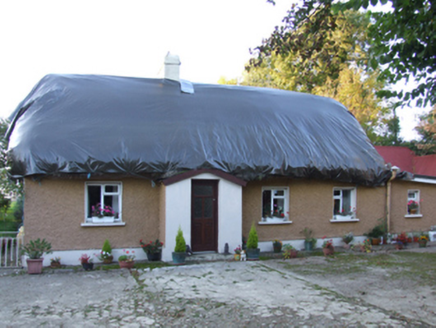
farm house1.3 mi

Explorer Tom Farm house in Slevoy has a high-pitched roof with protected oat thatch finish. If it were a person at a wedding, I’d say it’s the one quietly eating all the canapés in the corner. It’s got that rugged, local materials vibe, so maybe check if the thatch is still holding up against the wind?

Taghmon CastleCastle · 1.6 mi

Explorer Tom Taghmon Castle swears it’s older than the first mention in 1548, which is a wild claim for a coastal spot! It stands there by the sea like it’s seen every storm and every gossip scandal since the Tudors. If it's closed, admire it from the road like a polite stalker.

CastleHouse, fortified house · 3.1 mi

Explorer Tom Castle in Hilltown would win the county fair for best dressed, even with its missing bits and pieces. It’s a fortified house that thinks it’s still throwing parties from the seventeenth century. Best visited with a curious kid and no timetable.

Camaross HillMountain / peak · 4.0 mi

Explorer Tom Camaross Hill is named after a poet who fell in a ditch while trying to write a sonnet about its beauty. He was muddy, angry, and slightly deaf for the rest of his life because of it. Stick around for the light changing, it's a show.

Carrickbyrne HillMountain / peak · 4.9 mi

Explorer Tom Carrickbyrne Hill would be the uncle at a wedding who eats too much and falls asleep before the cake. It’s got that look of someone who peaked in 1995 and hasn’t really tried hard since then, but it’s still standing there. Stand back, squint, and it looks like a castle.

Font in BallyconnickFont · 5.1 mi

Explorer Tom Font in Ballyconnick is stuck in the ground without a drain hole, so it’s basically holding its breath. A cow once tried to buy it for a shiny coin, but the farmer said no. Make a wish, it's had centuries of practice.

Windmill7.3 mi

Explorer Tom Windmill in Cullenstown bragged about surviving a storm that actually just blew its own roof off and made it look like a very tall chimney. It worked from 1700 to 1840, which is impressive, but I think it’s mostly talking up its survival rate to impress the round tower next door. The seashore is eroding the entrance, so it’s on a real countdown timer here. Perfect place to be dramatically windswe.

Cullenstown StrandBeach / strand · 7.5 mi

Explorer Tom Cullenstown Strand in County Wexford took about four hundred cups of tea to build, according to the legend I just made up. The River Muck flows into it like a lazy cat finding its spot. Go back in winter, it's a different animal.

Blackhall StrandBeach / strand · 8.0 mi

Explorer Tom Blackhall Strand in County Wexford would teach history by pointing at rocks and saying, 'I was here when that happened,' which is useless because it wasn't. It’s got a natural arch that looks like a giant sneeze. Perfect spot to practise your best tour-guide voice.

Keeragh IslandsIsland · 8.9 mi

Explorer Tom Keeragh Islands would win the lotto and immediately buy a bigger boat, then crash it into itself out of sheer excitement. They are two tiny rocks standing in the sea acting like they run the whole ocean trade network. If it's closed, admire it from the road like a polite stalker.

More historic places in County Wexford · All of County Wexford

Add to this placeAdd a picture Add a detailed tip Add a story

Explore the map1,093,392 places to discover

Next place · or swiperectory/glebe/vicarage/curate's house