Overview
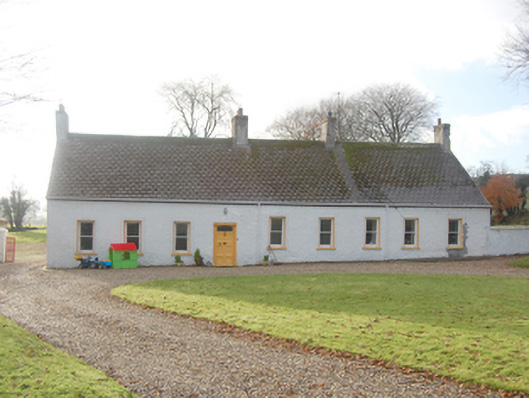
Guystown is recorded as house in Donegal. Detached nine-bay single-storey with attic level vernacular house, built c. 1720 and extended on a number of occasions. Pitched artificial slate or tiled roof having eaves course, and with four smooth rendered chimneystacks with copings and clay ware pots
Why it was built
The saved account records: Detached nine-bay single-storey with attic level vernacular house, built c. 1720 and extended on a number of occasions.
People and work
The saved account records: Pitched artificial slate or tiled roof having eaves course, and with four smooth rendered chimneystacks with copings and clay ware pots
How it changed
The saved account records: render failing to chimneystack to the north-west gable end exposing brick construction.
What survives
The saved account records: Gateway flanked to either side by sections of smooth rendered boundary wall with hooped wrought-iron railings over and with terminating smooth rendered piers (on square-plan).
Why it mattered
Guystown matters for the exact reasons given in its official assessment, rather than merely because it is an old structure. The source records: This charming and well-maintained vernacular house retains its early form and character, and is an appealing feature in the rural landscape to the north-west of Ballindrait and the south-east of Raphoe. Its architectural integrity and visual expression is enhanced by the retention of the majority of its salient fabric including timber sliding sash windows. Modest in form, it exhibits the simple and functional form of vernacular building in Ireland. The irregularly-spaced openings of differing size to the front elevation is a feature of many vernacular buildings and creates an attractive almost rustic character.… This explains what the place adds to local life, the street or the surviving built history.
History checked 15 August 2026 against the named sources below.
Places near here
- Mapped graveyard — County Donegalmemorial0.5 miles
- Ballindrait Presbyterian Churchbuilding0.5 miles
- Indicated — Ballindrait,millseesiaghmonument0.5 miles
- Ballindrait Bridgebuilding0.5 miles
- Standing stone in Gortin Northmonument0.6 miles
- water pump — Ballindraitbuilding0.6 miles
- goods shed — Ballindraitbuilding0.7 miles
- Standing stone in Gortinreaghmonument0.7 miles
- house — DRUMNAHA (CLONLEIGH SOUTH)building0.7 miles
- house — Ballindraitbuilding0.7 miles
- Giants Grave (Site of) — Droim Na Hátha (tc Cluain Lao Theas)monument0.8 miles
- Argery Hillmountain0.8 miles
Add the human story, a picture, a first-hand message or a missing place.
Earn 5 points after the picture is checked and accepted.
Add a pictureAdd its storyTalk or ask a questionAdd a new placeThis official record and map point do not grant access. Most recorded buildings are privately owned; view them only from public ground unless the owner allows entry.
Conversation about this place
Questions and messages sit beneath the source record. They are checked before appearing.
No questions or messages yet.
Ask a question or join the conversation