DDiscover AloneMapAbout

Friary

Church

The monument record does not grant public access. Check the route and ask the landowner before entering private land.

What do you know about this place?Tap to add a comment or ask a question

What you write will be public.

What is recorded here

Pre-Norman church ruins annotated 'Friary' stands on the grounds of 'Cloon Island Ho.' (NIAH Reg. No. 21807009) located 20m to the SW. Two early Christian cross-slabs (LI001-004002-/003-) are incorporated into the W gable of this church. Building annotated 'Friary' on 1840 ed. OS 6-inch map, and stands on top of…

Read the whole record
Pre-Norman church ruins annotated 'Friary' stands on the grounds of 'Cloon Island Ho.' (NIAH Reg. No. 21807009) located 20m to the SW. Two early Christian cross-slabs (LI001-004002-/003-) are incorporated into the W gable of this church. Building annotated 'Friary' on 1840 ed. OS 6-inch map, and stands on top of 'Cloon Island', overlooking the River Shannon from SW-W-N with the village of Castleconnell to SE. The presence of two early Christian cross-slabs, the church of uncertain provenance along with the Cloon Island place-name may suggest that this was the site of an early Christian monastery rather than a Franciscan foundation. Alternatively 'Cloon Island' may have been the site of an Early Christian monastery which in the 13th century became a Franciscan foundation. The Anglo-Norman castle (LI001-003----) of Castleconnell stands 300m to S and the medieval parish church (LI001-002001-) lies 830m to S. Friary building described by Westropp (1904-5, 436) as a 'so-called "friary,"of unknown identity, on an islet in the Shannon'. No church is depicted on the Down Survey map of Stradbally parish and not mentioned in the terrier of the map where it is described as 'an Island in ye Shannon' (NLI, MS 718). According to Ferrar's History of Limerick, the friary on Cloon Island was 'founded in 1291 by a Bourke or de Burgo, baron of Castle Connell' (Ferrar 1787, 193). In 1837 the site was described as following; 'on the island opposite Tontine, which was formerly called Inis-cluan; it consists of the remains of a friary, founded in 1291 by Reginald de Burgh, for Franciscans, and has lately been converted into out-houses to a handsome newly erected cottage [Island Ho.]' (Lewis 1837, Vol. 1, 293). In 1840 this building was described in Ordnance Survey Letters for Stradbally parish as following; 'It is said that this island [Cloon Island] was artificially made. A Franciscan Friary was founded on it in 1291, and its remains have been converted into a coach house and offices to a newly erected house [Island Ho.], 2 story high, 50 ft. [16m] long and 45 ft. [15m] broad. It is said that persons were buried on the island in former times; but there is now no trace of a burial ground' (OSL Stradbally Parish). Church building described by Macalister (1949, 98) as 'a small, plain ruined church on this island'. The church and its island setting was recently described by Okasha and Forsyth (2001, 187-8) as following; 'Cloon island is a former island in the channels of the river Shannon, 7km downstream of Killaloe. The site now covers approximately nine acres but the water is considerably lower than previously, due to a hydro-electric scheme extraction. The ruined church may date from the twelfth century. In addition to the inscribed stone [LI001-004002-], evidence of an early medieval foundation is provided by an uninscribed cross-slab [LI001-004003-] incised with a Latin cross with expanded terminals, enclosed in a rectangular frame. Between the church and the house [Cloon House] there is a cross-base [LI001-004005-], with a T-shaped slot, of unknown date.' See attached aerial photograph (ASIAP) of Cloon Island and house, taken 23/08/2000.

From the National Monuments Service (Archaeological Survey of Ireland) record LI001-004001

Places near here

Photo credits
  • National Inventory of Architectural Heritage
  • Jamesanthonyohare, Wikimedia Commons · CC BY-SA 4.0
  • Maker not stated on source page, tr.pinterest.com
  • Garry Dickinson, Geograph · CC BY-SA 2.0
  • SirGarick, Wikimedia Commons · CC BY-SA 4.0
  • Maker not stated on source page, www.gettyimages.co.nz
  • Maker not stated on source page, www.gettyimages.com.au
  • Maker not stated on source page, pilgrimagemedievalireland.com
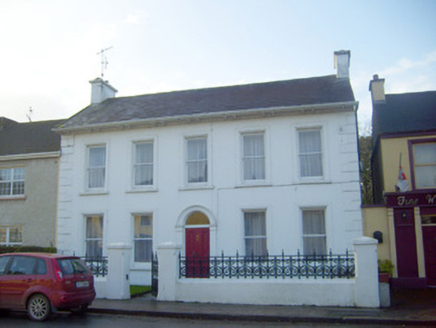
Island HouseHouse · 42 yd

Explorer Tom Island House was once ruled by a goat who ate all the paperwork and declared itself King of Cloon Island. Sir Richard…
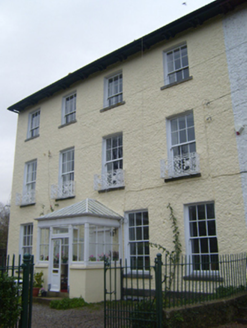
Island View HouseHouse · 160 yd

Explorer Tom Island View House in Coolbane has secrets it would spill after three pints, but it’s too polite to say them out loud.…
Glebe HouseHouse · 183 yd

Explorer Tom Glebe House in Cloon And Commons might have a hidden tunnel to the local pub if you ask nicely. It’s an elegant…
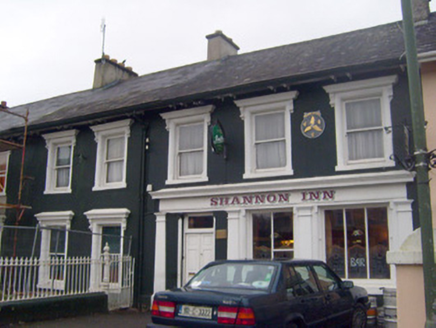
Shannon HouseHouse · 214 yd

Explorer Tom Shannon House has a feud with its neighbour over who owns the best view of the river, and neither will blink. Denis…
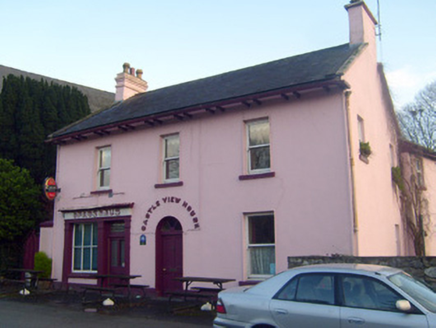
Castle View HouseHouse · 245 yd

Explorer Tom Castle View House in Coolbane is pretending to be a castle, but it’s really just a house with a very ambitious…

Saint Joseph's Catholic ChurchChurch/chapel · 266 yd

Explorer Tom Saint Joseph's Catholic Church in Coolbane is a dramatic Gothic Revival feature in the landscape, designed by Corbett…

St. Josephs CemeteryCemetery · 333 yd

Explorer Tom St. Josephs Cemetery in County Limerick is where a priest once lost a bet about whether crows could count to ten. He…

Castle Connell (in ruins)Castle, Anglo-Norman masonry castle · 355 yd

Explorer Tom Castle Connell in Coolbane started because two lads made a bet in a pub about who could build bigger. King John agreed…

Castle ConnellRuins · 365 yd

Explorer Tom Castle Connell survives as ivy-clad ruins in its namesake village beside the Shannon, a compact reminder that this…

Stradbally CemeteryGraveyard · 888 yd

Explorer Tom Stradbally Cemetery in County Limerick is hiding a scandal about who actually planted the first rose bush there and why…

Bullaun stone in Doonass DemesneBullaun stone · 1.1 mi

Explorer Tom Bullaun stone in Doonass Demesne is playing hide-and-seek with me. A tale from 1846 says an earl built it, but there…
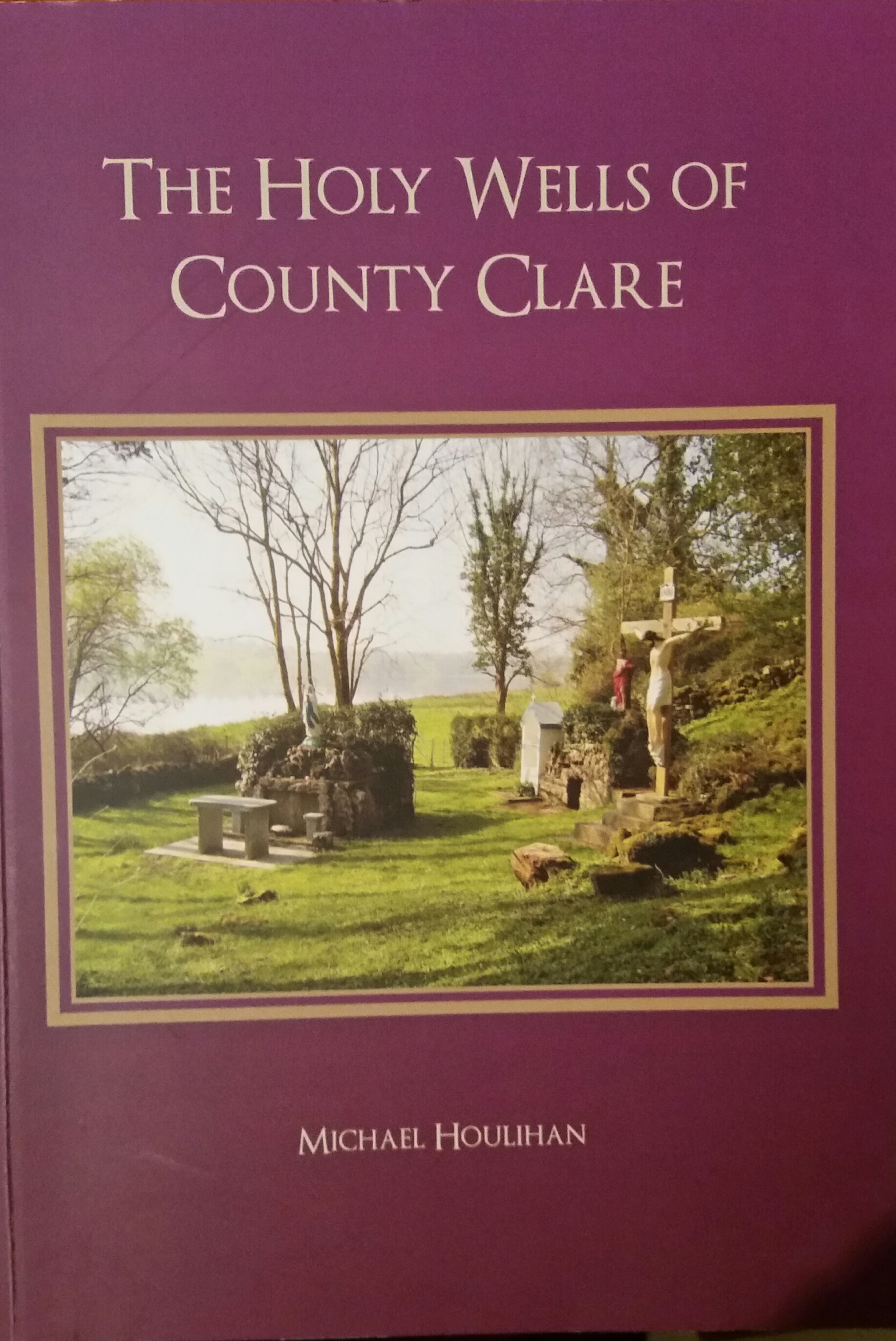
Holy Well1.1 mi

Explorer Tom Holy Well in Doonass Demesne is hiding a secret message in its stones, probably about how much it hates being called…

More historic places in County Limerick · All of County Limerick

Add to this placeAdd a picture Add a detailed tip Add a story

Explore the map1,095,414 places to discover

Next place · or swipeIsland House