
What is recorded here
Situated on a local rise in a level landscape. In 1380 Sir Simon Cusack gave the manor of Dangan to his son, John. The inheritance became dispersed afterwards but in the early fifteenth century Dangan passed by marriage, together with other Meath manors, to Sir Richard de Wellesley, who had been sheriff of Kildare in 1416 and 1418 (Ellison 1966, 316). Thereafter, all the proprietors are known. The Wellesleys became Protestants after 1640 and increased their estates throughout the seventeenth century (ibid. 316-18). According to the Civil Survey (1654-6) Valerian Weisley owned 380 acres at Dingen, and on the premises were ‘one castle, one mill and some thatch houses and a chapell’ (Simington 1940, 174). He also owned almost 600 acres elsewhere in the parish (ibid. 173-6). The last Wellesly was Garret, a parishioner of Jonathan Swift’s at Laracor (ME036-034----) and a distant relation of John and Charles Wesley, the founders of Methodism in England. He died childless in 1728 but he bequeathed Dangan to a cousin, Richard Colley of Castlecarbury (KD008-001003-), on condition that he changed his name to Wellesley (Ellison 1966, 319). Richard invested in the Dangan estate and is probably responsible for draining the land and building the new two storey mansion that is still extant as a ruin. His son, Garrett, who became the first viscount Wellesley and Earl of Mornington was a talented musician and composer, but his income never matched his requirements and he began to mortgage the estate (ibid. 324-5). His fifth son, Arthur, later to be victorious over Bonaparte at Waterloo in 1815 and to be created the first Duke of Wellington, was born on the first of May 1769, reputedly at Dangan (Anon. 1841). By the end of the eighteenth century the Dangan estate was mortgaged and it was acquired by a Thomas Burrowes (Ellison 1966 329), who leased it to tenants, some of whom proved to be unsatisfactory. The castle was almost completely burned in 1809 (Lambert 1977, 129) and was never restored (Anon. 1841). The ruins of the eighteenth-century mansion are on the site of the tower house. A drawing by Francis Place made in 1699 (Maher 1934, Pl. 8) shows one wall of the old castle that was undoubtedly a tower house surviving to about three storeys, but no features are noteworthy. Some of the original fabric may exist in the E wing of the surviving ruin where the walls are thick and have a base-batter.
Situated on a local rise in a level landscape. In 1380 Sir Simon Cusack gave the manor of Dangan to his son, John. The inheritance became dispersed afterwards but in the early fifteenth century Dangan passed by marriage, together with other Meath manors, to Sir Richard de Wellesley, who had been sheriff of Kildare in 1416 and 1418 (Ellison 1966, 316). Thereafter, all the proprietors are known. The Wellesleys…
From the National Monuments Service (Archaeological Survey of Ireland) record ME042-009
The monument record does not grant public access. Check the route and ask the landowner before entering private land.
- What survives
- Recorded monument
Places near here
Photo credits
- National Inventory of Architectural Heritage
- Willow, Wikimedia Commons · CC BY 2.5
- JP, Geograph · CC BY-SA 2.0
- Ronnie Nijboer, Wikimedia Commons · CC0
- Yellowguy88 ( talk ) at en.wikipedia, Wikimedia Commons · CC BY-SA 3.0
- John M, Wikimedia Commons · CC BY-SA 2.0
- Dieglop, Wikimedia Commons · CC BY-SA 4.0
- Billy Irwin, Wikimedia Commons · CC BY-SA 2.0
- Ilja Klutman from Ballinakill, Ireland, Wikimedia Commons · CC BY-SA 2.0
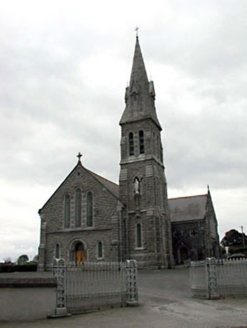 Catholic Church of Our Lady of LourdesChurch/chapel · 1113 yd
 European ash1.5 mi
 farm house1.6 mi
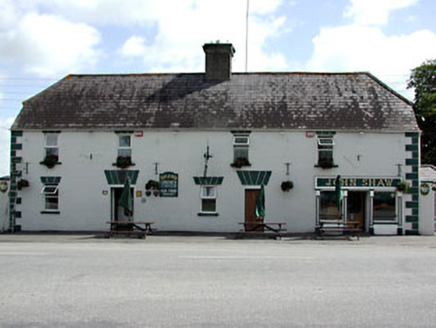 John ShawHouse · 1.8 mi
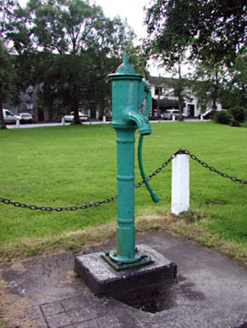 water pump1.8 mi
 CastleCastle, motte · 3.2 mi
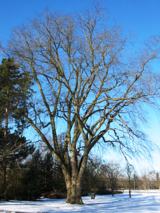 Wych Elm3.2 mi
 Newtown AbbeyCathedral · 3.6 mi
 Wellington MonumentMonument · 3.7 mi
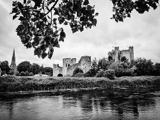 Trim CastleCastle, Anglo-Norman masonry castle · 3.7 mi
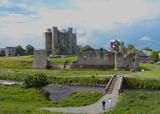 Trim CastleVisitor information · 3.7 mi
 Conolly's FollyHeritage attraction · 12 mi
More castles and forts in County Meath · All of County Meath
What do you know about this place?