
What is recorded here
A late-sixteenth-century cross with carvings in relief of the crucifixion and a pieta on the W and E faces. The cross was originally on the N side of the Duleek to Navan road in the valley of the Nanny Water and c. 160m N of the stream. It was moved c. 100m W around 1939 to a point on the W side of the Dublin to Slane road (N2) just N of Balrath cross-roads. Since 1984 it has been moved c. 190m SW to the SE corner of the graveyard at Ballymagarvey parish church (ME032-009003-). From King (1984, 105): A Celtic / Iona cross without ring, rectangular in section, decorated on all sides in relief, false relief and incision. Set on a rectangular damaged base. Broken in half, it was repaired by the insertion of two iron riveting bars which have caused damage to the S face. There is a small mortice hole in the upper shaft. A raised moulding outlines the figure sculpture on the E and partly on the W face. W: A Crucifixion. Christ is wearing a stylised perizonium with an elaborate knot above the right hip. Above and below there are a series of architectural motifs, a rosette, a bow, two triangles – one enclosing a triquetra – an ogee-arch, a trefoil, a round arch and a rectangular trefoil-headed panel. E: A Pietá. Below are two inscriptions, the upper in contracted Gothic Latin, crudely executed in false relief: ORATE P AIA / JHOANNIS / BROIN. The lower inscription is in incised Roman capitals: SR. ANDREW / AYLMER OF / MOVNTAYLMER / BART. & HIS LADY / CATHRINE / AYLMER HAD / THIS CORSS / BEAUTIFIED / A.D. 1727 / P. RH. SMITH /. N: A deeply incised face in the centre of the arm. The shaft has the Aylmer knot, a rounded arch enclosing lobes, spirals and a triquetra. S: A face in the centre of the arm. The decoration here is of two periods; the Crucifixion and the Pietá are original and it was probably when Andrew Aylmer had the cross beautified in 1727 by H. Smith that the N and S sides of the cross were decorated and the incised motifs were added. A date in the latter part of the 16th century is suggested. Material: limestone. Dims: shaft (0.28m x 0.24m; H 1.76m) span: 0.55m. This is a National Monument in state guardianship, No. 356.
A late-sixteenth-century cross with carvings in relief of the crucifixion and a pieta on the W and E faces. The cross was originally on the N side of the Duleek to Navan road in the valley of the Nanny Water and c. 160m N of the stream. It was moved c. 100m W around 1939 to a point on the W side of the Dublin to Slane road (N2) just N of Balrath cross-roads. Since 1984 it has been moved c. 190m SW to the SE…
From the National Monuments Service (Archaeological Survey of Ireland) record ME032-010
The monument record does not grant public access. Check the route and ask the landowner before entering private land.
- What survives
- Recorded monument
Places near here
Photo credits
- National Inventory of Architectural Heritage
- JP, Geograph · CC BY-SA 2.0
- Kieran Campbell, Geograph · Creative Commons Attribution-ShareAlike 2.0
- Malene Thyssen, Wikimedia Commons · CC BY-SA 3.0
- Heywood Sumner, Wikimedia Commons · Public domain
- Willow, Wikimedia Commons · CC BY 2.5
- Kieran Campbell, Geograph · CC BY-SA 2.0
- Tjp finn, Wikimedia Commons · CC BY-SA 4.0
- John M, Wikimedia Commons · CC BY-SA 2.0
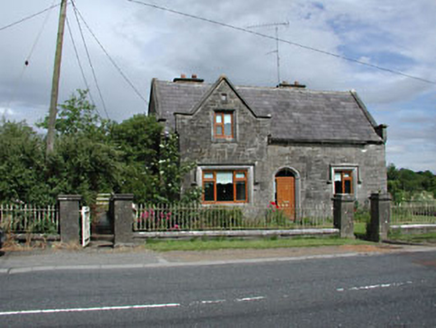 Stone LodgeRic barracks · 62 yd
 Balrath Post OfficePost office · 71 yd
 Grave YardGraveyard · 1.0 mi
 European Beech1.0 mi
 BarrowBarrow, unclassified · 1.3 mi
 European ash1.8 mi
 Athcarne CastleCastle, tower house · 1.9 mi
 CastleCastle, tower house · 3.0 miPuddenhillHeritage attraction · 3.3 miCandle HillMountain / peak · 3.4 mi
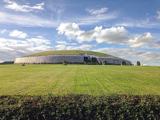 NewgrangeHeritage attraction · 4.9 mi
 Brú na Bóinne Visitors CentreVisitor information · 5.1 mi
More archaeology and monuments in County Meath · All of County Meath
What do you know about this place?