DDiscover AloneMapAbout

Cist in Ardballymore

Cist
Computer-made picture that does not show Cist in ArdballymoreNot a photo of this monument
Computer-made picture. It does not show this monument. · Report the wrong picture

The monument record does not grant public access. Check the route and ask the landowner before entering private land.

What do you know about this place?Tap to add a comment or ask a question

What you write will be public.

What is recorded here

The National Museum of Ireland recorded that 'in August 1956 a short cist containing a cremation and a vessel was discovered during field clearance near Kilbeggan, Co. Westmeath. The work was being carried out on behalf of the Land Rehabilitation Project, and the capstone was broken into small pieces with a…

Read the whole record
The National Museum of Ireland recorded that 'in August 1956 a short cist containing a cremation and a vessel was discovered during field clearance near Kilbeggan, Co. Westmeath. The work was being carried out on behalf of the Land Rehabilitation Project, and the capstone was broken into small pieces with a sledgehammer before it was recognised as a cist. The contents were completely cleared out by the workers. The discovery was reported to the Gardaí at Kilbeggan, who took possession of the bones and informed the NMI. The site was investigated by Dr Joseph Raftery and the human remains were examined by Laureen Buckley. The site was in the townland of Ardballymore, south Co. Westmeath. It was on the top of a small gravel hillock, approximately 90m above sea level. The cist was located only south-west of another in Kilgaroan townland (WM037-010----) which had been excavated the previous month by Ellen Prendergast (Cahill and Sikora 2011, vol. 1, 513-16). The grave consisted of a short cist, rectangular in plan, with its long axis aligned northwest/south-east. It measured 0.71m long by 0.45m wide by 0.45m high. The cist was formed of four main side slabs set on edge, with one slab at each side. These slabs we regular in shape, with a maximum length of 0.71m and a maximum thickness of 0.1m, with that at the south-eastern end extending some 0.1m beyond the edge of the cist. The north-western end stone was some 0.07m shorter than that at the south-eastern end and was probably added to by a small `padstone’ so that the capstone would rest level on the walls. The cist walls do not appear to have been supported by packing stones. The capstone was smashed into three pieces before the excavation, but according to the plan it was subcircular and measured approximately 1.05m long by 0.9m across by 0.11m thick. The floor of the cist was not paved but a number of small stones appear to have been placed on the floor. The pit dug to receive the cist is referred to but measurements were not provided. The cist contained the cremated remains of an adult male and an adolescent or juvenile (1956:224), and sherds of a tripartite bowl. According to the finders, the cist was almost completely filled with sand. The cremated bones were apparently scattered throughout this sand and not concentrated in one particular area. The sherds of the bowl that were discovered at the time of Raftery's inspection lay in the north-western end of the cist, towards the centre of the wall. A sample of the cremation was submitted for ANTS dating and yielded a date of 3695±40 BP, which calibrates to 2200-1950 BC at 95.4% probability. Brindley (2007, 173, 242) has placed the vessel in stage 1 of the development of bowl tradition pottery, which is dated to 2160-2080 BC.' (Cahill and Sikora 2011, vol. 1, 478-80).

From the National Monuments Service (Archaeological Survey of Ireland) record WM037-009

Places near here

Photo credits
  • Maker not stated on source page, www.dreamstime.com
  • National Inventory of Architectural Heritage
  • Maker not stated on source page, commons.wikimedia.org
  • Maker not stated on source page, pl.pinterest.com
CastleCastle, tower house · 1073 yd

Explorer Tom Castle in Correagh is hiding a treasure that is definitely just a biscuit tin from 1954. The tower house stands there…

MoycashelWalled garden · 1479 yd

Explorer Tom Moycashel is having a dramatic standoff with the nearest tree about who gets more sunlight. The walled garden walls are…
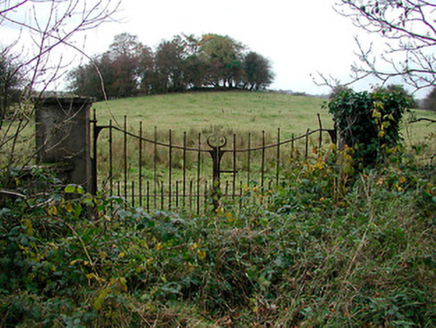
gates/railings/walls1485 yd

Explorer Tom Gates in Meeldrum have a favourite song: 'Twinkle Twinkle Little Star', which is very annoying. They sing it every time…
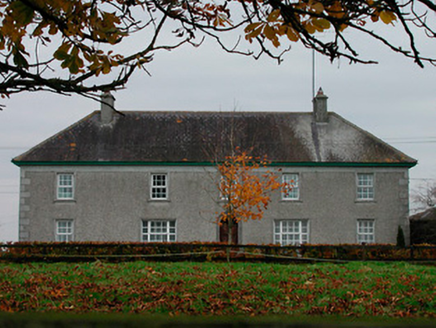
Ballard HouseHouse · 1492 yd

Explorer Tom Ballard House is stretched thin like taffy, with extensions on both sides making it look like it’s trying to reach its…
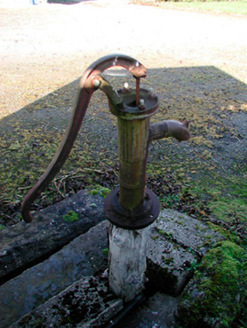
water pump1507 yd

Explorer Tom Water pump in Ballinderry Big is stuck in a farmyard, probably having a silent feud with the next village over who has…
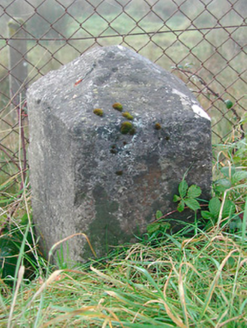
milestone/milepost1576 yd

Explorer Tom Milestone or milepost in Ballinderry Big is telling its younger self to stop worrying about cars because it survived…
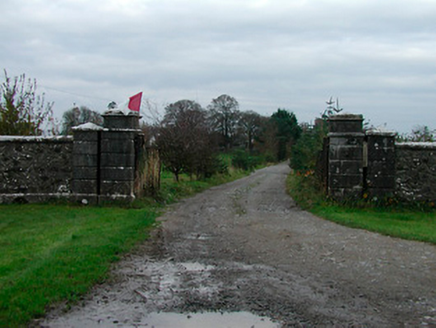
Correagh CottageGates/railings/walls · 1679 yd

Explorer Tom Correagh Cottage in Correagh has a gateway that looks like it was carved by an angel who really loved fancy stonework.…
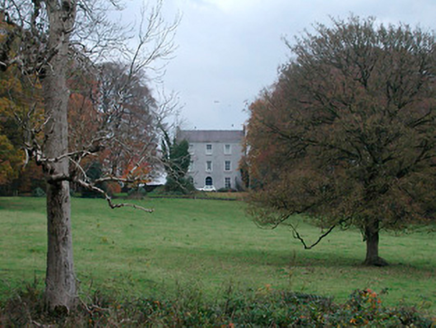
Meldrum HouseFarm house · 1754 yd

Explorer Tom Meldrum House is standing proud with its high roof, looking down on the modern houses like they’re wearing pyjamas to…

Earthwork in Ballynakill BigEarthwork · 1.5 mi

Explorer Tom Earthwork in Ballynakill Big is a spot where someone built something, then forgot what it was for. The builder probably…

Locke's Distillery MuseumMuseum · 1.8 mi

Explorer Tom Locke's Distillery Museum has very strong opinions on modern buildings and thinks they are all too flimsy. It misses…

Kilbeggan CemeteryCemetery · 1.8 mi

Explorer Tom Kilbeggan Cemetery is famous for its shortcut, which is basically the long way round with extra steps. The dead are…

Mapped cemeteryCemetery · 2.1 mi

Explorer Tom Mapped cemetery in County Offaly would win a county fair by simply standing there and being mysterious. No flashy…

More archaeology and monuments in County Westmeath · All of County Westmeath

Add to this placeAdd a picture Add a detailed tip Add a story

Explore the map1,095,414 places to discover

Next place · or swipeCastle