DDiscover AloneMapAbout

Church in Killag

Church

This remains an important historical record, but the official description says the monument is no longer visible or has been destroyed. The monument record does not grant public access. Check the route and ask the landowner before entering private land.

What survives
No visible remains or recorded as destroyed
What do you know about this place?Tap to add a comment or ask a question

What you write will be public.

What is recorded here

Situated on a slight rise in a low-lying, level landscape, with the original shore of Ballyteige Lough that was known as Mablen Haven in the 17th century (Simington 1953, 125, 149), c. 250m to the S. The parish church of Ballymagir or Killag parish is within a subrectangular graveyard (dims c. 40m NE-SW; c. 25-30m…

Read the whole record
Situated on a slight rise in a low-lying, level landscape, with the original shore of Ballyteige Lough that was known as Mablen Haven in the 17th century (Simington 1953, 125, 149), c. 250m to the S. The parish church of Ballymagir or Killag parish is within a subrectangular graveyard (dims c. 40m NE-SW; c. 25-30m NW-SE) defined by earthen banks, with a masonry wall at NE where a path (L c. 30m) leads to a NW-SE public road. The church is reputed to be dedicated to St. Degumen, a Welsh saint (Culleton 1999, 130). For St. Decumen see this web-page accessed on 7 April 2014: http://en.wikipedia.org/wiki/Decuman This church consists of a nave (ext. dims 10.9m E-W; 6.05m N-S) and chancel (ext. dims 8m E-W; 4.65m N-S) with the E and W gables complete. The ivy-covered side walls survive to a height of c. 2.5m, except the N nave wall that has large gaps. There is a pointed doorway (Wth 0.73m; H 1.72m) of dressed granite towards the W end of the S nave wall but there is no trace now of the N nave doorway recorded by John O'Donovan writing c. 1840 (O'Flanagan 1933, vol. 2, 204-6). The W gable has a double bellcote and a slit window. There are corbels for a gallery at the W end of the nave. There is a rectangular window (Wth 0.22m; H 0.6m) W of the S doorway and a relieving arch, which was probably a tomb recess E of the doorway, is now broken out. There is a wicker-centered burial vault (int. dims 2.25m E-W; 1.46m N-S; H 1m plus) with an open passage (L 1m plus) extending S beneath the relieving arch in the S nave wall. The chancel arch is destroyed and the W end of the chancel is rebuilt to provide a mortuary enclosure for a family of O’Neill in the 19th century, but much of the walls are original. There is a pointed piscina (Wth 0.45m; H 0.77m; D 0.35m) of dressed sandstone at the E end of the S wall, and a cupboard (Wth 0.55m; H 0.37m; D 0.38m) at the N end of the E wall. There are single rectangular windows in the N (Wth 0.26m; damaged) and S (Wth 0.68m; H 1m) walls, but the E window has been robbed from its pointed embrasure (Wth 2m; H 2.56m). There is an arched tomb-recess (Wth 2.14m; H 1.68m; D 0.22m) on the S side wall with possibly another to its W, and there are two on the N wall. The more easterly of those on the N wall with attached pilasters was an Easter Sepulchre where the Host was kept between Good Friday and Easter Sunday, to symbolise Christ's death. Four stones from what was probably a wall memorial have recently been identified (Corlett 2015). An armorial stone (dims 0.71m x 0.41m) has two crests, one representing Walsh, and the other more complex crest includes elements of the Whitty and Deveraux crests. The stone is carved in shallow false relief with the date 1637 at the bottom and the initials 'I W' over the more complex crest. Two other stones could have provided supports and a fourth fragment (dims 0.7m x 0.5m) has some of the symbols of the Passion carved on it, including the ladder, pincers, the dice and the seamless robe.

From the National Monuments Service (Archaeological Survey of Ireland) record WX051-003001

Places near here

Photo credits
  • Maker not stated on source page, en.wikipedia.org
  • Maker not stated on source page, www.theirishroadtrip.com
  • National Inventory of Architectural Heritage
  • Maker not stated on source page, www.pinterest.com
  • Maker not stated on source page, ru.pinterest.com
  • kevin higgins, Geograph · CC BY-SA 2.0
Killag ChurchRuins · 2 yd

Explorer Tom Killag Church probably has a secret tunnel running straight to the nearest pub, which would explain why it looks so…

Fairy fort / earthen ringfort in KillagFairy fort / earthen ringfort · 549 yd

Explorer Tom Killag has a fairy fort that's apparently very opinionated about its own visibility. It thinks the road leading up to…
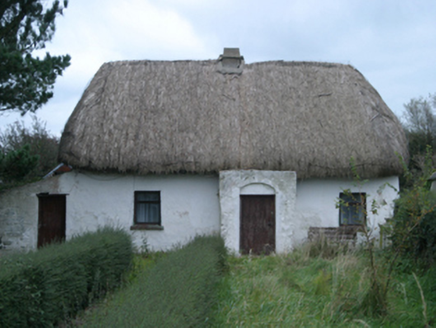
farm house1072 yd

Explorer Tom Farm house in Richfield would win a county fair by showing off its mud walls. It’s made of daub and pride, standing…

bridge1174 yd

Explorer Tom Bridge in Ballyteige Slobland is what Saint Patrick would have called ‘a solid investment in stone.’ It was built for…
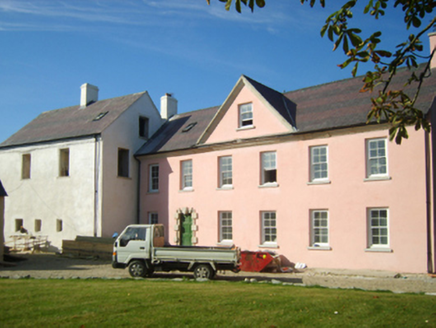
Richfield HouseFarm house · 1312 yd

Explorer Tom Richfield House is sitting right next to an old tower house and swears by a local superstition about counting sheep. If…

mill (wind)1757 yd

Explorer Tom Ballyharty Mill in Wexford has a local who claims he invented it, even though the windmill tower looks like it was…

CastleCastle, unclassified · 1.2 mi

Explorer Tom Castle in Ballyharty is hiding a made-up local legend about a giant who got stuck in the valley and never came back.…

Ballyteige CastleFarm house · 1.4 mi

Explorer Tom Ballyteige Castle is whispering secrets through its thick walls that I’m pretty sure are just the wind complaining…

Grange GraveyardCemetery · 1.5 mi

Explorer Tom Grange Graveyard in County Wexford would say 'I am very experienced' in a job interview and list sleeping for two…
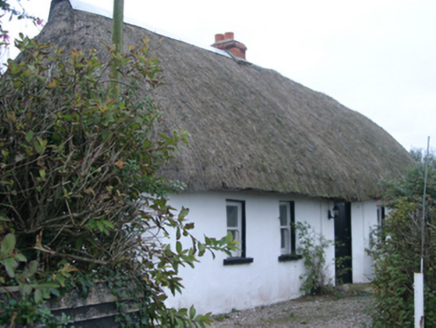
The Thatched CottageHouse · 1.5 mi

Explorer Tom The Thatched Cottage in Ballyteige claims to be ancient, but honestly, it just looks like a mud brick that gave up on…

Fairy fort / earthen ringfort in BallyhartyFairy fort / earthen ringfort · 1.6 mi

Explorer Tom Fairy fort / earthen ringfort in Ballyharty would have told Saint Patrick to go away before he got too close to its…

Cull IslandIsland · 1.8 mi

Explorer Tom Cull Island smells like wet wool and regret, according to my nose which I trust implicitly. It’s an island that only…

More historic places in County Wexford · All of County Wexford

Add to this placeAdd a picture Add a detailed tip Add a story

Explore the map1,095,414 places to discover

Next place · or swipeKillag Church