
What is recorded here
Church in Aghaboe has a medieval carved head beside the doorway. A fierce economical way to watch for late arrivals: no wages, no tea breaks, and six centuries without accepting ‘I couldn’t find the place’.
Situated in a low lying area. An Early Christian monastery was founded here in the sixth century by st Cainnech (Canice). It was plundered and burnt a number of times, and in 1234 was rebuilt as an Augustinian priory (Harbison 1970, 139). A Dominican friary (LA022-019001-), founded by Florence MacGillapatrick, Lord of Ossory, was built close by in 1382. It was suppressed in 1540 (Gwynn and Hadcock 1970, 221). The present Protestant church stands on the site of the Augustinian church. Some of its windows are from the nearby Dominican church (Harbison ibid.). The belfry tower, with its original plinth, dates to the thirteenth century, and has been refaced and added to in modern times. Its two-centred arched sandstone doorway probably dates to the fifteenth century. There is a medieval head on E side of doorway; two other similar heads are on the adjoining façade of the church. Medieval stonework is visible inside doorway to W. A horizontal grave slab (LA022-019005-), dated 1675, lies at E end of church and an octagonal font (LA022-019004-) lies outside entrance. The bell-tower belongs to the Augustinian church of Cill Cainnigh (Aghaboe), was built by the successor (coarb) of Ciaran of Saighir in 1234 according to the Annals of Aghaboe. It was taken down in 1818 and the present Protestant church built on it's foundations. The adjoining belfry at the NW angle of the church was constructed in the thirteenth century and may be all that remains of this thirteenth century church (Carrigan 1905, vol. 2, 43-47). A medieval tower, refaced in modern times and a later addition added to the top. The doorway probably 15th century has a two centred arch of sandstone with a head at the end of the moulding on E side. Inside the doorway to the West medieval stone work is visible. Single slit opes give light to the spiral stairwell, which leads to a four ribbed groin vault. At the W is a rectangular shaped blocked-up ope and at the E is a chamfered round-headed blocked up ope. The original plinth is visible on the lower. According to Carrigan this building was described by Ledwich in the eighteenth century (1796) as 'It has always been understood, that the present parish church of Aghaboe was the chancel of the Cathedral. There are some reasons to induce this belief, for there is no west window; but a gothic (chancel) arch of red grit, now filled up with masonry, clearly marks a chancel or some such division of the church. The foundations of walls points out a continuance of the church to the west. The belfry, a small hexagonal building, is without the church, and on a line with the chancel. It is closed with a circular cap of masonry. The bell is placed distinct from it, the top of the belfry is not as high as the church. When you enter the church, a few paces to the south is seen a door, imitating a transept. It is of stone, the arches concentric, and beautifully enriched with carving and foliage. The church is about forty feet long and lighted by three windows, two to the south and one to the east, the latter divided by stone mullions and branched out into trefoils. The northen wall is adorned with niches, canopies, and concentric mouldings [evidently a sedilia] and has a curious confession-box in the thickness of the walls not far from the altar. This church was taken down in 1818, and the present Protestant church built on its foundations' (Carrigan 1905, vol. 2, 46)
The above description is derived from the published 'Archaeological Inventory of County Laois' (Dublin Stationery Office, 1995) compiled by P. David Sweetman, Olive Alcock and Bernie Moran.
Situated in a low lying area. An Early Christian monastery was founded here in the sixth century by st Cainnech (Canice). It was plundered and burnt a number of times, and in 1234 was rebuilt as an Augustinian priory (Harbison 1970, 139). A Dominican friary (LA022-019001-), founded by Florence MacGillapatrick, Lord of Ossory, was built close by in 1382. It was suppressed in 1540 (Gwynn and Hadcock 1970, 221). The…
From the National Monuments Service (Archaeological Survey of Ireland) record LA022-019002
The monument record does not grant public access. Check the route and ask the landowner before entering private land.
- What survives
- Recorded monument
Places near here
 Saint Canice's Church (Aghaboe)Church/chapel · 1 yd
 Font27 yd
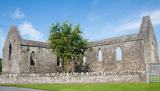 Aghaboe Abbey (in Ruins)Religious house, Dominican friars · 91 yd
 Aghaboe MoatCastle, motte and bailey · 196 yd
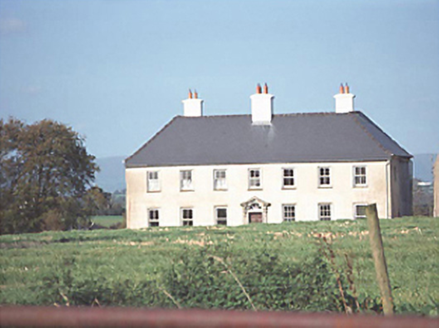 Aghaboe HouseHouse · 209 yd
 Ballygeehin Castle (in Ruins)Bawn · 3.1 mi
 European Pear3.4 mi
 Sweet Chestnut3.8 mi
 St. Fintans WellHoly well · 4.7 mi
 ArderinMountain / peak · 10 mi
 Birr Heritage CentreMuseum · 20 mi
 Birr CastleWorker's house · 21 mi
Pictures: A.-K. D., Wikimedia Commons · CC0; Andreas F. Borchert, Wikimedia Commons · CC BY-SA 4.0; National Inventory of Architectural Heritage; Mike Searle, Geograph · CC BY-SA 2.0; Keith Weller, Wikimedia Commons · Public domain; Miguel Angel Masegosa Martínez, Wikimedia Commons · CC BY 2.0; Hugh Chevallier, Wikimedia Commons · CC BY-SA 2.0; Brian Shaw, Wikimedia Commons · CC BY-SA 2.0
More historic places in County Laois · All of County Laois
What do you know about this place?