
What is recorded here
The Chapel in Castlekeeran has an ogham stone planted upside down: ancient wisdom presented with all the confidence of a man assembling a wardrobe who has already thrown out the instructions.
Ciarán of Castlekeeran, then known as Bealach Dúin – pass of the fort – was descended from the Fiacha Araidhe of NE Ulster, and his death is recorded in 775. Very little is known of his life, although it is thought that he wrote about St. Patrick, and his feastday is 14 June (Ó Rian 2011, 168-9). The deaths of some abbots of Disert Chiarain are recorded, including Siadhal (855), Consudh (868) and Dubhthach (961). The monastery was plundered by Godfrey, son of Sitric, and the Dublin Vikings in 949, together with other monasteries, and in 1170 Diarmuid Mac Murrough attacked it. It soon became a dependency of the Crutched Friars of St. John the Baptist at Kells (O’Connell 1957, 19) as a parish church, and it is listed amongst its possessions at the Suppression in 1540 (White 1943, 265). Although it is not mentioned by Ussher (1622) (Erlington 1847-64, 1, lxxxvii-xc), according to Dopping’s Visitation (1682-5) the church of Tristlekieran was ruined ‘since time out of mind’, although it was enclosed (Ellison 1973, 9). It is located in the shallow valley of the NW-SE River Blackwater, originally called Sele (O’Connell 1957, 17), with the stream c. 50m to the NE. The grass-grown remains of a structure (ext. dims 14.5m E-W; 7.5m N-S) are in a rectangular graveyard (dims c. 65m E-W; c. 45m N-S) defined by earthen banks and hedges. Three sandstone high crosses that are rather plain apart from roll mouldings, the base of another, a cross-slab and an ogham stone are displayed in the graveyard. The large sandstone cross-slab has a cross with expanded terminals defined by two incised double-lines within a frame (ibid. 25). The ogham stone (H c. 0.6m) was unearthed in the graveyard in 1898 and it is set up incorrectly with the top below. It is just N of the church remains, and has been read as: COVAGNI MAGI MUCOI LUGUNI (O'Connell 1957, 26; Macalister 1945, vol. 1, 46). However, a more recent interpretation (Herity and Newman Maguire 2012) has identified further letters and provides the reading: T_COVAGNI MAQI MUCOI LUGUNI ITI, which they translate as: ‘Of Thy Cuan son of the sons of Luigne’. The north cross (H 2.62m; Wth 1.1m) is ringed and has a shaft (0.53m x 0.47m) on a pyramidal base (dims at base 1.04m x 1m; H 0.75m). There is interlace at the ends of the arms and on the E face of the ring. The south cross (H 2.97m; Wth 1.3m) has a shaft (0.49m x 0.37m) on a base (dims at base 1.27m x 0.87m; H c. 0.9m). One end panel, a boss and part of the ring is decorated with interlace. The west cross (H 2.08m) has a broken S arm and the shaft (dims 0.37m x 0.24m) is on a plain base (dims at base 0.91m x 0.75m; H c. 0.56m). The cross is completely undecorated. (Harbison 1992, vol. 1, 41-2)
The above description is derived from the published 'Archaeological Inventory of County Meath' (Dublin: Stationery Office, 1987).
Ciarán of Castlekeeran, then known as Bealach Dúin – pass of the fort – was descended from the Fiacha Araidhe of NE Ulster, and his death is recorded in 775. Very little is known of his life, although it is thought that he wrote about St. Patrick, and his feastday is 14 June (Ó Rian 2011, 168-9). The deaths of some abbots of Disert Chiarain are recorded, including Siadhal (855), Consudh (868) and Dubhthach (961).…
From the National Monuments Service (Archaeological Survey of Ireland) record ME016-006
The monument record does not grant public access. Check the route and ask the landowner before entering private land.
- What survives
- Recorded monument
Places near here
 Grave YardGraveyard · 15 yd
 CrossCross, High cross · 29 yd
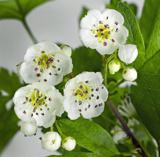 Hawthorn404 yd
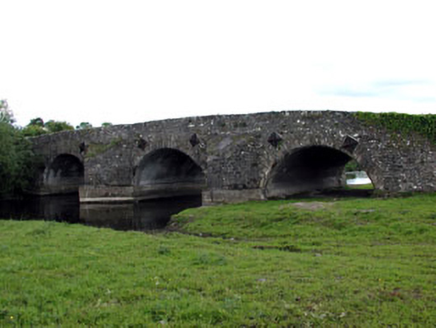 bridge874 yd
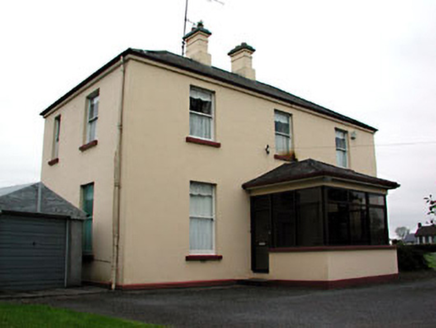 presbytery/parochial/curate's house1068 ydMoatCastle, motte and bailey · 1.5 miMaperathMountain / peak · 1.9 miThe Kieran Flanagan WayMemorial · 2.0 miGreat Famine ProjectMemorial · 2.1 miMountainpoleMountain / peak · 2.2 mi
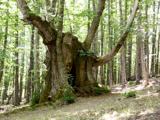 Sweet Chestnut3.6 mi
 Headfort HouseCastle · 4.4 mi
Pictures: RonanMcCormick, Wikimedia Commons · CC BY-SA 4.0; Didier Descouens, Wikimedia Commons · CC BY-SA 4.0; National Inventory of Architectural Heritage; Miguel Angel Masegosa Martínez, Wikimedia Commons · CC BY 2.0; Robert Adam, Wikimedia Commons · Creative Commons Zero, Public Domain Dedication
More historic places in County Meath · All of County Meath
What do you know about this place?