DDiscover AloneMapAbout

Castle in Athlone

Castle, motte
Castle in Athlone
Photo: Jonathan Thacker, Geograph · CC BY-SA 2.0 · Report the wrong picture

The monument record does not grant public access. Check the route and ask the landowner before entering private land.

What do you know about this place?Tap to add a comment or ask a question

What you write will be public.

What is recorded here

The Kingdom of Míde [Meath] was granted to Hugh de Lacy in 1172 (Mills and McEnery 1916, 177) and the process of sub-infeudation and settlement began soon afterwards but it is unlikely that any effective inroads were made as far west as Athlone for some time. The original Anglo-Norman grantee of Athlone was Geoffrey…

Read the whole record
The Kingdom of Míde [Meath] was granted to Hugh de Lacy in 1172 (Mills and McEnery 1916, 177) and the process of sub-infeudation and settlement began soon afterwards but it is unlikely that any effective inroads were made as far west as Athlone for some time. The original Anglo-Norman grantee of Athlone was Geoffrey de Costentin who was granted a cantred in Connacht adjoining Athlone in 1200 (Cal. doc. Ire., no. 137; Orpen 1907, 259; Claffey 1970-1, 55). In this year, King John of England granted Geoffrey de Costentin, ‘a cantred in Connaught called Tirieghrachbothe’ (Cal. doc. Ire., 22). If a motte castle had been constructed in Athlone then Geoffrey would have been responsible for the construction of this earth and timber castle (WM020-042098-) between the years 1191 and 1199 (Orpen 1911-20, II, 129; Graham 1980, 53; Bradley et. al. 1985, 35). In 1199 the annals recorded that a 'depredation was comitted on the Foreigners by Cathal Crobhderg, who burned the bódhún [bawn] of Ath [Athlone], and killed many persons; and they carried with them many cows to their homes' (ALC). The use of the word bódhún [Cow fort] anglicised as bawn to describe an Anglo-Norman fortification suggests that the fortification may have been a ringwork type earthwork rather than a motte. Alternativey the bawn may have been a reference to the bailey or courtyard adjoining the motte castle. Graham (1980, 52-3) suggests that Athlone formed a part of the final western frontier of the Liberty of Meath, a frontier which also included the motte castles of Granard (LF010-080001-), Co. Longford, Kilbixy (WM011-041----) and Rathconrath (WM018-093----), Co. Westmeath. The construction dates of the latter two motte castles, in 1192 and 1191 respectively, dates the formation of this frontier in his view. Accordingly a date between 1191 and 1199 could be proposed for the construction of the Athlone motte castle (Bradley et. al. 1985, 36). Claffey (1970-1, 55) has suggested that de Costentin may not have built a motte but merely reused the Ua Conchobhar [O'Conor] fortification (WM029-042098-) in Athlone. This suggestion finds some support in the Annals of Loch Cé reference to the Bishop of Norwich building in Athlone a new bridge (WM029-042004-) and a 'castle (WM029-042002-) instead of 'Ua Conchobhar's [O'Conor's] castle (WM029-042098-)' in 1210. Even if the survival of the Ua Conchobhar castle until 1210 were accepted, however, this does not exclude the construction of a motte because mottes were frequently built on top of ringforts and other pre-existing settlements (Graham 1980, 51). Claffey (1970-1, 55) further suggests that de Costentin's settlement was sited on the east bank of the Shannon but Orpen (1907, 263-4) was of the opinion that the original motte was built, and could still be detected, on the site of the present stone castle (WM029-042003-). The visit of King John to Ireland in 1210 marks a turning point in the development of Athlone. John de Grey, Bishop of Norwich, was appointed justiciar of Ireland as part of John’s efforts to improve the administration of the colony and he appears to have recognized the strategic importance of Athlone as the gateway between the Anglo-Norman liberty of Meath and Connacht, still effectively in Irish hands (Orpen 1911-20, II, 281; Claffey 1970-1, 56). De Grey appears to have desired to establish Athlone as the joint seat (with Dublin) of English administration in Ireland (Claffey 1970-1, 56) and the first step in this plan was the construction of new stone castle (WM029-042002-) and bridge (WM029-042004-) at Athlone in 1210. The 13th century Anglo-Norman stone castle may have been built on the site of the 12th century motte castle which in turn was built on the site of the Gaelic earth and timber fortification of the O'Conor's. Compiled by: Caimin O'Brien Date of upload: 29 November 2013

From the National Monuments Service (Archaeological Survey of Ireland) record WM029-042099

Places near here

Photo credits
  • Oliver Dixon, Geograph · CC BY-SA 2.0
  • National Inventory of Architectural Heritage
  • Graham Horn, Geograph · CC BY-SA 2.0
  • Pat Byrne, Geograph · Creative Commons Attribution-ShareAlike 2.0
  • Dvcireland, Wikimedia Commons · CC BY-SA 4.0
  • PatWhelehan, Wikimedia Commons
  • Peter Gerken, Wikimedia Commons · CC BY-SA 2.0
store/warehouse, outbuilding128 yd

Explorer Tom Store or warehouse in Athlone and Bigmeadow is now a Thai restaurant, so its imaginary fan club smells like lemongrass…
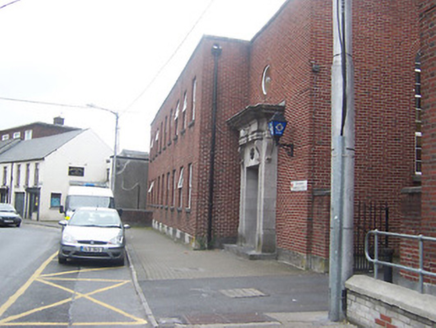
Athlone Garda Síochána StationGarda station/constabulary barracks · 139 yd

Explorer Tom Athlone Garda Síochána Station in Ranelagh is showing off that fancy limestone doorcase like it’s winning a county fair…
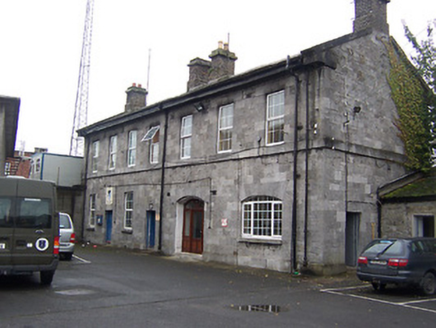
Custume BarracksOfficer's house · 172 yd

Explorer Tom Custume Barracks is an officer's house that thinks Dublin tourists are just noisy pigeons with better shoes. It’s all…
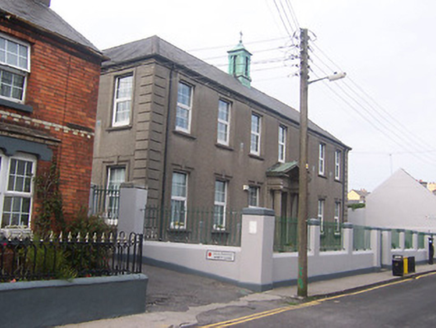
Scoil Náisiúnta Naoimh Peadar agus PólSchool · 175 yd

Explorer Tom Scoil Náisiúnta Naoimh Peadar agus Pól is confused about why the map makers put it in two different towns at once. It’s…
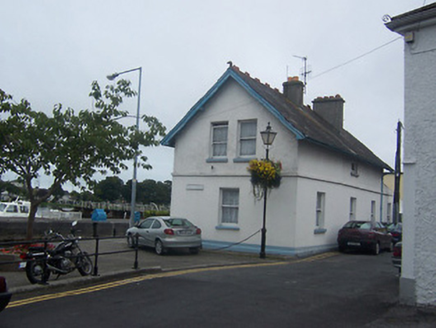
Athlone LockLock keeper's house · 176 yd

Explorer Tom Athlone Lock was nearly sold for a horse because the lock keeper’s house wasn’t worth much cash. It sits on the quay…

CastleCastle, unclassified · 196 yd

Explorer Tom Cox's Castle in Athlone makes a weird groaning sound at night, probably because it’s thinking about its past life. It…
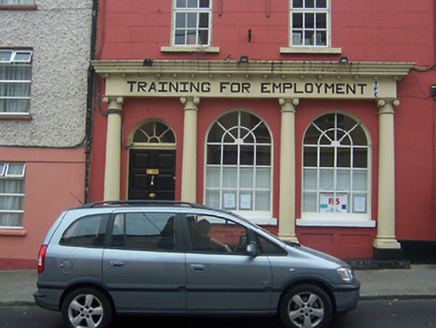
bank/financial institution209 yd

Explorer Tom Bank in Athlone and Bigmeadow is a former bishop's residence that still thinks tourists from Dublin are here to deposit…

WeirWeir, fish · 215 yd

Explorer Tom Weir is a fish trap that has a very devoted, imaginary fan club of medieval monks who just couldn’t stop bragging about…

Corpus Christi Catholic ChurchChurch/chapel · 268 yd

Explorer Tom Corpus Christi Catholic Church in Athlone is hiding a tall tale about a tunnel to the pub that definitely doesn’t…
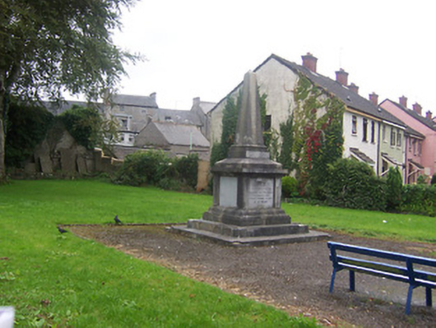
monument313 yd

Explorer Tom Monument in Athlone and Bigmeadow gets picked on by the wind because it’s too serious about remembering the dead. It…

Burgess ParkPark · 721 yd

Explorer Tom Burgess Park gives Athlone a green stretch on the east bank of the River Shannon, with paths and a playground close to…

Siege of AthloneSiege · 1341 yd

Explorer Tom Another Siege of Athlone event is telling the place that replaced it to stop acting so modern, as if concrete is…

More castles and forts in County Westmeath · All of County Westmeath

Add to this placeAdd a picture Add a detailed tip Add a story

Explore the map1,095,414 places to discover

Next place · or swipestore/warehouse, outbuilding