DDiscover AloneMapAbout

Barbavilla House

Country house
Barbavilla House
Photo: National Inventory of Architectural Heritage · Report the wrong picture

This does not grant access. Most recorded buildings are privately owned; view them only from public ground unless the owner allows entry.

Recorded change of use
Originally country house; recorded by the architectural inventory as office
What do you know about this place?Tap to add a comment or ask a question

What you write will be public.

What is recorded here

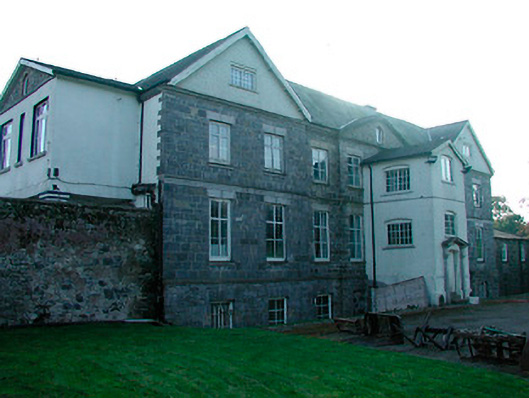
Detached nine-bay two-storey over basement double-pile house, built c.1730 and altered c.1790, with two-bay gable-fronted breakfronts to either end (east and west) and a three-bay pedimented breakfront to the centre having later single-bay two-storey porch attached to front (south), c.1900. Four-bay two-storey wing…

Read the whole record
Detached nine-bay two-storey over basement double-pile house, built c.1730 and altered c.1790, with two-bay gable-fronted breakfronts to either end (east and west) and a three-bay pedimented breakfront to the centre having later single-bay two-storey porch attached to front (south), c.1900. Four-bay two-storey wing attached to east side. Now in use as offices associated with modern factory. Pitched slate roofs. Dressed limestone walls with ashlar limestone detailing, including projecting moulded string courses. Roughcast rendered finish to projecting porch and to gable sections to breakfront at either end, rubble limestone construction to basement and to pediment over central breakfront. Square-headed window openings with moulded stone sills, ashlar lintels and replacement windows to main body of structure, cast-iron security bars to basement openings. Segmental-headed windows with replacement fittings to projecting porch and a single round-headed opening to pediment over central breakfront. Segmental-headed doorcase to later porch having timber sheeted double doors and a cut limestone open bed pedimented Doric doorcase. Original doorcase had broken segmental pediment over. Set back from road in extensive grounds now largely taken up with modern industrial units. Early outbuilding complexes not accessible. Located to the south of Collinstown.
An interesting and substantial early eighteenth-century house, which maintains its architectural and historical significance despite numerous alterations and additions over the years. Modern intervention and later developments such as the incorporation of inappropriate uPVC windows, although not enhancing the building, fail to detract from the overall elegance of the house and grounds. This fine building retains some interesting early eighteenth-century classical details, including moulded string courses and moulded stone sills, indicating an early construction date. This early date is now largely obscured by later works, including a large-scale reconstruction, c.1790, that resulting in the construction of the breakfronts to either end and by the later two-storey entrance porch. This house was originally built by William Smyth, c.1730, on land inherited from his father (William Smyth, Bishop of Kilmore & Ardagh). Smyth named the house the after his wife Barbara (nee) Ingoldsby, daughter of Sir George Ingoldsby. Barbavilla House is considered to be one of the last country houses in Ireland built in the seventeenth century tradition, making it rather old fashioned when first built. William Smyth was a relative of Sir Thomas Burgh (c.1670 – c.1730), Ireland's foremost late-seventeenth century architect and it is thought that he may have advised on the designs this house before his death in 1730, which possibly explains the rather dated architectural form for the construction date. The Smyths were an important family in northeast Westmeath in the eighteenth and nineteenth centuries and had further country seats at Drumcree House (14305006) and at Glananea (15305001), both a short distance to the east at Drumcree. The Smyths were also responsible for the construction of many of the buildings in Collinstown to the north, including the former school house (15400809). The Smyths left Barbavilla in 1955. It remains an interesting addition to the architectural heritage of Westmeath and is an important element of the history of the local area.

From the Buildings of Ireland (National Inventory of Architectural Heritage) record 15400813

Places near here

Photo credits
  • Maker not stated on source page, storage.googleapis.com
  • National Inventory of Architectural Heritage
  • Maker not stated on source page, commons.wikimedia.org
  • Maker not stated on source page, en.wikipedia.org
  • Maker not stated on source page, www.pinterest.com
Fairy fort / ringfort in Barbavilla DemesneFairy fort / ringfort · 817 yd

Explorer Tom This Benisonlodge ringfort has been flattened so much it looks like a very expensive lawn ornament or a forgotten…
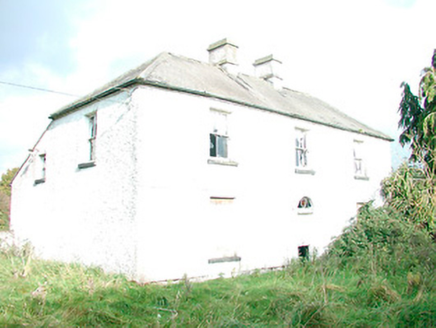
The OrchardHouse · 879 yd

Explorer Tom The Orchard in Ballybeg is tired of the wind picking on its derelict state, especially those fancy teardrop windows.…
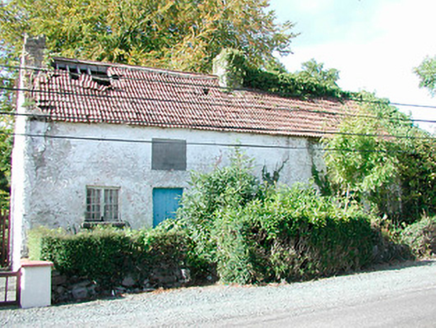
Prize CottagesWorker's house · 1228 yd

Explorer Tom Prize Cottages are twin stars of Collinstown, flashing their cast-iron windows like they’re auditioning for a period…

Earthwork in Ballybeg (fore By.)Earthwork · 1228 yd

Explorer Tom Earthwork in Ballybeg is where a priest once lost a bet about who could dig the deepest hole before lunch, and he never…

Earthwork in Kilpatrick (fore By.)Earthwork · 1340 yd

Explorer Tom Earthwork in Kilpatrick is currently stuck in a fairy dispute over parking rights, which explains why there’s nothing…
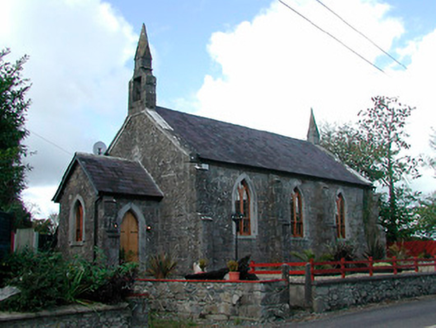
Saint Feighin's Church (Saint Feighins)Church/chapel · 1352 yd

Explorer Tom Saint Feighin's Church in Collinstown is doing its best to look serious in that Gothic outfit, but I can hear the…
The Old School HouseModel school · 1359 yd

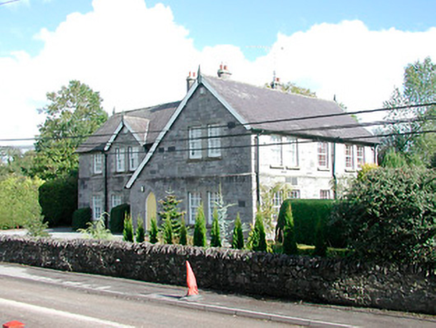
Explorer Tom The Old School House in Collinstown is a proper show-off with all that carved stone and inscribed doorcases. It was…
Glebe HouseRectory/glebe/vicarage/curate's house · 1508 yd

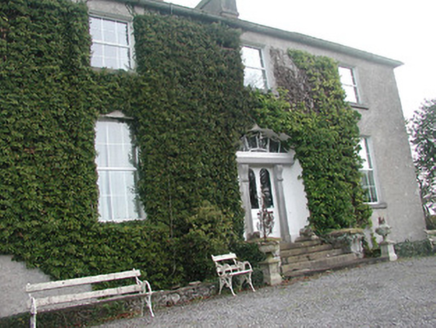
Explorer Tom Glebe House would tell you in a job interview that it has strong references from the Board of First Fruits. It was…

CastleCastle, unclassified · 1645 yd

Explorer Tom Castle in Kilpatrick is secretly proud of a potato that grew inside its wall back in the day. A guy named Walter used…
worker's house1690 yd

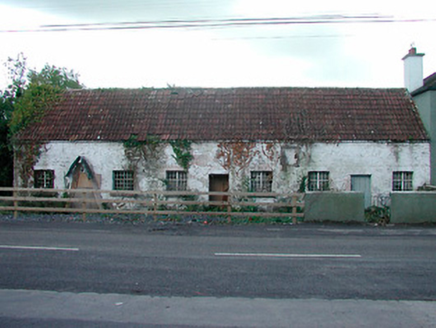
Explorer Tom Worker's house in Collinstown hosted a dance that went on so long the pantile roof started to rattle like it was trying…

Kilcumny GraveyardGraveyard · 1.3 mi

Explorer Tom Kilcumny Graveyard would survive a zombie attack because they’re already used to being ignored by everyone else. It’s…

Turgesius IslandIslet · 1.9 mi

Explorer Tom Turgesius Island was nearly sold off as a very expensive horse to a confused tourist last Tuesday, I swear. The name is…

More historic places in County Westmeath · All of County Westmeath

Add to this placeAdd a picture Add a detailed tip Add a story

Explore the map1,095,414 places to discover

Next place · or swipeFairy fort / ringfort in Barbavilla Demesne