What is recorded here
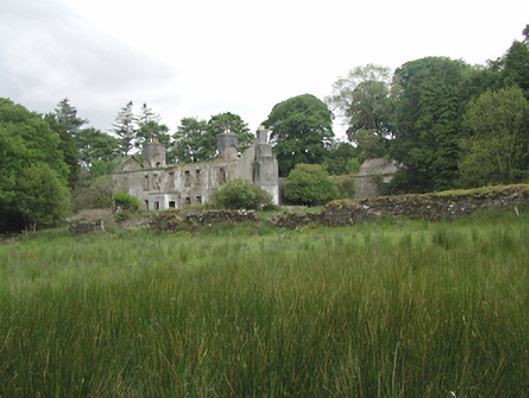
Detached seven-bay two-storey sporting lodge, built 1800, on a rectangular plan originally five-bay two-storey centred on single-bay single-storey flat-roofed projecting porch to ground floor. Burnt, 1987. In ruins, 2002. Pitched roof now missing with rendered chimney stacks having capping supporting terracotta or yellow terracotta tapered pots. Rendered walls. Square-headed central door opening with no fittings surviving. Square-headed window openings with remains of six-over-six timber sash windows without horns. Interior in ruins. Set in overgrown grounds.
A sporting lodge built by the Dillons of Belgard Castle and therefore sometimes known as Dillon Lodge. The elongated rectangular plan with a later porch at its centre, the uniform proportions of the openings on each floor, and the high pitched roof, all contribute to its architectural interest. Ballinascorney House was tenanted by the Bagenal family and is said to have been occupied for one night by the fugitive Robert Emmet (1778-1803) following the failed Irish Rebellion of 1803 (Handcock 1877, 60). Ballinascorney House was later occupied by Gerald Tench (1787-1863), Registrar of the Court of Exchequer (Thom's Almanac and Official Directory of the United Kingdom of Great Britain and Ireland for the year 1859, 1242; 1392), and it is believed that it was subsequently leased by Major Lawrence Edward Knox (1836-73), proprietor of "The Irish Times" (1859), whose city residence was at 53 Fitzwilliam Square (see 50930094).
From the Buildings of Ireland (National Inventory of Architectural Heritage) record 11224004
This does not grant access. Most recorded buildings are privately owned; view them only from public ground unless the owner allows entry.
Places near here
 Black HillMountain / peak · 704 yd
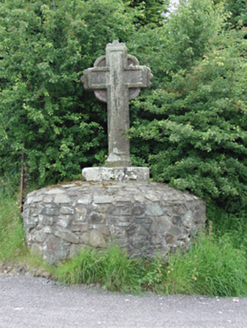 monument1037 yd
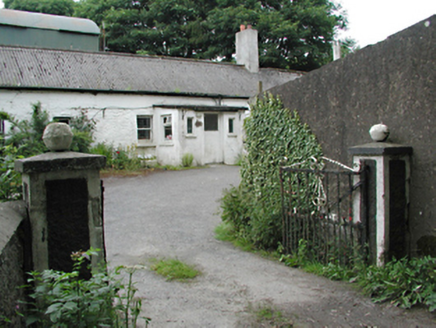 farmyard complex1701 yd
 Ballymorefinn HillMountain / peak · 1.2 miGraveyard in BallymanaGraveyard · 1.7 mi
_-_20180125125204.jpg/250px-County_Dublin_-_St_Colmcille's_Well_(Oldcourt)_-_20180125125204.jpg "Photo: Syncretists, Wikimedia Commons · CC BY-SA 4.0") St Columkilles WellHoly well · 3.6 mi
St Columkilles WellHoly well · 3.6 mi Noel Lemass MemorialMemorial · 4.0 mi
 Pine ForestForest · 4.5 mi
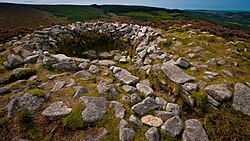 Tibradden Chambered CairnArchaeological place · 4.9 mi
 CastleCastle, tower house · 5.3 mi
 CastleCastle, tower house · 6.1 mi
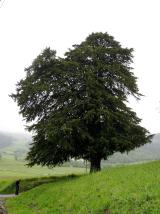 European Yew6.2 mi
Pictures: Jonathan Billinger, Geograph · CC BY-SA 2.0; National Inventory of Architectural Heritage; JP, Geograph · CC BY-SA 2.0; Syncretists, Wikimedia Commons · CC BY-SA 4.0; Sarah777, Geograph · CC BY-SA 2.0; Joe King, Wikimedia Commons · CC BY-SA 3.0; Hamish Bain, Wikimedia Commons · CC BY-SA 2.0; Mike Searle, Geograph · CC BY-SA 2.0; Sitomon, Wikimedia Commons · CC BY-SA 2.0
More historic places in County Dublin · All of County Dublin
What do you know about this place?