
What is recorded here
Assaroe Abbey was raided, closed, and then put to work as its own graveyard wall. In the nineteenth century, carved pieces from the old church were built into that wall. Some ruins get a quiet retirement; Assaroe was asked to do one more shift.
Assaroe Abbey (DG107-044001-): This Cistercian monastery, a daughter house of Boyle, was founded in 1178. It was plundered in 1398 by Niall Óg O'Neill and was suppressed in the later 16th century (Gwynn and Hadcock 1970, 127). The only identifiable remains are those of the church and comprise the ivy-covered section of the S wall and W gable with its N return; c. 9m high. Built of rubble and split stone with sandstone dressings, only the NW ashlar quoin with chamfered arris is in situ. The S wall which acts as the graveyard (DG107-0044002-) boundary is 15.8m in length to the interior return of the W gable, represented by a few protruding bond stones. Sheds have been built against the exterior face of the wall. It is joined to the surviving N section of the W gable by a modern graveyard wall. The N splayed ingoing for a window survives in the upper section of this gable. Some .7m of attached N wall remains giving an internal church width of 8.39m. Many moulded fragments (DG107-044003-) of late 12th/early 13th century date are scattered throughout the cemetery and others including three capitals and one cusped piece of tracery were built into the graveyard wall when it was constructed in the 19th century at the instigation of Dr. D. MacGettigan, Catholic Bishop of Raphoe, 1861-70 (Moran ed. I, 1873, 176). The Ballyshannon sewerage scheme involved the monitoring by Giles Dawkes of Archaeological Development Services Ltd under licence No. 07E0620 of a series of machine-excavated trenches in areas identified as having archaeological potential in and around Ballyshannon. Numerous large masonry walls, built directly on the bedrock and surviving to a height of 1.4m, were recorded on the north side of the river immediately east of the bridge. These walls appear to relate to a large 18th-/19th-century British army barracks, possibly representing the parade ground and a large stabling area. The site was in use until the late 19th century, when it was demolished for use as a market-place. In addition, a well-faced stonemasonry block, possibly a doorjamb, was recovered from topsoil while monitoring trenches adjacent to the medieval Abbey Assaroe (DG107-044001-) (Bennett 2010, 75). Monitoring was undertaken by Giles Dawkes and Aaron Johnston, for Archaeological Development Services Ltd (ADS), under licence No. 07E0620 of groundworks associated with the Ballyshannon Sewerage Scheme, Co. Donegal. Work was carried out from June until November 2007 across Carrickboy, Townparks, Abbey Island and Abbeylands townlands in the Ballyshannon hinterland (Excavations 2007, No. 345). Monitoring of additional works was carried out in Main Street, Ballyshannon, in May 2008 and finally a section adjacent to the old army barracks was monitored in October 2008. A desk-based impact assessment by David Sweetman in 2003 was undertaken in advance of the development. This study selected areas of archaeological potential where monitoring was deemed appropriate. No archaeological features or remains were noted while monitoring topsoil-stripping outside the immediate environs of Ballyshannon town. However, in Abbey Island townland, to the north-west of Ballyshannon, a roughly rectangular stone masonry block was recorded at the side of the pipe trench and left in situ. This well-faced stone block, possibly a door jamb, may have originated from the adjacent medieval Assaroe Abbey (Bennett 2011, 83-4). The above description was derived from the 'Archaeological Survey of County Donegal. A description of the field antiquities of the County from the Mesolithic Period to the 17th century.' Compiled by: Brian Lacey with Eamon Cody, Claire Cotter, Judy Cuppage, Noel Dunne, Vincent Hurley, Celie O'Rahilly, Paul Walsh and Seán Ó Nualláin (Lifford: Donegal County Council, 1983).
Assaroe Abbey (DG107-044001-): This Cistercian monastery, a daughter house of Boyle, was founded in 1178. It was plundered in 1398 by Niall Óg O'Neill and was suppressed in the later 16th century (Gwynn and Hadcock 1970, 127). The only identifiable remains are those of the church and comprise the ivy-covered section of the S wall and W gable with its N return; c. 9m high. Built of rubble and split stone with…
From the National Monuments Service (Archaeological Survey of Ireland) record DG107-044001
The monument record does not grant public access. Check the route and ask the landowner before entering private land.
- What survives
- Recorded monument
Places near here
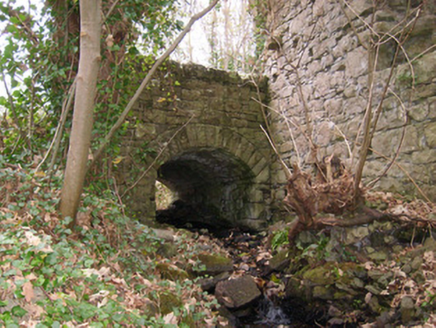 bridge12 yd
 CatsbyBuilding misc, mass rock · 68 yd
 Dungravenen Promontory FortPromontory fort, coastal · 753 yd
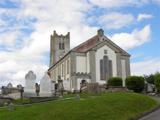 St Anne's Church GraveyardGraveyard · 886 yd
 Rory GallagherMemorial · 1168 yd
 Standing stone in Townparks (ballyshannon Ed)Standing stone · 1239 yd
 Wardtown StrandBeach / strand · 1.5 mi
 Tullan StrandBeach / strand · 1.9 mi
 Dark Cliffs at KilbarronPublicly named cliff or headland · 2.5 mi
 Kilbarron Castle in ruinsCastle, tower house · 2.6 mi
 RossnowlaghOfficial bathing water · 3.1 mi
 Hawthorn3.2 mi
Pictures: National Inventory of Architectural Heritage; louise price, Geograph · CC BY-SA 2.0; Kenneth Allen, Wikimedia Commons · CC BY-SA 2.0; Kenneth Allen, Geograph · CC BY-SA 2.0; Jonathan Wilkins, Geograph · CC BY-SA 2.0; louise price, Wikimedia Commons · CC BY-SA 2.0; Dean Molyneaux, Geograph · CC BY-SA 2.0; Didier Descouens, Wikimedia Commons · CC BY-SA 4.0
More historic places in County Donegal · All of County Donegal
What do you know about this place?